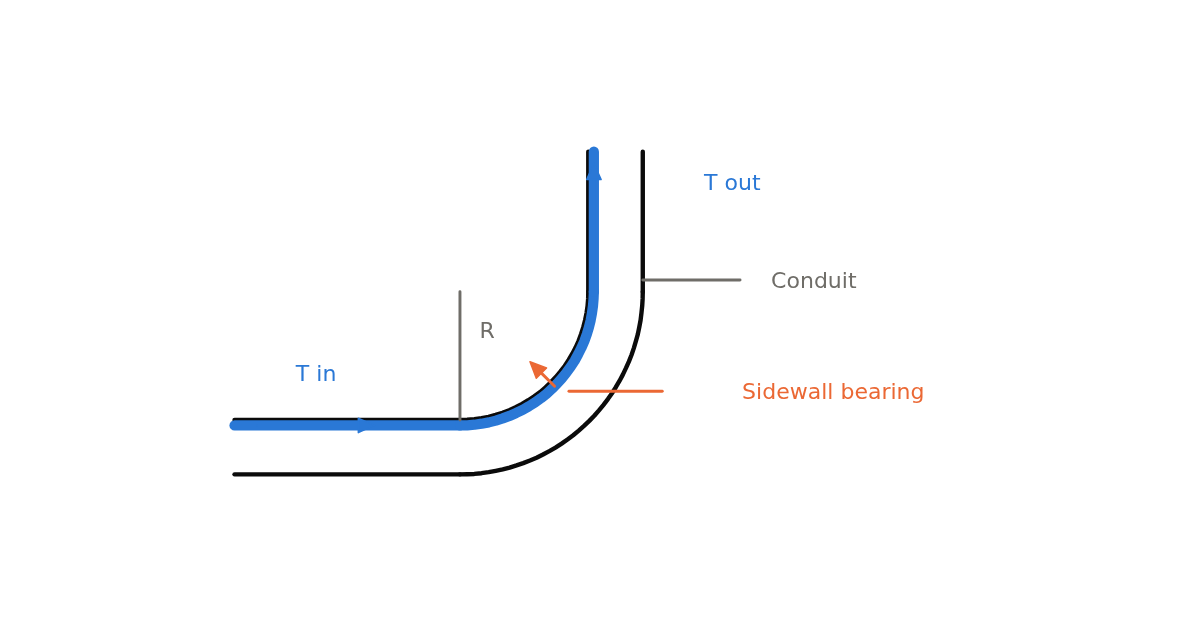
Calculate section-by-section cable pulling tension in both directions, bend sidewall pressure, three-cable jam ratio and conduit fill. Compare friction, cable limits and pull-line ratings.
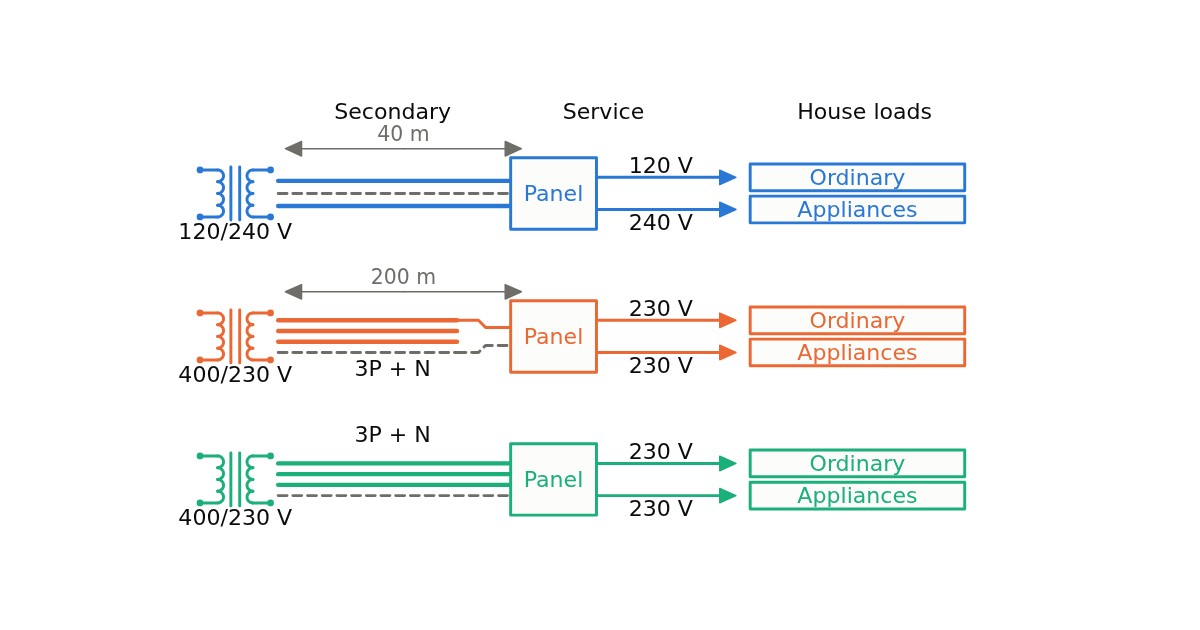
Compare identical household loads on split phase, single phase and three phase. Size conductors, count copper, and calculate annual wire and transformer losses.
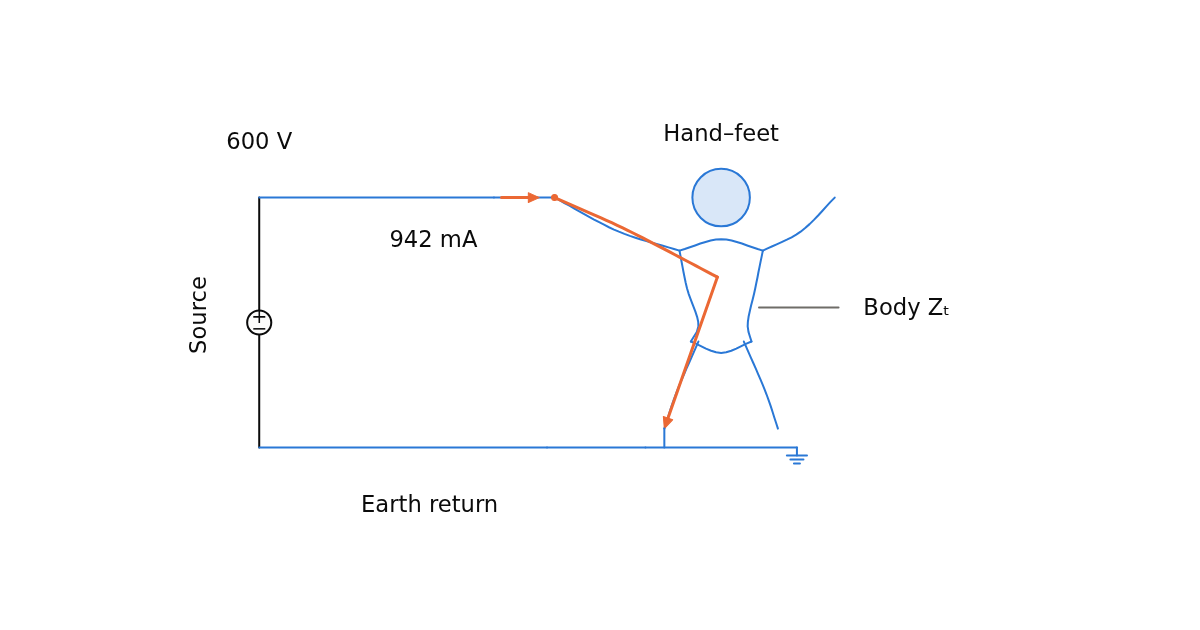
Estimate voltage-dependent body current, compare AC and DC shock zones, and explore RCD clearing and IT earth-contact transients.
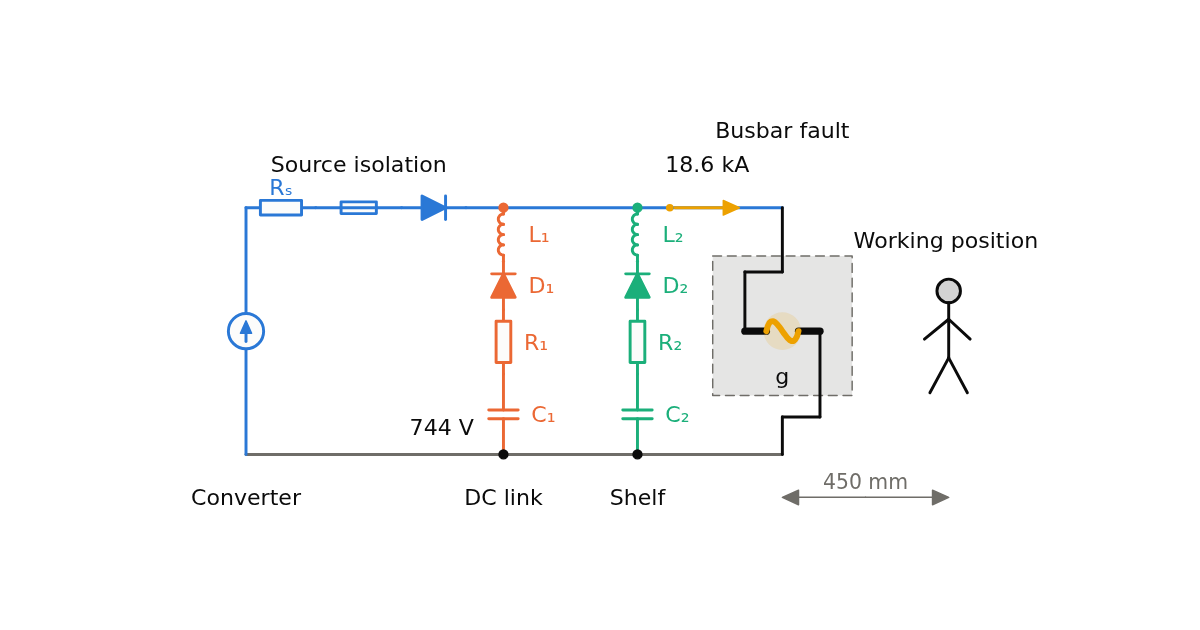
Solve capacitor discharge and current-limited source contributions to a DC arc. Compare incident energy with Doan’s screen and find a clearing-time bound for 1.2 cal/cm².
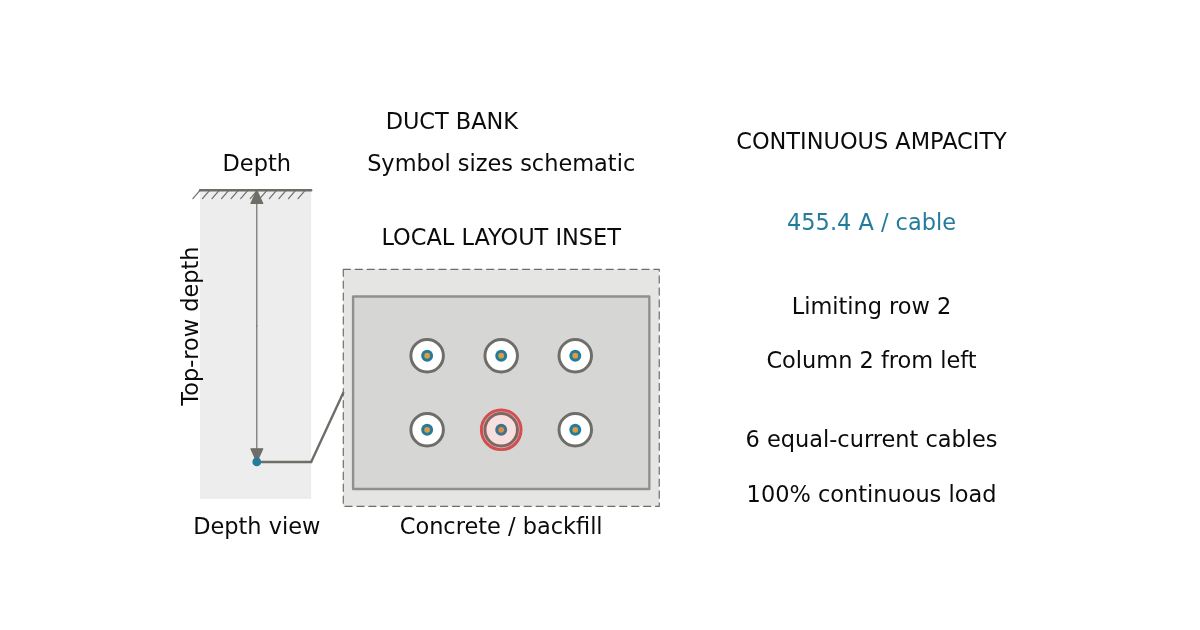
Calculate continuous ampacity for equal-current single-core cables in duct banks or direct burial, including mutual heating, sheath losses and a rectangular backfill envelope.
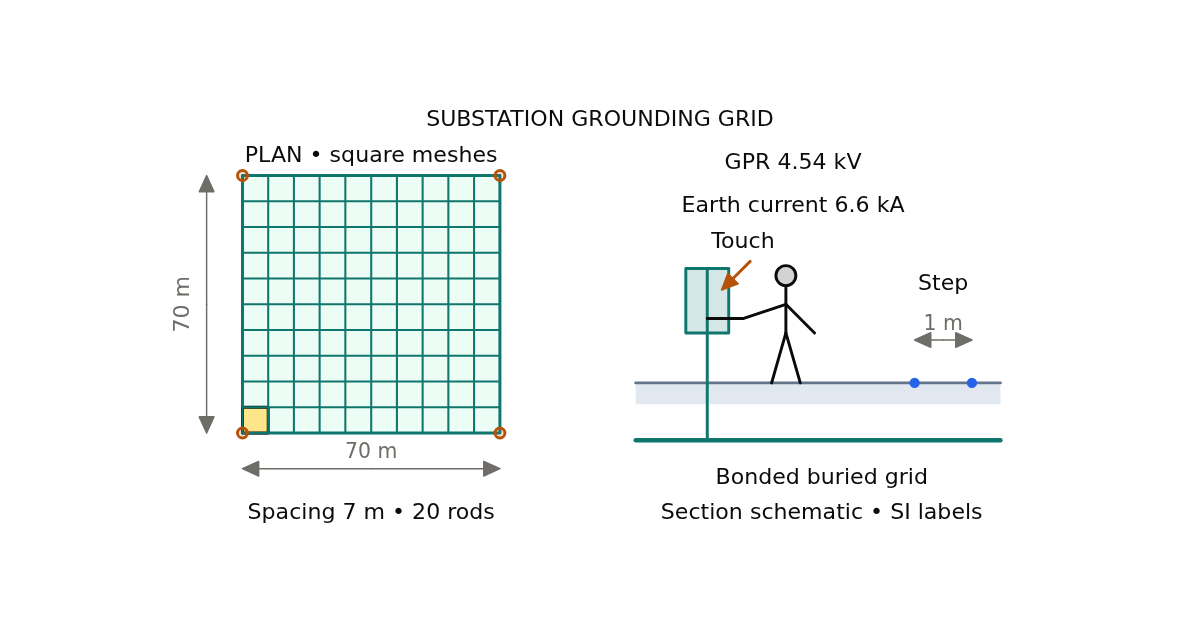
Calculate substation grid resistance, GPR, mesh and step voltages, tolerable limits and copper conductor size. Compare grid spacings using a uniform-soil IEEE 80 method.
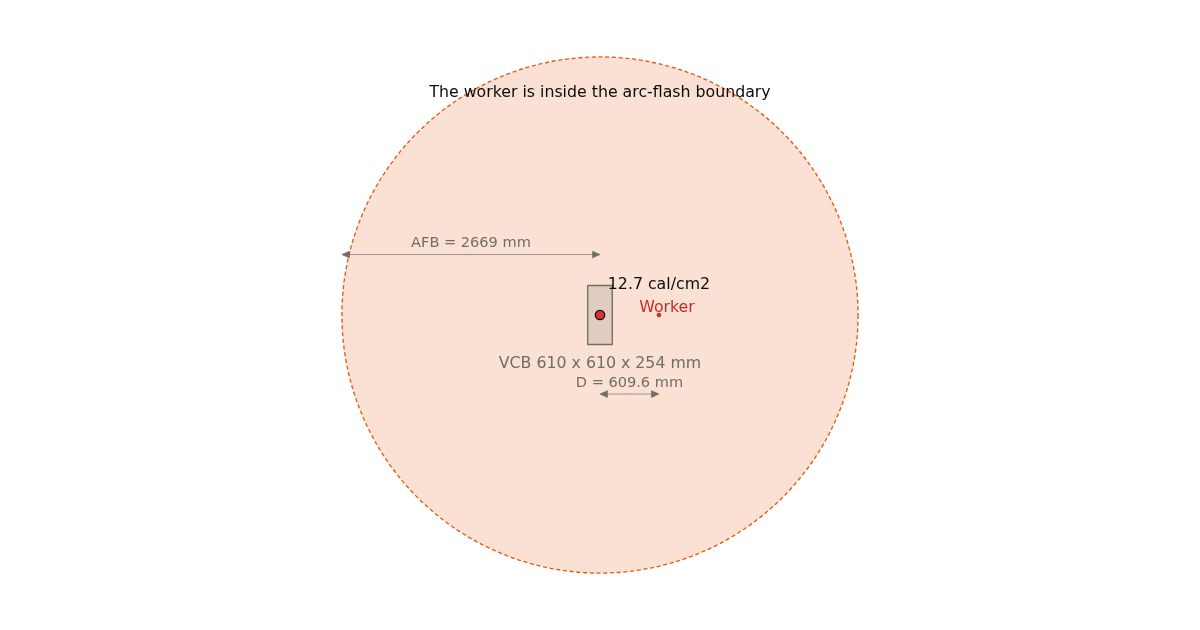
Arcing current, incident energy and arc-flash boundary of a three-phase 208 V to 15 kV equipment by the IEEE Std 1584-2018 empirical model, with the arcing current variation.
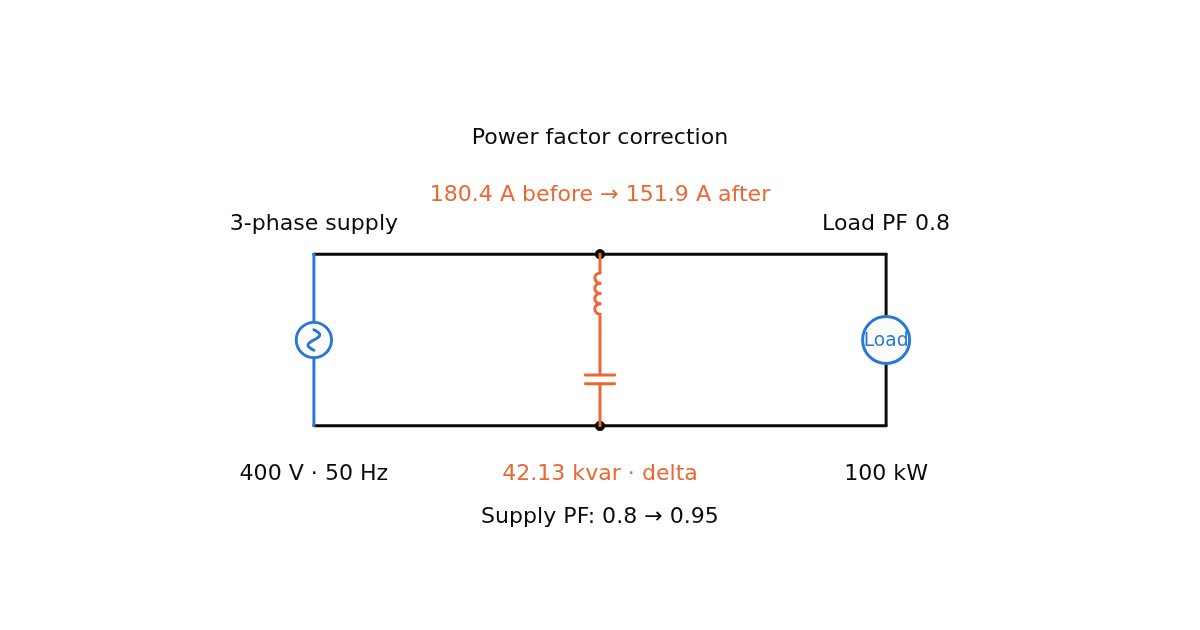
Size a three-phase capacitor bank, compare star and delta capacitance, estimate tariff savings and screen resonance. Includes detuned reactors, power triangles and a motor no-load limit.
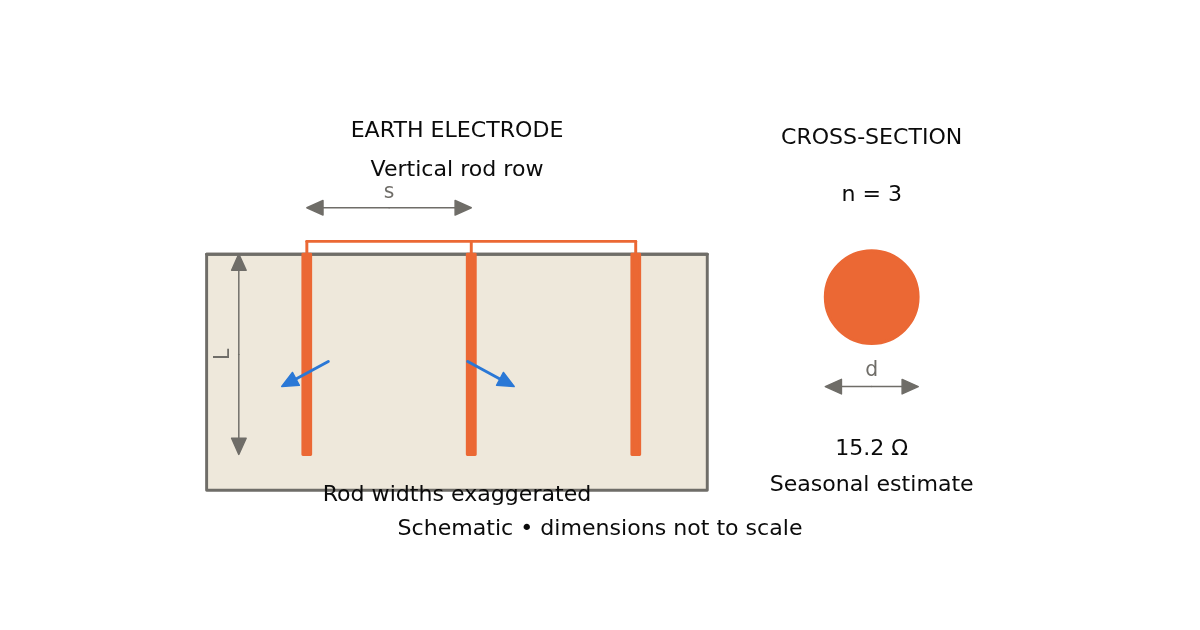
Estimate rod, plate, strip and ring earth resistance from soil resistivity or a Wenner test. Include rod screening, seasonal variation and a clearly bounded TT RCD check.
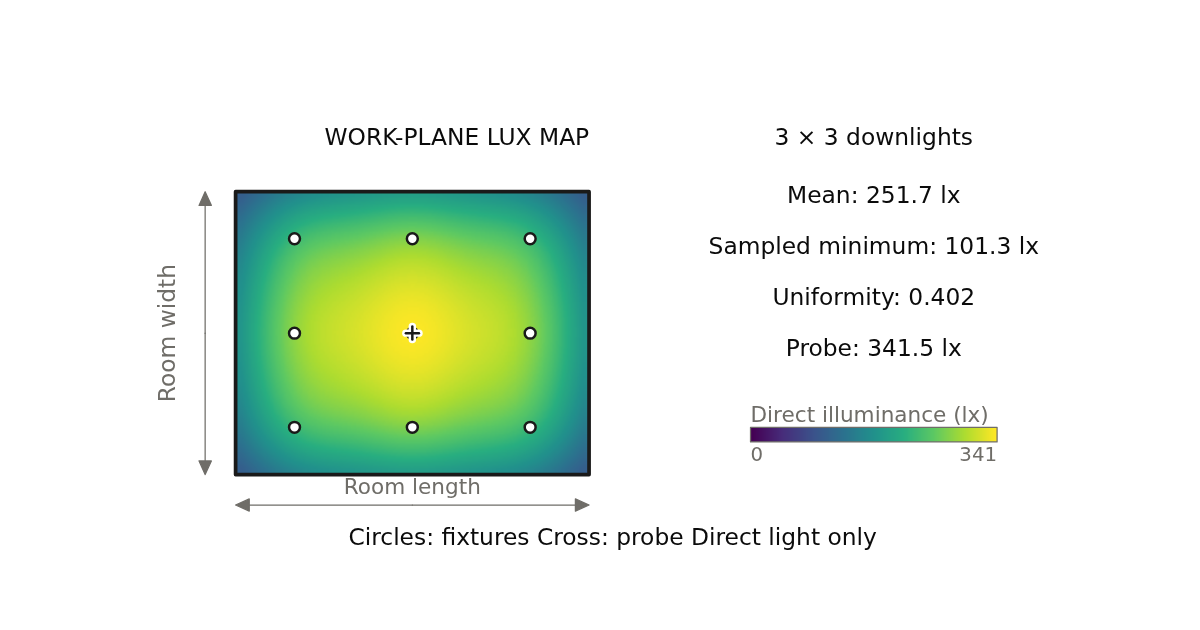
Plan recessed-light spacing and count from lumens, beam angle and mounting height. Compare lux heat maps, average light levels and uniformity with a task target.
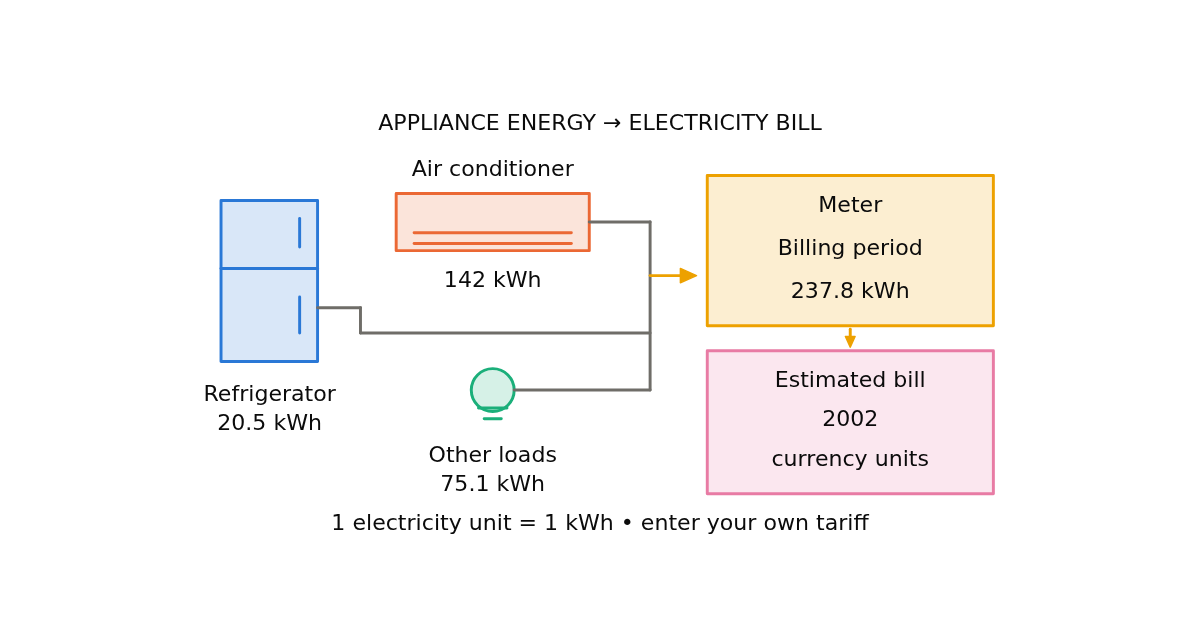
Estimate appliance kWh, electricity units and bills from your own flat or slab rates. Compare fridge and inverter AC replacements using labels, duty cycles or seasonal ratings.
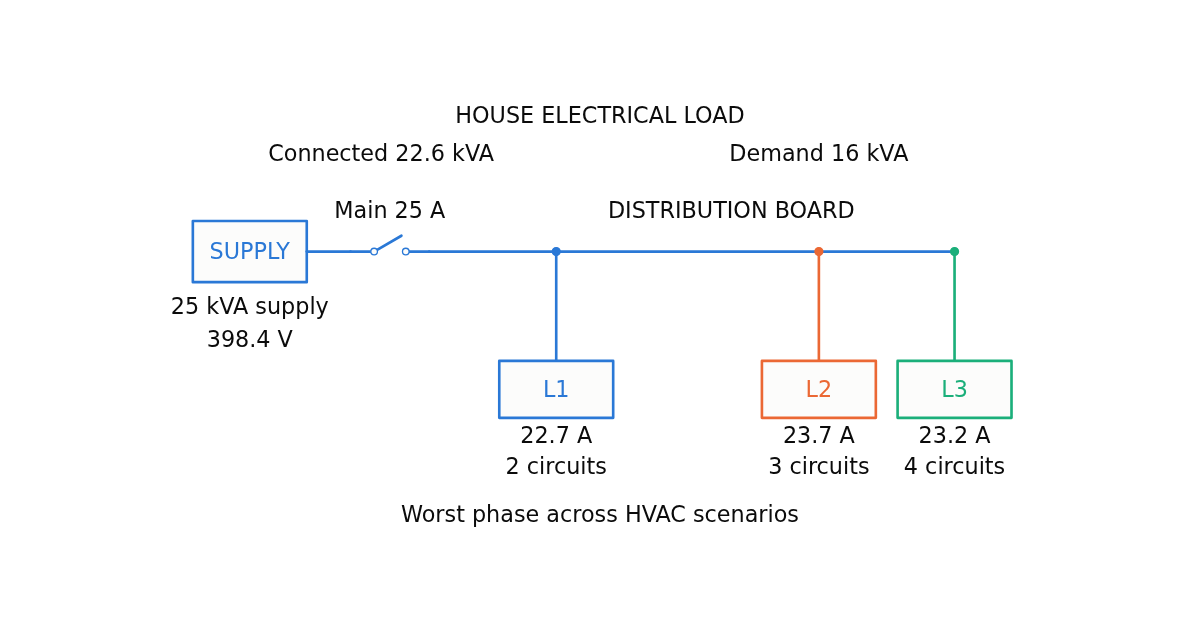
Build a house load schedule, balance single-phase circuits, and estimate demand, main breaker and supply kVA. Compare editable IEC-style factors with the NEC 220.82 optional-method structure.
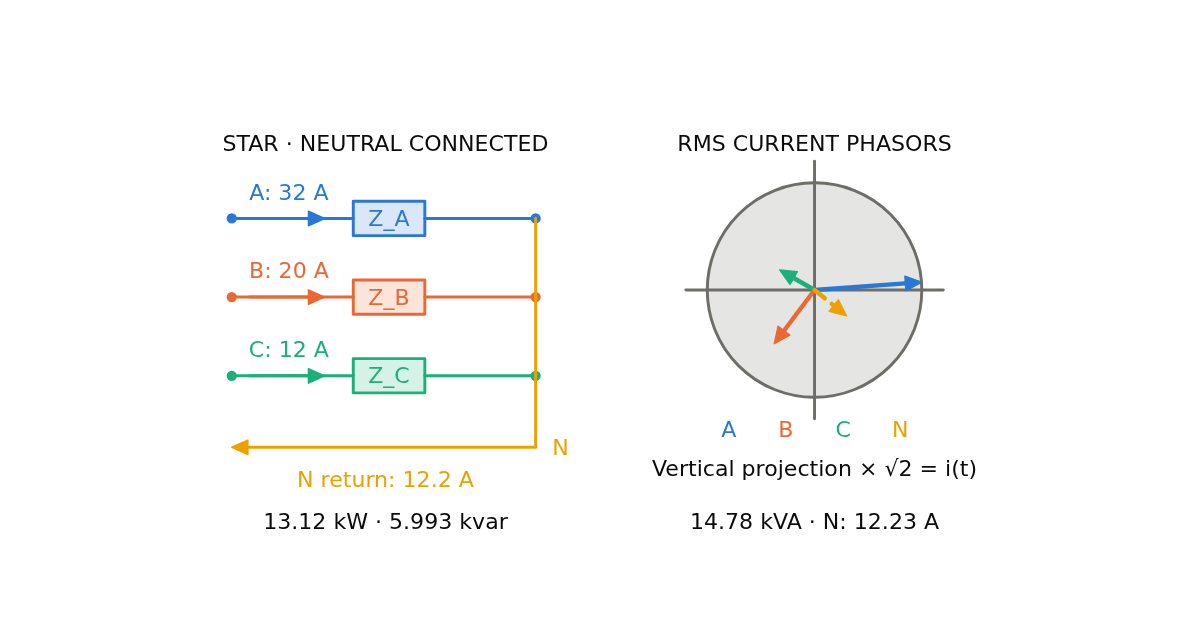
Calculate balanced three-phase kW, kVA and amps, convert motor hp, and solve unbalanced star or delta loads with neutral-current phasors and animated waveforms.
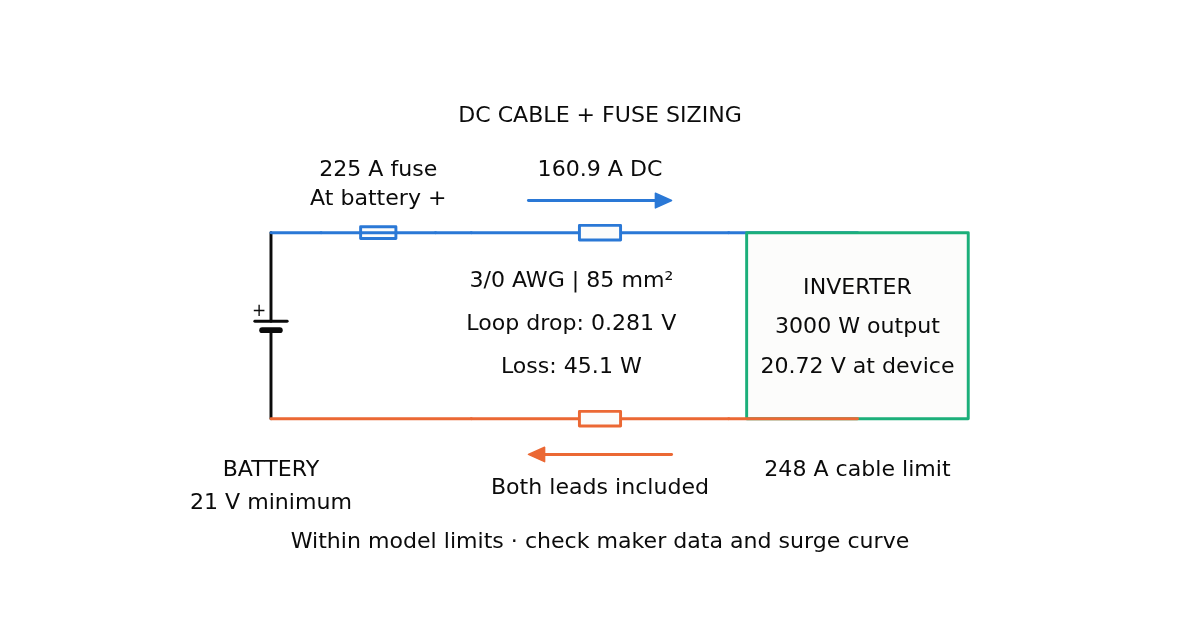
Size copper cables and DC fuses for inverters, solar battery circuits and car audio. Check voltage drop, thermal derating, fault interruption and alternator capacity.
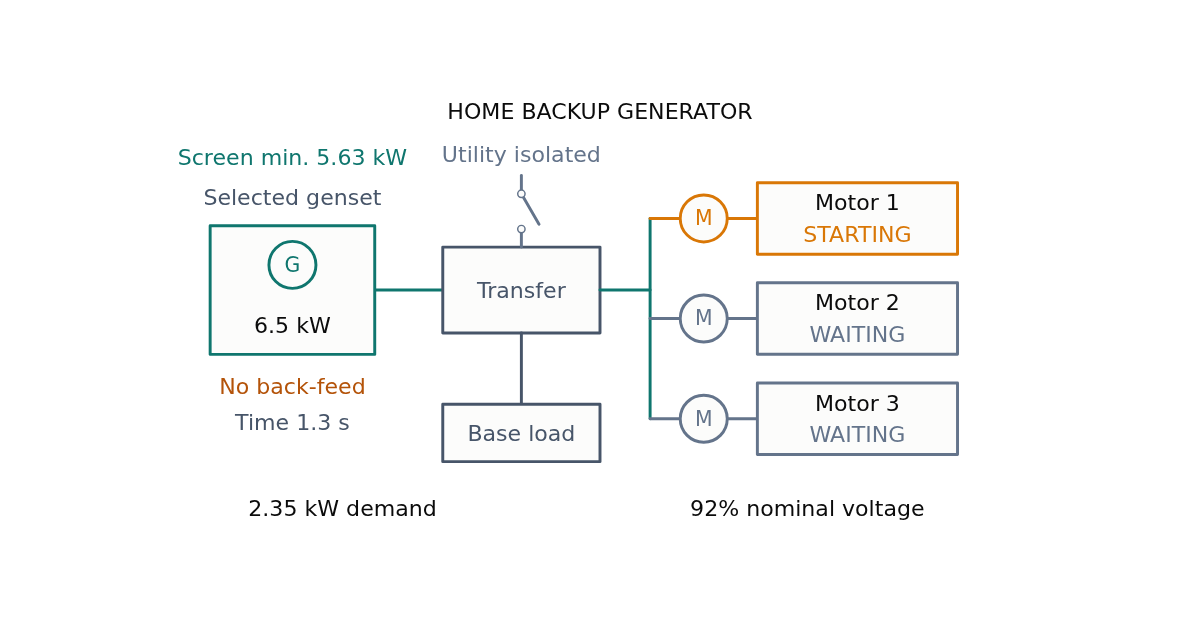
Size a home generator for running loads, sequenced motor starts, voltage dip and site derating. Estimate part-load fuel use, monthly cost and a conditional solar–battery cost crossover.
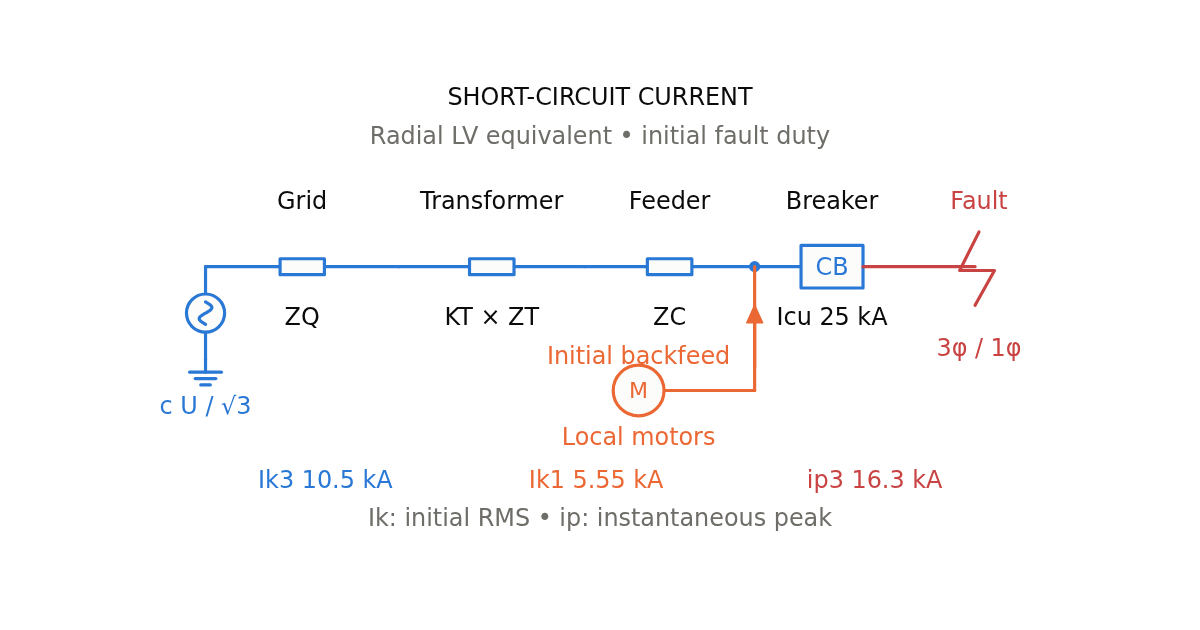
Estimate three-phase and single-phase fault current, motor backfeed and peak current using a simplified IEC 60909 impedance model. Compare duty with breaker capacity.
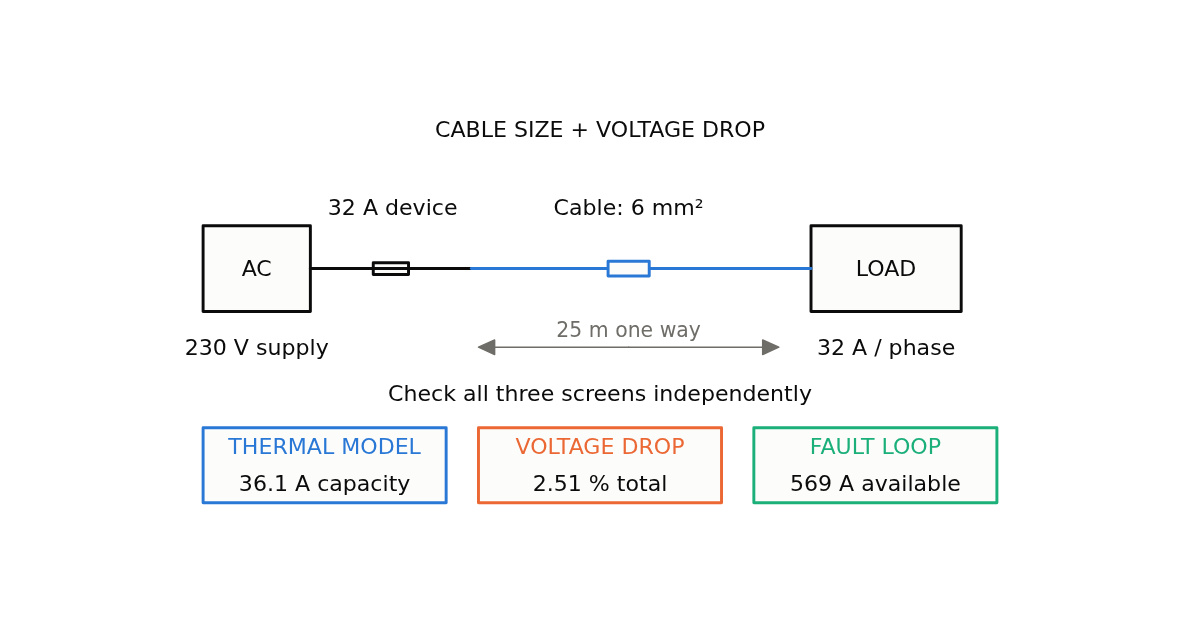
Size a cable or find its maximum current and kW at 1%, 3% and 5% voltage drop. Compare computed heating, device coordination and fault-loop limits with explicit IEC and NEC assumptions.