Advanced Robotics Design & Simulation Services
We design and simulate robotic systems for demanding applications — with a focus on reliable motion, stable control, and faster prototype development.
Robotics Modeling, Motion Control, and Virtual Validation for Complex Mechanical Systems
WiredWhite provides robotics design, dynamic simulation, and motion-control development for bipedal robots, articulated mechanisms, and electromechanical test systems.
We model how a robot moves under load, how its joints and drives respond, and whether the control system remains stable during contact, acceleration, and changing operating conditions. This gives you a practical basis for design decisions before prototype testing begins.
From kinematic models and Newton–Euler dynamics to force-controlled drives and test-bench validation, we help turn complex robotic concepts into systems that can be built, tested, and improved.
Solve Robotics Modeling and Simulation Challenges Before They Reach Hardware
Robotic systems fail or underperform for reasons that are often difficult to isolate in CAD models or static calculations alone. We support projects facing challenges such as:
✅ Inaccurate simulation of dynamic robotic motion
✅ Unstable walking, balance, or contact behavior in bipedal systems
✅ Limited visibility into joint loads, torque requirements, and mechanical stress
✅ Delays between mechanical design, control development, and physical testing
✅ Insufficient in-house expertise for high-DOF dynamics and motion-control algorithms
✅ Difficulty translating Newton–Euler equations and theoretical models into usable simulations
✅ Uncertainty about whether a control strategy will remain stable outside ideal operating conditions
✅ Lack of a clear validation workflow between simulation results and test-bench data
Our work is focused on reducing uncertainty early, when changes are faster and less expensive than after prototype manufacturing.
Robotics Engineering Services
Dynamic Modeling of Articulated Robotic Systems
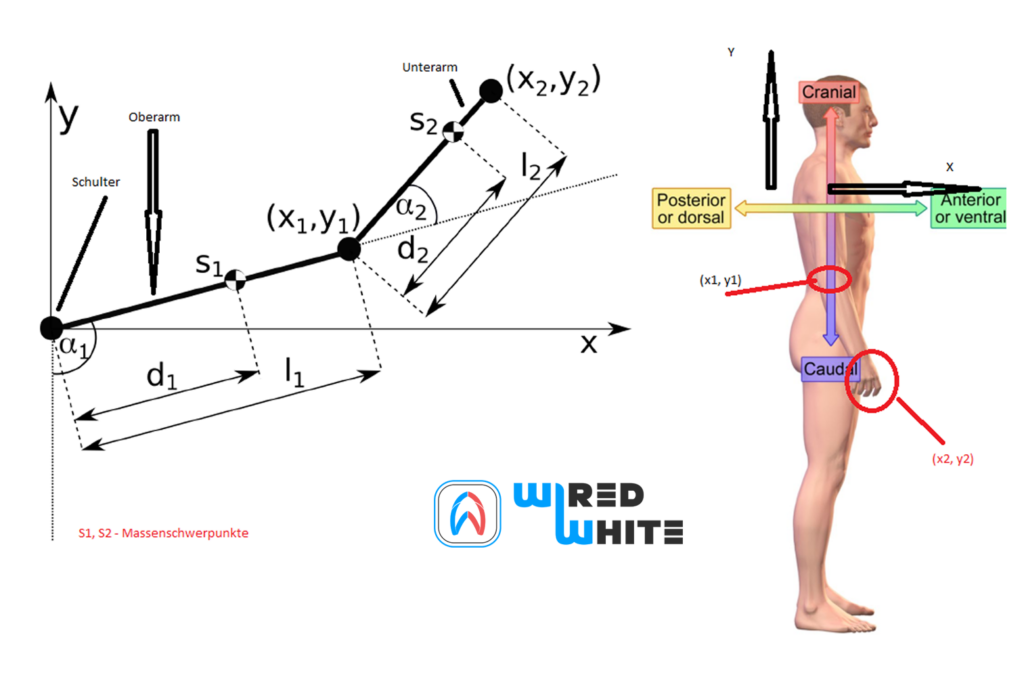
We develop dynamic models for robotic mechanisms with multiple degrees of freedom, including articulated arms, legged systems, and custom electromechanical assemblies.
Depending on the project, the model can include:
- kinematic chains and joint constraints;
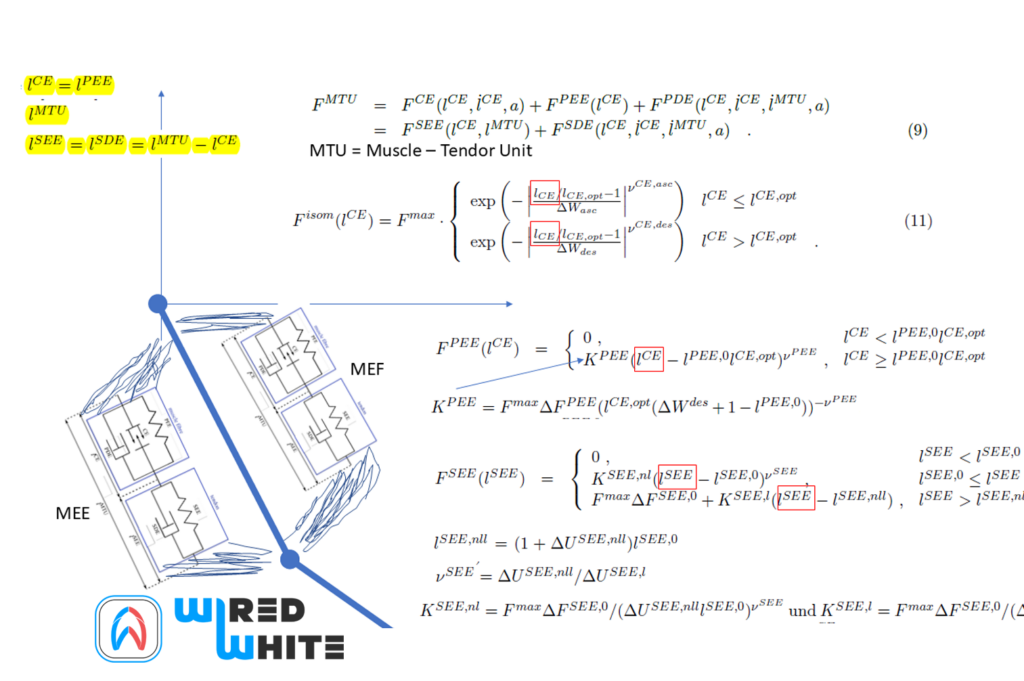
- mass, inertia, friction, and elasticity effects;
- actuator torque, force, and speed limits;
- external loads and contact forces;
- drivetrain and transmission behavior;
- sensor feedback and control-loop interaction.
The goal is not simply to create a visual robot model. It is to understand how the system behaves under real motion conditions and where mechanical or control assumptions may fail.
Bipedal Robotics and Dynamic Walking Simulation
Bipedal robotics requires more than trajectory planning. Stable walking depends on the interaction between body dynamics, contact forces, actuator response, balance logic, and changing ground conditions.
We support the design and simulation of bipedal robotic systems, including:
- ballistic and force-controlled walking concepts;
- gait-cycle analysis;
- balance and stability assessment;
- ground-contact and impact modeling;
- joint torque and force analysis;
- impulse-control strategies;
- simulation of disturbances and non-ideal operating conditions;
- test-bench preparation for walking and motion experiments.
This work helps teams evaluate whether a walking concept is physically viable before committing to expensive hardware iterations.
Motion Control and Force-Control Development
A robot may follow a planned trajectory in ideal conditions but become inaccurate, inefficient, or unstable when load conditions change. We develop and evaluate control approaches that account for real mechanical behavior.
Our work can include:
- position, velocity, torque, and force control;
- trajectory generation and tracking;
- force-controlled drive concepts;
- impulse and contact-response control;
- feedback-loop tuning;
- control stability analysis;
- actuator coordination across multiple joints;
- comparison of alternative control architectures.
We use simulation to test control performance under changing loads, disturbances, parameter variation, and operating scenarios that are difficult to reproduce safely on physical hardware.
Multibody Simulation and Virtual Prototyping
Virtual prototyping connects mechanical design and control development before a complete physical robot exists.
We build simulation environments that allow engineering teams to investigate:
- motion feasibility;
- workspace and collision behavior;
- joint loads and actuator sizing;
- structural and mechanical constraints;
- control-system response;
- sensitivity to parameter changes;
- performance under different payloads, trajectories, and operating conditions.
This approach makes it easier to identify design risks before they become prototype rework, testing delays, or costly component changes.
Simulation-to-Test-Bench Validation
A useful simulation must eventually be compared with physical behavior. We help teams prepare validation workflows that connect model outputs with test-bench experiments.
Typical tasks include:
- defining measurable simulation outputs;
- preparing test scenarios and operating conditions;
- comparing model predictions with sensor and experiment data;
- identifying mismatches between assumed and real parameters;
- refining model fidelity where it affects engineering decisions;
- validating control behavior before wider deployment.
The objective is practical confidence: knowing which parts of the model can be trusted, where uncertainty remains, and what should be tested next.
Engineering Methods We Apply
Robot Dynamics and Equations of Motion
For complex robotic mechanisms, motion must be described in a form that can be analyzed, simulated, and used for control development.
Our engineering work may involve:
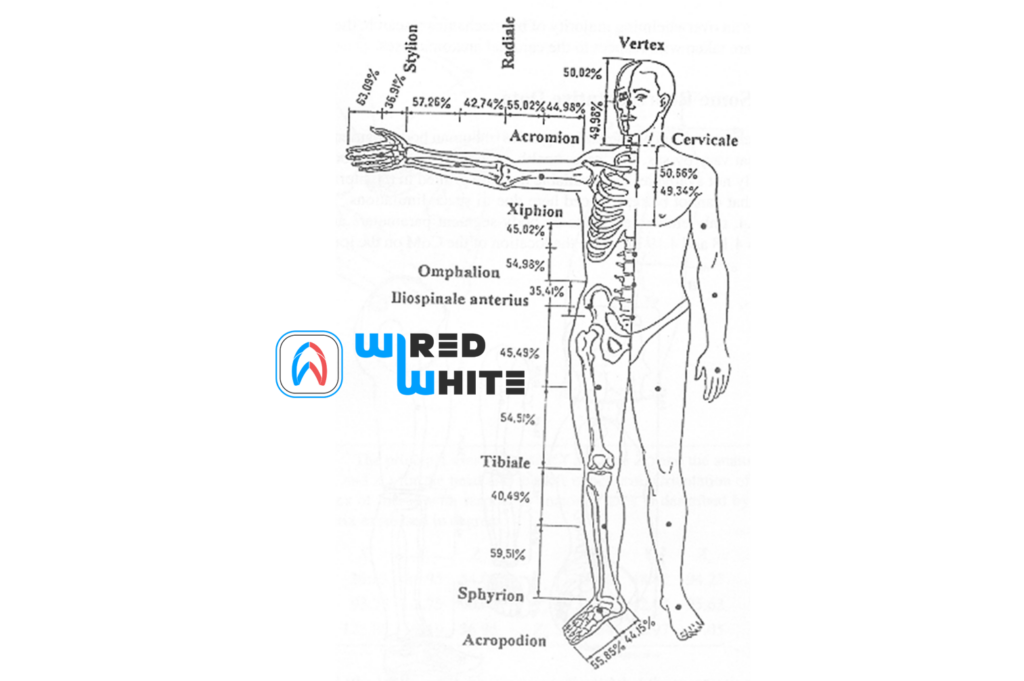
- Newton–Euler formulation for articulated systems;
- forward and inverse dynamics;
- kinematic and Jacobian-based analysis;
- Cauchy problem formulation for dynamic systems;
- contact-force and impulse modeling;
- nonlinear differential equations;
- actuator and drivetrain dynamics.
These methods are applied as part of an engineering workflow, not as isolated mathematical exercises. The result should support design choices, controller development, or validation planning.
Simulation-First Robotics Development
Simulation is used to answer questions that are difficult, risky, or expensive to answer only through physical testing.
We use dynamic simulation to investigate:
- what happens when payload, friction, or inertia differs from the initial assumption;
- whether actuators can meet torque and speed requirements;
- how a robot responds to sudden disturbances;
- whether a control strategy remains stable during contact events;
- where mechanical design limits affect achievable motion;
- which test scenarios should be prioritized before hardware validation.
A simulation-first workflow does not replace prototypes. It makes prototypes more purposeful.
Typical Robotics Systems and Use Cases
We support engineering work involving:
- bipedal and legged robotic platforms;
- 5-DOF and 7-DOF anthropomorphic robots;
- articulated robotic mechanisms;
- force-controlled drives;
- robotic test benches;
- custom motion systems;
- electromechanical prototypes;
- motion-control research and development projects;
- simulation environments for robot design validation.
If your system includes interacting mechanical, electrical, and control layers, we can help define a modeling and simulation approach that fits the project stage.
Tools and Engineering Environment
Tool selection depends on the system architecture, required model fidelity, and validation target. Our workflow can include:
- MATLAB and Simulink for dynamic modeling, control design, and algorithm validation;
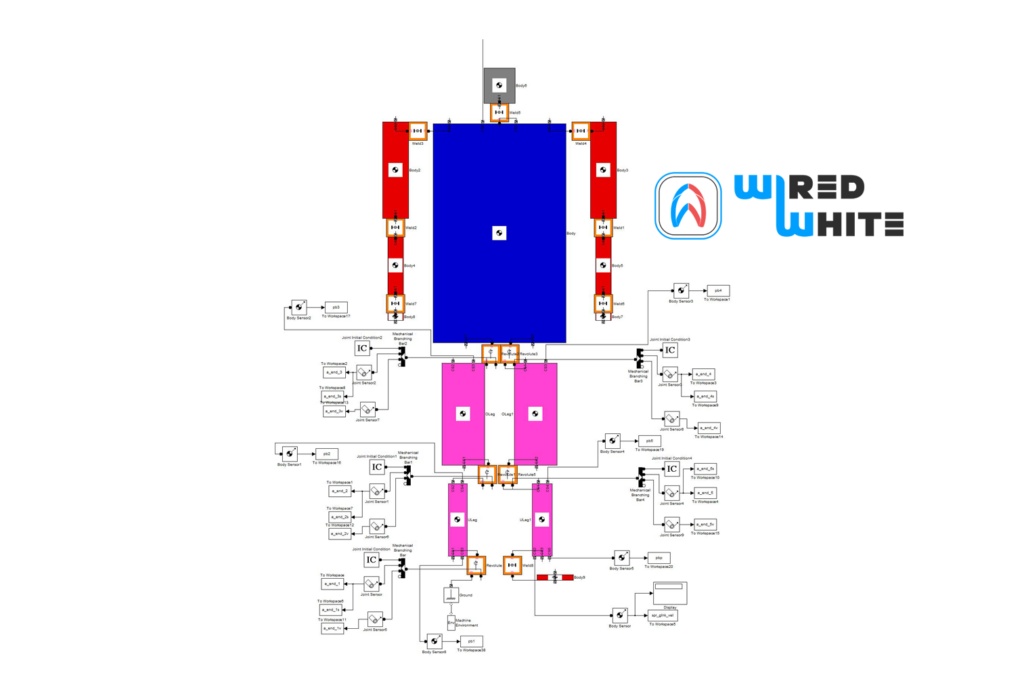
- Simscape Multibody for multibody mechanics and articulated-system simulation;
- Simscape Electrical and related environments for electromechanical drive behavior;
- CAD-based geometry and mechanism data where relevant;
- real-time and test-bench environments for controller validation;
- custom numerical models for specialized dynamic or control problems.
We focus on choosing tools that make engineering decisions clearer, rather than building unnecessarily complex models.
What You Receive
Depending on the scope, a robotics design and simulation project can deliver:
- a documented dynamic model of the robotic system;
- kinematic and dynamic analysis;
- actuator load, torque, and force requirements;
- motion-control architecture and simulation results;
- scenario-based stability and performance analysis;
- virtual-prototype findings and design recommendations;
- test-bench validation plan;
- technical documentation for internal engineering teams;
- a clear next-step roadmap for prototype development or control refinement.
Why Work with WiredWhite
WiredWhite supports companies, engineering teams, and technology ventures working on complex technical systems.
Our approach combines engineering analysis with practical project delivery:
- simulation linked to real design decisions;
- transparent communication and documented assumptions;
- cross-disciplinary work across mechanics, control, electrical systems, and software;
- support from concept development through validation;
- access to a network of engineering specialists for project-specific requirements.
We do not treat robotics simulation as a visual demonstration. We use it to reduce technical uncertainty and help teams move forward with stronger evidence.
We Are Supporting Businesses, Executives, and Innovators Worldwide
Freelance Agencies
Teams of Engineers
Start-ups
Companies
Trusted by









- Free consultation call
- Contact form
Partner with Us for Your Robotics Project
Speak directly with our experts to explore how we can help you model, simulate, and validate your robotics projects — with speed, precision, and full standards compliance.
Let’s move your ideas forward.
Explore All Our Business Services
We offer full-cycle engineering services ranging from small consulting projects to extensive R&D projects, where we support throughout the entire product development process.