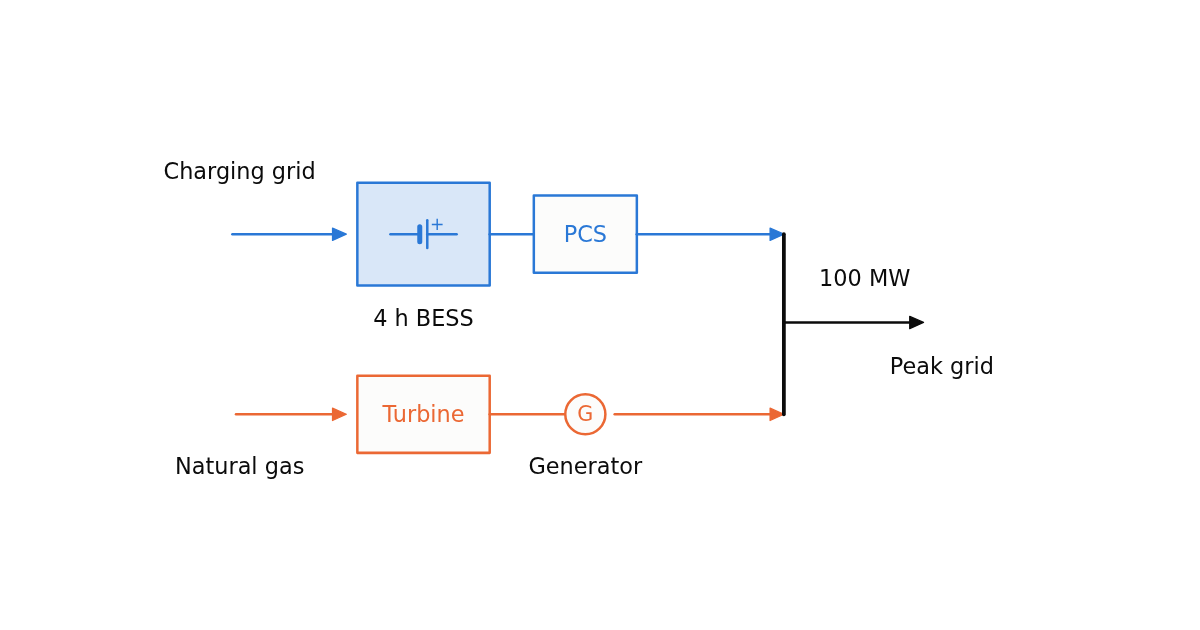
Compare four-hour battery storage with a gas peaker in $/kW-year and $/MWh. Model peak-event duration, charging losses, degradation, augmentation, and equal-service battery sizing.
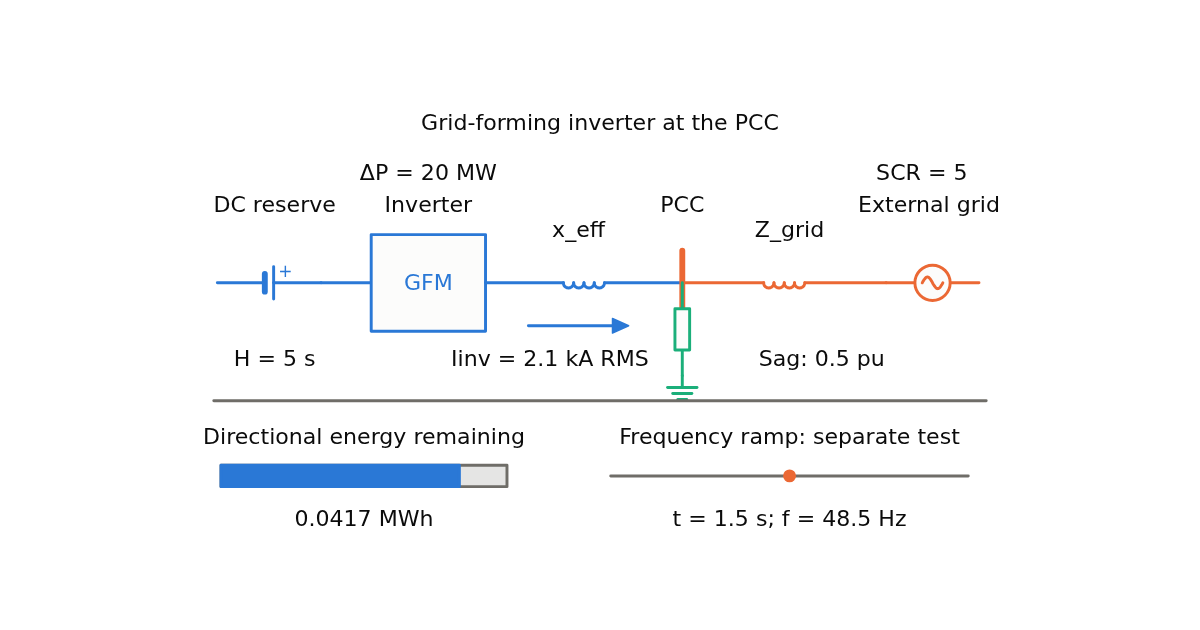
Calculate external-grid SCR, inverter fault-current limits and synthetic-inertia power and energy demand. Compare dispatch headroom and usable energy during a prescribed frequency ramp.
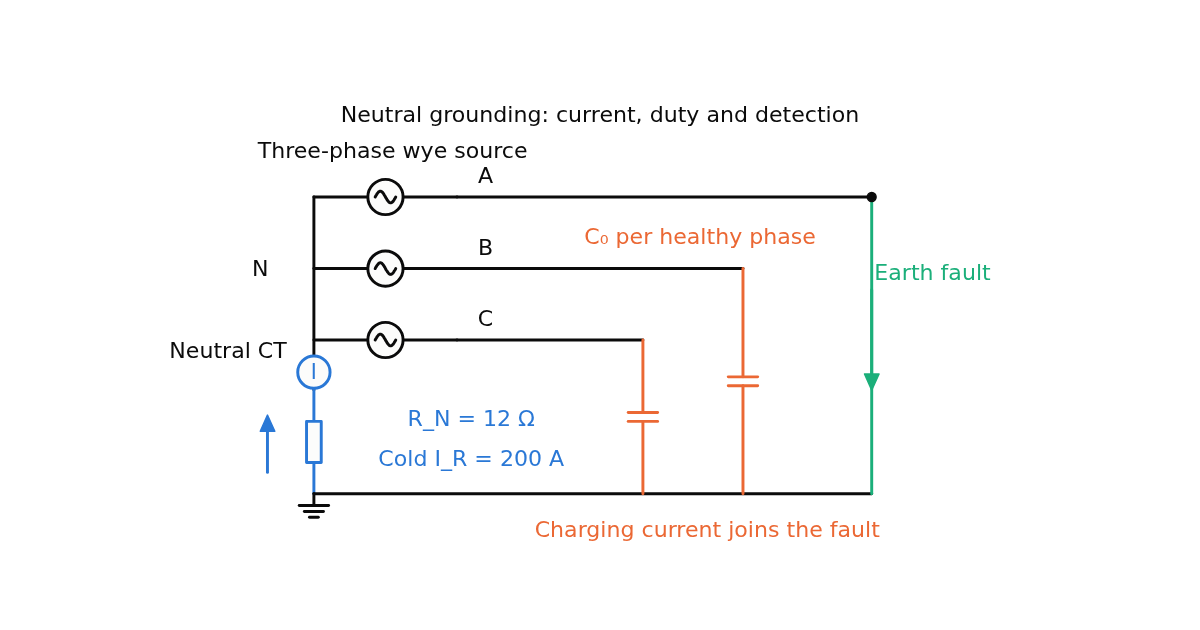
Size an NGR from fault current or assess an existing resistor. Check 3·I_c0, hot-current detection, short-time energy and relay grading—and compare with 400 A.
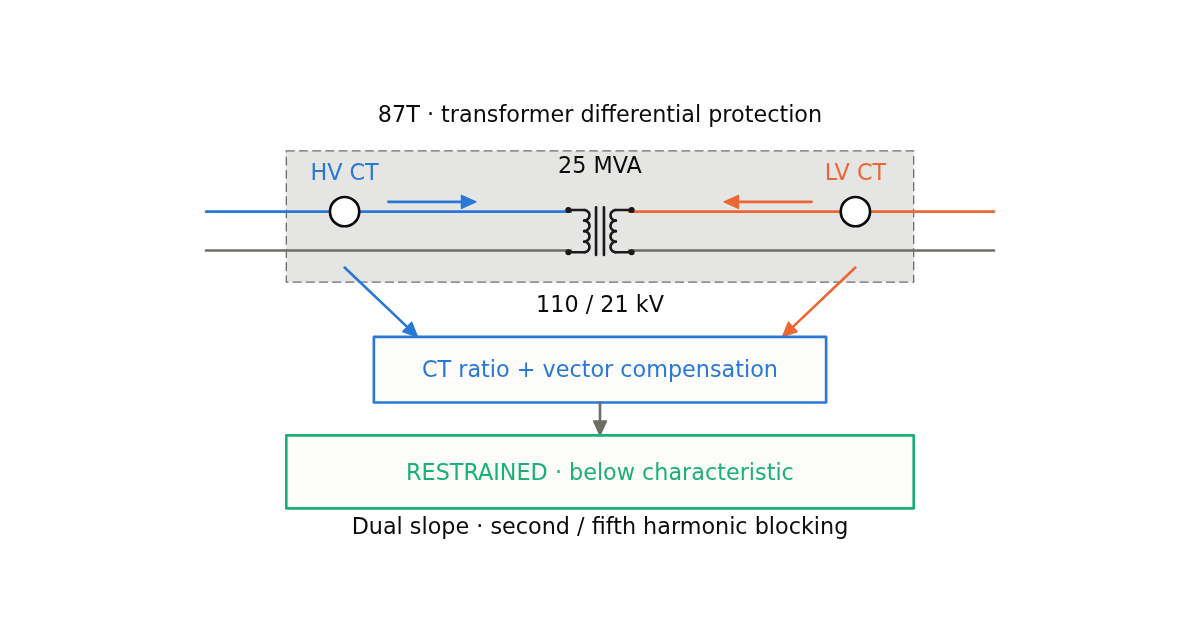
Match transformer CT ratios and vector-group phase shift, plot a dual-slope 87T characteristic, and check through faults, internal faults and harmonic blocking.
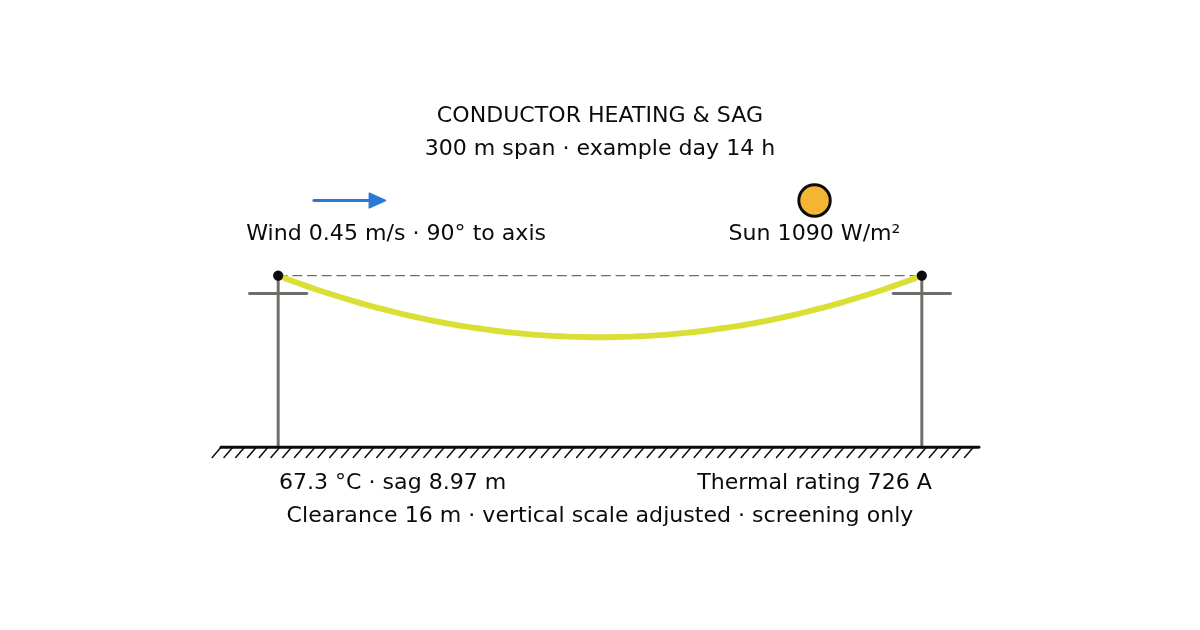
Estimate overhead conductor ampacity, temperature after a current step, and thermal sag from ambient temperature, wind and sun. Includes ambient-only comparisons and an animated example day.
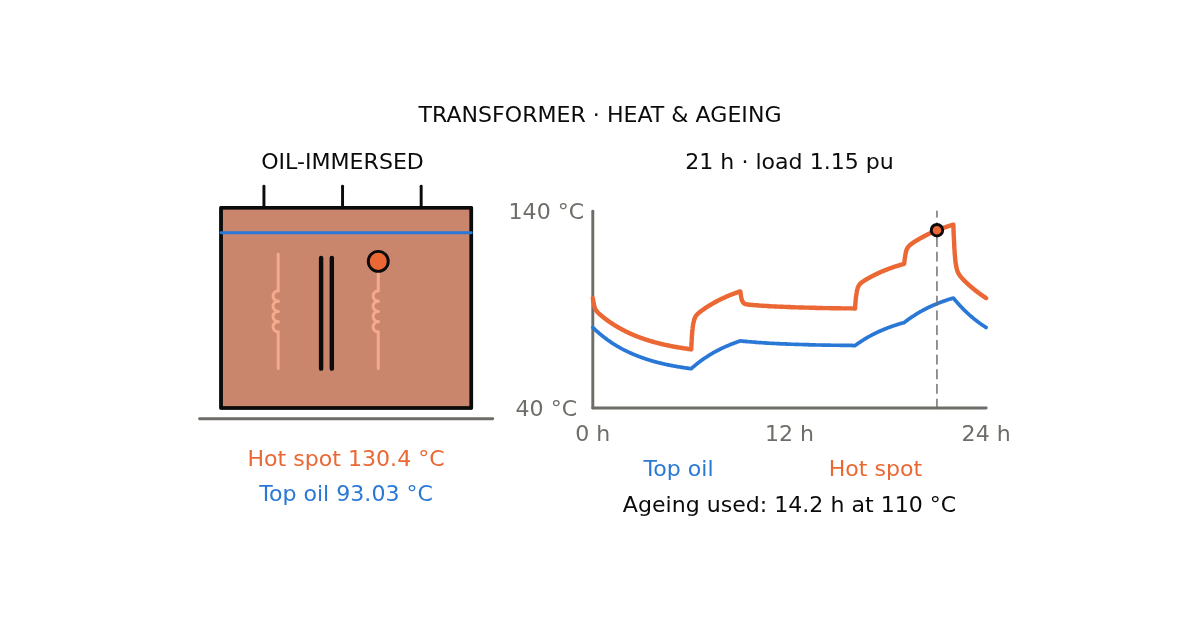
Model a 24-hour transformer load cycle, hot-spot temperature and insulation life use. Calculate harmonic loss factors and loss-based derating from a current spectrum.
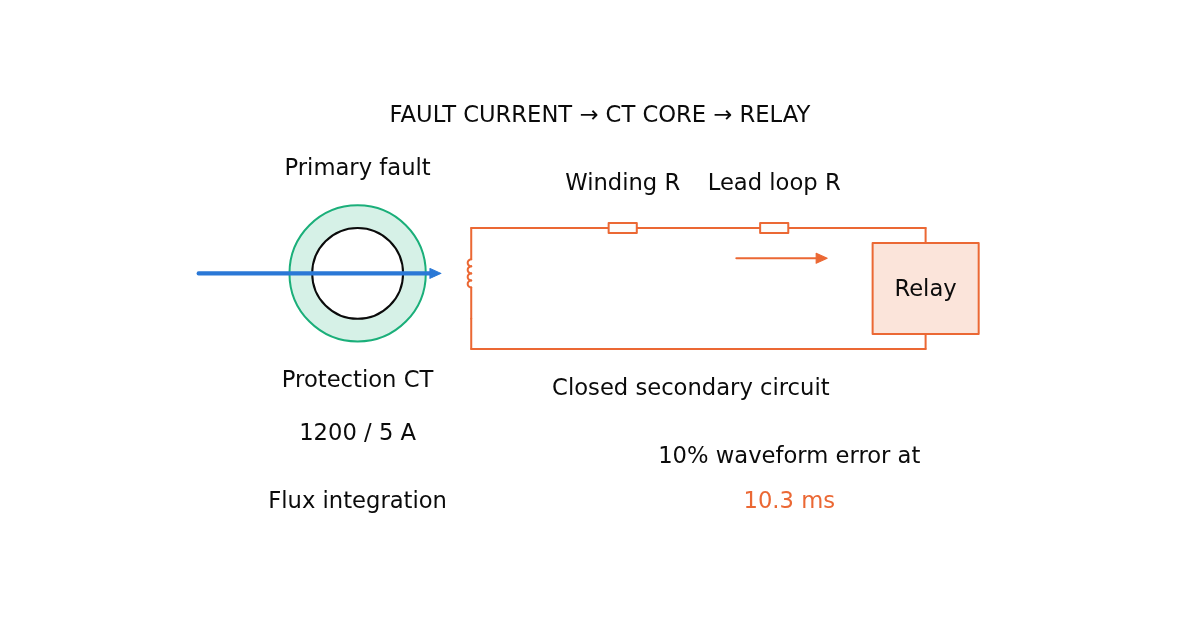
Estimate CT knee crossing and fault-current distortion with DC offset, burden and remanence. Animate core flux and compare the relay current with a one-cycle Fourier estimate.
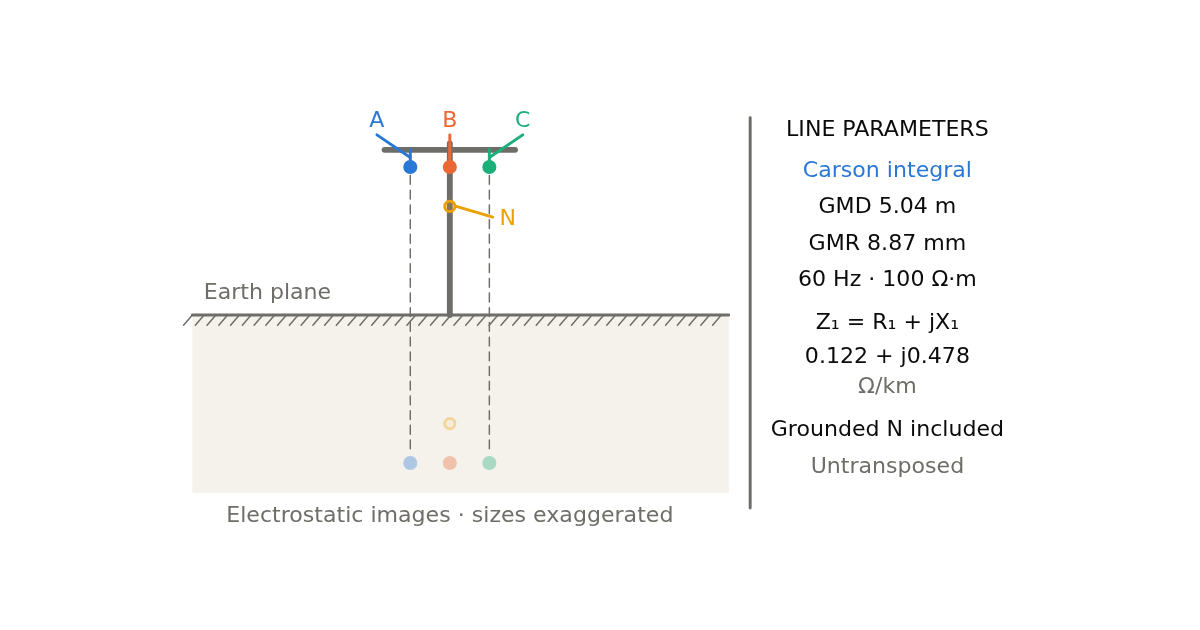
Calculate overhead-line R, L and C per km from conductor positions, bundles and soil resistivity. Inspect phase and sequence impedance matrices, with Carson earth return and neutral reduction.
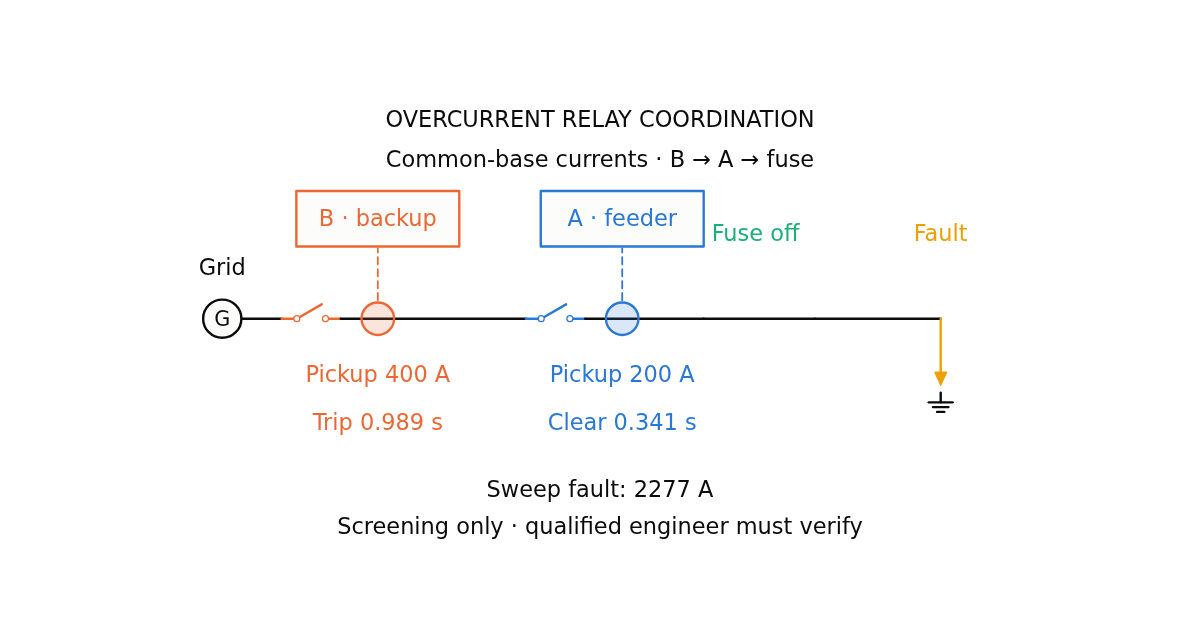
Plot IEEE and IEC relay curves with CT ratios, instantaneous trips and user fuse points. Screen grading margins and find a candidate upstream time dial and pickup interval.
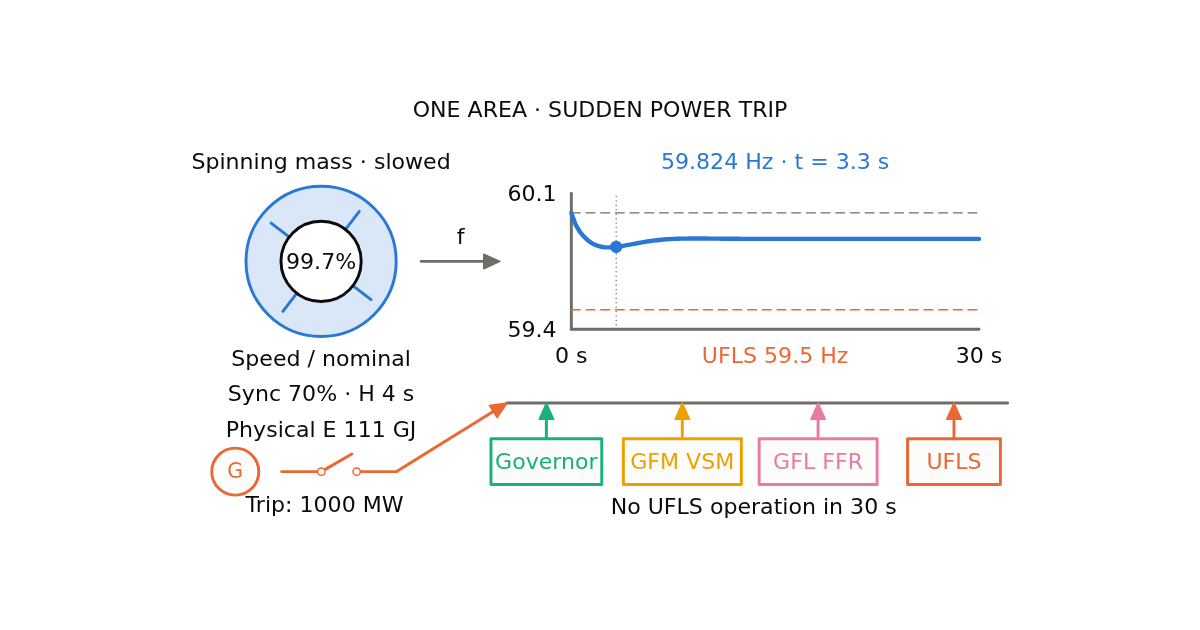
Simulate a single-area grid trip with synchronous inertia, GFM droop and virtual inertia, GFL fast response and UFLS. Compare RoCoF and nadir as synchronous share falls.