Online Mathematics Courses
Math courses for engineering and technical work.
- Derivatives, integrals, differential equations.
- Matrices, linear systems, eigenvectors.
- Numerical methods, probability, optimization.
Why Choose WiredWhite

 Approved by PhD Engineers
The quality of the online courses on our platform is important to us. Therefore, the content of the Online Courses offered on our platform are screened and approved by the Founder Team of WiredWhite, who are experienced engineers with PhD qualification.
 Tutoring Lessons
Our platform is dedicated to an excellent learning experience. Therefore, you can not only learn by yourself using our online courses, but you can also schedule Online Tutoring Lessons with our course instructors or any other engineering experts whose skills match your request.
 Learning Tools
Benefit from a seamless learning experience with our integrated tools such as online classrooms, chats, whiteboards, etc. Write private messages to tutors, schedule online calls using their booking calendar and make use of our integrated project management system.
 Built for Engineers
WiredWhite is an engineering and technology specialized platform. Besides online courses and a huge network of engineering professionals, you will find meaningful articles, webinars, job opportunities – everything you need for a successful and thriving career in engineering.
 Job Opportunities
Combine upgrading your engineering skills with finding exciting job opportunities. Just be active on the platform, gain new skills and become part of our industry projects.
This math is used to calculate loads, model systems, check results, predict failures, and optimize designs, though that's far from all it covers. Show more
Show more
Who Should Take These Courses?
The courses fit a fairly wide range of people:
- Students. Preparing for university or a technical program? The engineering math and math-for-CS modules give you the foundation those courses expect.
- Professionals. Finance, IT, data science, engineering — the material is built around applied outcomes, not abstract proofs.
- Beginners and career switchers. Core concepts get walked through step by step, no assumed background.
- Lifelong learners. If logic and structured thinking are your thing, that's exactly what you'll find here.
Career Opportunities in Mathematics
Solid math skills travel well across industries:
- Engineering — civil, mechanical, electrical
- Data science and analytics
- Software and AI development
- Finance and economics
- Research and education
- Architecture and design
- Scientific computing
Applied math and technical math both leave you with problem-solving habits that stay in demand.
What you will actually learn
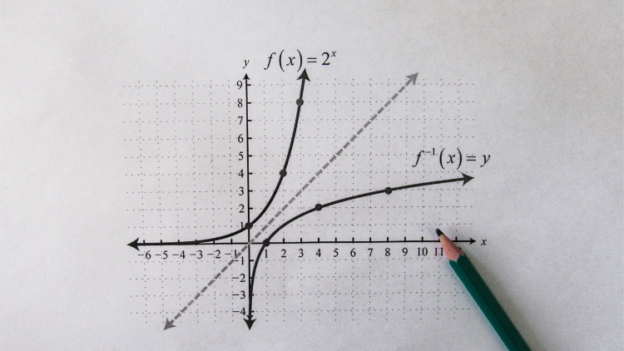
- Work through functions, derivatives, integrals, and differential equations.
- Work with matrices, linear systems, eigenvalues, eigenvectors.
- Apply numerical methods to approximate solutions — and judge how much error they carry.
- Model how the variables in a system depend on one another.
- Data analysis via probability distributions and statistical methods.
- Optimization problems: objectives, constraints, solutions.
- Use complex numbers and transforms in technical calculations.
Where it is used in practice
Engineering calculations
Forces, motion, energy consumption — whatever quantities come up in engineering systems.
Computer simulations
System behavior described in math before anything runs in software.
Data analysis
Measured data and experimental results processed with statistical methods.
Control systems
Differential equations and linear algebra for system dynamics and controller behavior.
Optimization
Parameter values chosen to fit, without violating technical constraints.
Scientific computing
Numerical solving when analytical solutions aren't practical.
Example tasks
- Compute a derivative or integral by hand and check it against a numerical estimate.
- Solve a linear system and plug the answers back in.
- Find the error in a matrix calculation and trace where it started.
- Read a graph of system behavior and mark where a value leaves its allowed range.
- Solve a differential equation, then confirm the answer actually works.
- Estimate the odds of a failure or defect from the data you have.
- Turn a real constraint into an optimization problem and pick the values that fit.
Top tutors for Mathematics





Related categories
Related articles
-
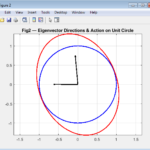
 A MATLAB Teaching Tool for Matrix Operations Visualizing Linear Algebra
- Facts about Finite Element Method (FEM)
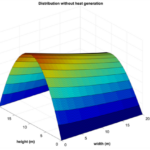
- Thermal Conductivity Analysis Using Finite Difference Methods in MATLAB
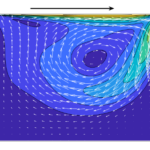
- High-Resolution CFD Analysis of Incompressible Flow in a Lid-Driven Cavity Using Explicit RK2 and SOR Techniques
- Simulation and Visualization of Quantum Wavepacket Dynamics using Crank-Nicolson and Split-Step Fourier Methods