Online Artificial Intelligence Courses
Machine learning, deep learning, computer vision. The specific topics vary across the AI courses, as do the tools and methods used in each one.
- Machine learning algorithms and neural networks
- Data processing and model development
- Model testing and performance evaluation
Why Choose WiredWhite

 Approved by PhD Engineers
The quality of the online courses on our platform is important to us. Therefore, the content of the Online Courses offered on our platform are screened and approved by the Founder Team of WiredWhite, who are experienced engineers with PhD qualification.
 Tutoring Lessons
Our platform is dedicated to an excellent learning experience. Therefore, you can not only learn by yourself using our online courses, but you can also schedule Online Tutoring Lessons with our course instructors or any other engineering experts whose skills match your request.
 Learning Tools
Benefit from a seamless learning experience with our integrated tools such as online classrooms, chats, whiteboards, etc. Write private messages to tutors, schedule online calls using their booking calendar and make use of our integrated project management system.
 Built for Engineers
WiredWhite is an engineering and technology specialized platform. Besides online courses and a huge network of engineering professionals, you will find meaningful articles, webinars, job opportunities – everything you need for a successful and thriving career in engineering.
 Job Opportunities
Combine upgrading your engineering skills with finding exciting job opportunities. Just be active on the platform, gain new skills and become part of our industry projects.
AI courses differ by the models they cover — from classical algorithms to neural networks — and by how much of the pipeline you build yourself. Practical training means loading a dataset, training a model, and checking where it fails. Show more
Show more
Machine Learning vs Deep Learning Courses
Machine learning covers decision trees, gradient boosting, support vector machines, clustering. Works on tabular data — spreadsheets, sensor logs, transaction records. Focus on feature engineering, not hardware.
Deep learning is neural networks with many layers. Handles images, video, audio, text. Requires more compute and more math.
Data fits in a spreadsheet → machine learning. Data is pixels, waveforms, or long text → deep learning.
What Computer Vision Courses Cover
- Image classification — label for a whole image
- Object detection — locate and label multiple objects in one frame
- Segmentation — split an image into regions
- Tracking — follow objects across video frames
- Pose estimation — map body or machine part positions
Prerequisites
- Programming basics — loops, functions, libraries
- Linear algebra and statistics — matrices, mean, variance, probability
- Data handling — reading CSV files, missing values, plotting
- Debugging — models fail often
No-code tracks drop the math. Technical tracks require you to implement algorithms yourself.
What you will actually learn
- Types of machine learning algorithms
- How neural networks process input data
- Training models on sample datasets
- Differences between classification and regression
- Model parameters and their effect on results
- Common problems with model accuracy
Where it is used in practice
Image and Video Analysis
Finding defects in product images, identifying objects in video, or sorting images by content.
Manufacturing
Machine learning models can flag unusual sensor readings that may indicate equipment problems.
Energy and Production Forecasts
Electricity consumption, production output, and equipment demand can all be estimated from past data.
Robot Vision
A robot needs to distinguish a component from the other objects in its camera view before it can pick it up.
Document Processing
AI can sort invoices, identify fields in forms, and route incoming requests to the right department.
Engineering Simulations
Predictions from a trained model can be checked against simulation results to see where the two differ.
Example tasks
- Classifying images with a trained neural network
- Predicting numerical values from historical data
- Comparing machine learning algorithms on the same dataset
- Identifying objects in images or video
- Finding patterns in experimental measurements
- Detecting anomalies in equipment sensor data
- Extracting structured information from text
- Comparing model predictions with simulation results
Top tutors for Artificial Intelligence





Tutors by skill
Related categories
Related articles
-
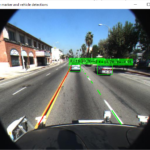 Real-Time Object Detection System especially Vehicle and Lane Detection using Yolo V4 algorithm Using MATLAB and Deep Learning
-
 CNN-Based Industrial Defect Detection with Texture Feature Analysis and Visual Explainability in Matlab
-
 Synthetic Data Generation and Ensemble Methods for Robust Fake News Detection Using Matlab