Online Internet of Things Courses
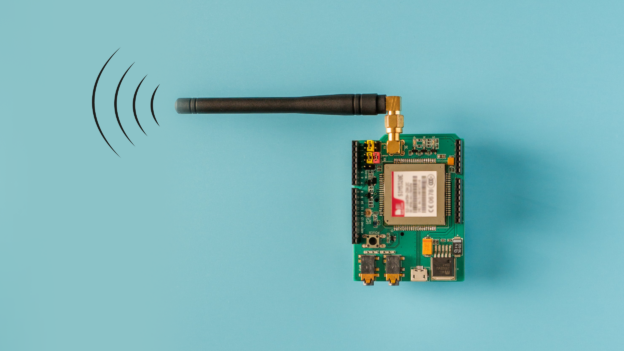
An IoT device has four parts: a sensor that measures something, a board that reads it, firmware that runs on the board, and a network link that carries the data out.
- Hardware and firmware: ESP32, Arduino, real code
- Wireless links: Wi-Fi, LoRa, MQTT in practice
- Sensors, data logging, remote monitoring
Why Choose WiredWhite

 Approved by PhD Engineers
The quality of the online courses on our platform is important to us. Therefore, the content of the Online Courses offered on our platform are screened and approved by the Founder Team of WiredWhite, who are experienced engineers with PhD qualification.
 Tutoring Lessons
Our platform is dedicated to an excellent learning experience. Therefore, you can not only learn by yourself using our online courses, but you can also schedule Online Tutoring Lessons with our course instructors or any other engineering experts whose skills match your request.
 Learning Tools
Benefit from a seamless learning experience with our integrated tools such as online classrooms, chats, whiteboards, etc. Write private messages to tutors, schedule online calls using their booking calendar and make use of our integrated project management system.
 Built for Engineers
WiredWhite is an engineering and technology specialized platform. Besides online courses and a huge network of engineering professionals, you will find meaningful articles, webinars, job opportunities – everything you need for a successful and thriving career in engineering.
 Job Opportunities
Combine upgrading your engineering skills with finding exciting job opportunities. Just be active on the platform, gain new skills and become part of our industry projects.
IoT development starts with picking a board and knowing what the device should measure or control. Then comes firmware, message passing over MQTT, and getting data to a server or cloud. Show more
Show more
Boards and sensors
ESP32 and Arduino are used in plenty of small IoT projects. The choice of sensor depends on what needs to be measured: temperature, humidity, pressure, current, or something else. I2C, SPI, and UART are common interfaces for connecting components to a board. Sensor datasheets are worth checking before wiring anything up, particularly for voltage requirements and supported communication modes.
Firmware
Most examples for ESP32 and Arduino use C or C++. The code reads sensor values and controls the connected hardware; more involved projects may also use interrupts, sleep modes, or OTA updates.
Networking
Wi-Fi is often enough for a device installed at home or in a building. Bluetooth is useful for nearby devices, while LoRa can cover longer distances with relatively little power. MQTT is a common option for sending readings to a broker, but the device still needs to handle dropped connections and reconnect when the network returns.
Practical side
Practical work covers the full process of getting an IoT device up and running. Depending on the course, this may involve:
- embedded programming,
- circuit assembly,
- sensor integration,
- wireless communication,
- cloud connectivity,
- data handling,
- testing,
- debugging,
and other aspects of IoT development.
Who it's for
Students who want to work with hardware, engineers moving into embedded work, developers who already build smart devices and want to go deeper, and teams that need to get an IoT product off the ground.
Where it leads
Roles include:
- IoT developer,
- embedded systems engineer,
- solutions architect,
- data analyst,
- security specialist,
- smart device designer.
The demand is there across manufacturing, logistics, healthcare, agriculture, and smart cities — but the courses don't promise a job, only the skills those roles ask for.
What you will actually learn
- Programming ESP32 and Arduino for specific tasks
- Reading temperature, pressure, and motion sensors
- Getting sensor data to a remote server
- Using MQTT to exchange messages between devices
- Working with Wi-Fi and Bluetooth connectivity
- Setting up data logging for connected hardware
- Tracking down faults in sensors and network connections
Where it is used in practice
Industrial monitoring
Sensors on equipment track temperature, pressure, vibration.
Smart buildings
Devices manage lighting, heating, ventilation, access.
Agriculture
Soil moisture sensors and weather stations tell you when to water and how the crop is doing.
Asset tracking
GPS and wireless sensors show where a truck is and whether it's loaded.
Energy management
Smart meters read how much power goes where and spot a meter running when nothing's on.
Remote equipment control
Operators check system status and change settings without driving to the site.
Example tasks
- Read a BME280 over I2C and print temperature to serial.
- Send a sensor reading to an MQTT broker every 10 seconds.
- Reconnect a dropped Wi-Fi link without rebooting the board.
- Run a pump from a relay when soil moisture drops below a threshold.
- Push new firmware to a device over the air.
- Log power usage from a smart meter once a minute.
- Drive an OLED screen with live readings from two sensors.
Top tutors for Internet of Things





Tutors by skill
Related categories
Related articles
-
 Smart Warehouse using CISCO Packet Tracer and IOT devices
- Model Reduction and Energy Optimization in Large-Scale Environmental Sensor Networks Using Matlab
- Revolutionizing Agriculture, The Complete Guide to Smart Irrigation Technology and Implementation Using Matlab
- Smart Bee Hive Monitoring System Using MATLAB, Activity Analysis, Anomaly Detection, and Colony Health Index Modeling
- Prototype of Arduino Controlled Musical Fountain using Sound Sensor with Proteus and Arduino software