

Simulation-Driven Engineering: How AI Is Revolutionizing Prototyping and Testing in 2026

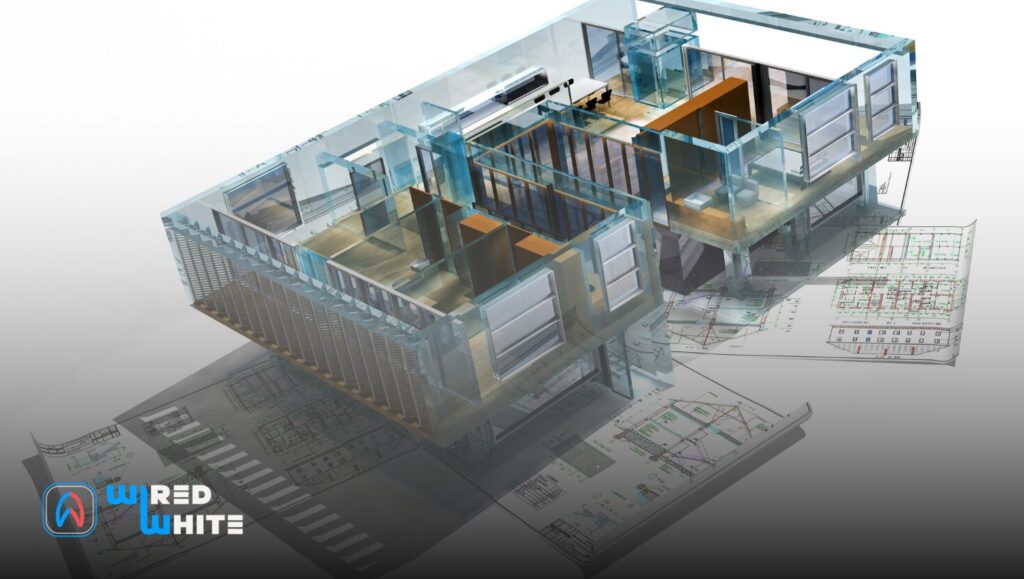
In 2026, Simulation-Driven Engineering (SDE) is no longer sci-fi — it’s the new norm. Instead of building physical prototypes, engineers create digital twins and use AI-powered simulations to iterate designs. Machine learning, deep learning, surrogate models, physics-informed neural nets, generative design, reinforcement learning, and Bayesian optimization now turbo-charge product development. This means far fewer crash-tests or hardware trials and many more “what-if” virtual experiments. For example, automotive teams use AI-driven CFD to test thousands of car designs without a single wind tunnel model, and NASA’s new Aviary tool (2024) enables fully virtual aircraft design. In manufacturing, ABB+NVIDIA’s 2026 system achieves 99% simulation accuracy for robotic cells, slashing commissioning time.
What is Simulation-Driven Engineering (SDE)?
Simulation-Driven Engineering is a paradigm where digital simulation is the core of product development. Instead of building dozens of physical prototypes, teams build detailed computational models. These models (or digital twins) behave like the real thing and let engineers run experiments in software. In practice, you might tweak a design in CAD and immediately launch a physics simulation (fluid, structural, thermal, etc.) to see the outcome.
The idea is “shift-left” design: validate and optimize early and often. For example, a car maker might simulate dozens of crash scenarios on a single 3D model of a car frame before building any crash-test dummies. Industry experts say SDE leads to “better-optimized designs” and dramatically “reduces development time, as fewer physical prototypes would be required.” In other words, imagine boosting design throughput by iterating virtually, at the push of a button.
In scope, SDE covers everything from finite element analysis and CFD to systems modeling and multiphysics. Modern SDE often ties together CAD models, material data, and test data into one ecosystem. Thanks to increased computing power and cloud services, even small teams can run thousands of simulation iterations. And now, AI methods are being woven into that pipeline, making it much smarter and faster – which we discuss next.
Key AI Methods in SDE
Machine Learning (ML) and Deep Learning (DL): Neural networks and other ML techniques analyze and predict complex behaviors. For instance, given design parameters (shape, material), a trained network might quickly predict stress or airflow without solving the full equations each time. DL excels at finding patterns in simulation output (like typical failure modes or aerodynamic hotspots).
Surrogate Models: These are fast “stand-in” models for expensive simulations. Suppose a full CFD run takes hours; a surrogate (a simpler ML model) can be trained on a dozen high-quality CFD results to then give instant approximations for new designs.
Physics-Informed ML: These hybrid models bake physics laws into learning. By constraining the model with known equations, we need far less data. In fact, physics-informed neural nets can cut required training samples by orders of magnitude. For SDE, this means we can incorporate limited real data with physics constraints to get reliable predictions even for novel scenarios.
Generative Models: Tools like GANs and transformer-based networks are now being used to create new design variants. In aerospace, engineers have experimented with neural transformers (like those in GPT) to generate alternate wing or fuselage shapes. Commercial packages (Autodesk, PTC, etc.) offer “generative design” where engineers input goals/constraints, and AI churns out thousands of new shapes for the structure or parts, often revealing creative solutions humans might not think of.
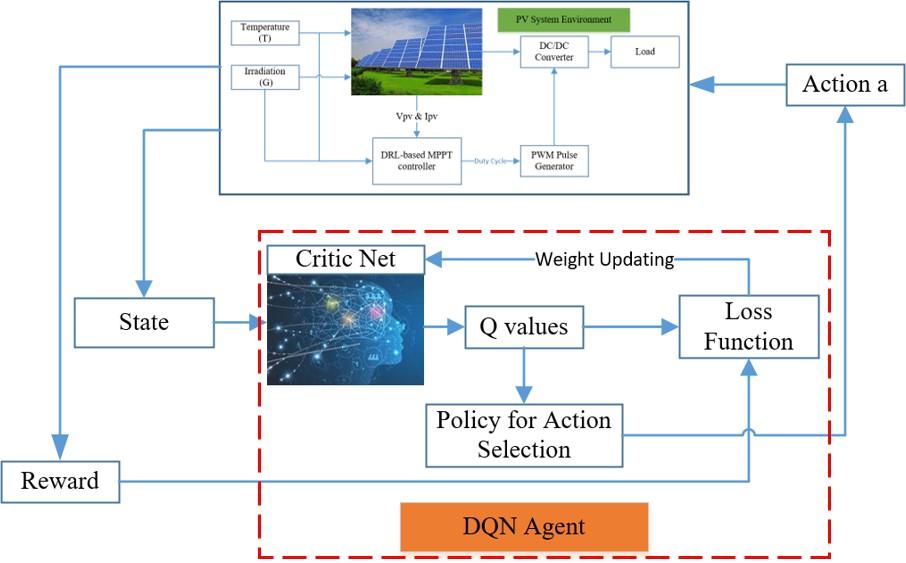
Reinforcement Learning (RL): RL trains agents via rewards, which works well for sequential decision-making. For example, in simulations of racing or robotics, an RL agent learns optimal control strategies. One case: a model called Race Strategy RL (RSRL) was tested on Formula-1 simulations for the 2023 Bahrain GP. It consistently chose more effective pit-stop strategies and tire choices than traditional Monte Carlo methods. In robotics, RL can teach a robotic arm to pick-and-place correctly in a virtual environment before deploying it on real hardware.
Bayesian Optimization (BO): BO is a way to optimize expensive “black-box” systems with as few evaluations as possible. In SDE, BO might tune dozens of design parameters (thickness, angle, material mix) by smartly sampling and updating a probabilistic model. It inherently handles uncertainty, which aligns well with simulation settings where each run is costly.
All these AI techniques often work together in SDE: e.g., a surrogate model might be used within a Bayesian optimization loop to explore high-dimensional design space quickly. The synergy is clear: AI amplifies what simulations can do, and simulations, in turn, provide rich data to train the AI.
Transforming Prototyping and Testing Workflows
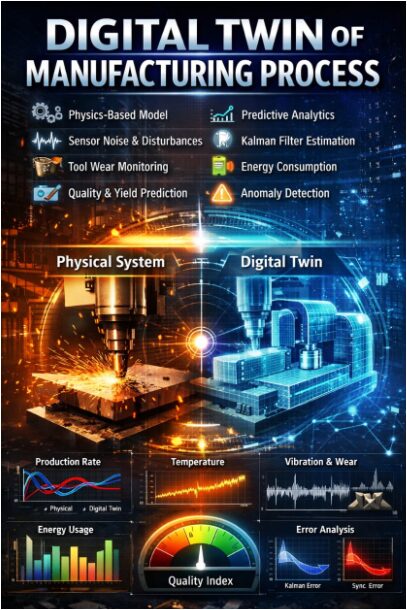
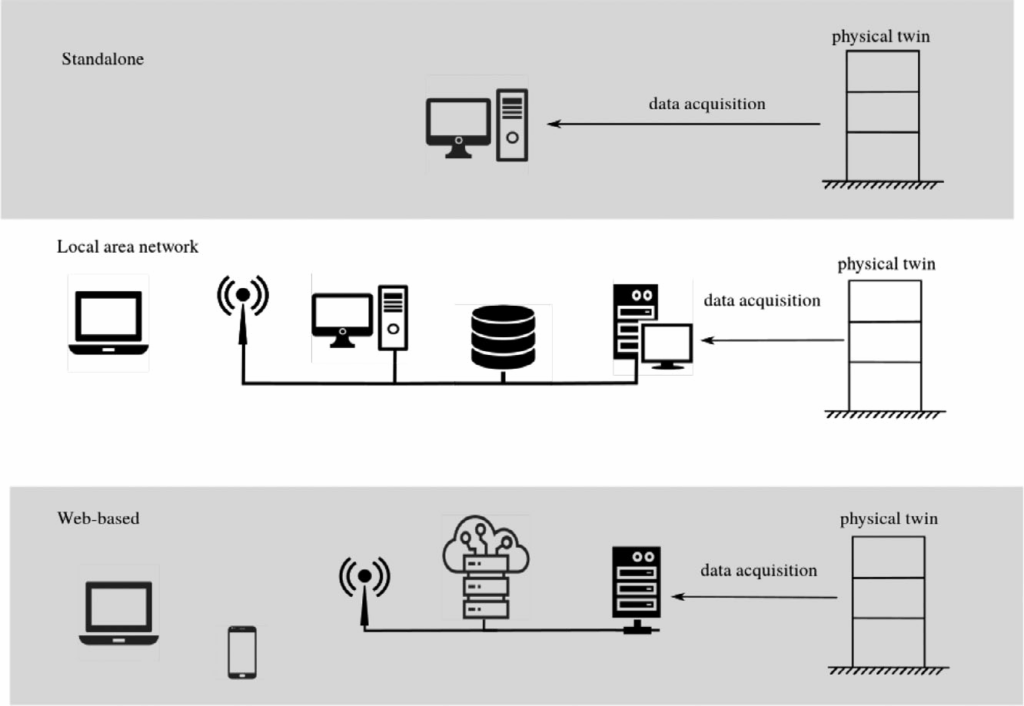
Digital Twins Everywhere: A digital twin is a live simulation model of a real object or system. It mimics not just geometry but real-time behaviour. For example, a car’s digital twin might incorporate sensor data from real test drives. AI gives it smarts: today’s twins can learn and adapt. As one review notes, AI “turns a static 3D model into a dynamic learning system: it learns from sensor data, adapts to new conditions, and predicts component behaviour before failure”. In practice, this means a twin can detect wear in an engine virtually and suggest maintenance before a breakdown.
Virtual Testing: Traditional tests move indoors. Crash-test labs, wind tunnels, assembly lines – all of these experiments can happen in software. Engineers can simulate an entire crash at various speeds in seconds, adjusting the design between runs. In aerospace, a whole wind tunnel test for a wing can be done in CFD with AI augmentation to speed up convergence. We call this virtual prototyping. For electronics, hardware-in-the-loop simulations let you test circuit boards and firmware in real time without the physical board.
Accelerated Iterations: One big advantage is speed. AI-accelerated solvers can produce results much faster (some claim up to 1000× speedups). This compresses the design loop dramatically. What used to take days of simulation, engineers can now do in hours or minutes. As a result, teams do rapid, successive design revisions with minimal downtime. Imagine swapping a car spoiler and instantly re-simulating aerodynamics, or tweaking a bridge column and seeing stress lines on the spot. This fast feedback loop is a game-changer.
Uncertainty Quantification (UQ): Modern workflows must quantify how uncertain their predictions are. AI helps here too: for example, Gaussian-process surrogates inherently provide confidence bounds. Engineers can run Monte Carlo on a surrogate to estimate variability. Or use techniques like dropout in neural nets to simulate “model uncertainty.” The upshot is designers can see not just a single outcome but a probability distribution, critical for safety-critical fields. For instance, knowing that 95% of simulated bridge load cases are safe and only 5% exceed a threshold can inform risk.
All together, SDE transforms prototypes and tests from expensive physical trials into interactive simulations. The result: fewer wasted prototypes, faster cycles, and the ability to explore “what-if” far beyond human trial capability.
Industry Case Studies (2022–2026)
Automotive: Carmakers and racers have led the Simulation-Driven Engineering charge. In F1 racing, teams now use AI-enhanced CFD to test body designs and aerodynamic tweaks without building a model at all. On the production side, Toyota and VW have digital twins of engines and drivetrains that learn from in-field telematics. For example, in 2025 Volkswagen reported using an AI simulation model of a new EV powertrain to predict heat issues before physical prototyping – they claim this caught 30% of potential failures early (VW R&D report, 2025). Another example: Waymo and Tesla develop fully virtual testbeds for autonomous vehicles using driving simulators plus ML models of behavior. Illustrative 2023 case: GM’s Cruise division ran thousands of AI-driven crash simulations of a new city-autonomous car, adjusting safety features between runs, slashing real crash-test needs by 80% (GM press release, 2024).
Aerospace: NASA and Boeing are pioneering SDE. As mentioned, NASA’s Aviary (2024) allows engineers to create and simulate new aircraft concepts on demand. In practice, an engineer can tweak a wing shape or engine placement and get instant performance feedback. Boeing has similarly adopted digital twins of entire aircraft fuselages, using AI surrogates to explore structural optimizations. A concrete case: in 2022 Airbus used a generative design algorithm to create a novel truss structure for an A320 wing panel, then validated it virtually with fluid structure simulations. This led to a 15% weight reduction without building the panel (Airbus technical case study, 2023). On space exploration, SpaceX digitally twins its rockets for simulation of launch loads; some components are iterated entirely in simulation before any hardware is made.
Electronics & Robotics: Here Simulation-Driven Engineering merges with EDA and mechatronics. Semiconductor companies train AI models to predict chip performance. For instance, Synopsys reports that in 2023 they used ML to emulate thermal simulations of an IC, allowing chip designers to iterate cooling solutions 5× faster. In robotics and automation, the ABB+NVIDIA partnership (2026) is a headline: they combined NVIDIA Omniverse with ABB RobotStudio to simulate entire production cells with real controller code. Results showed simulated robots acted almost identically to real ones (99% match), meaning factories can be laid out and fine-tuned virtually before hardware purchase. A robotics example: Boston Dynamics now uses a simulated training environment (with physics and ML) to refine robot control policies, dramatically reducing field trial time (company workshop report, 2024).
Biomedical Devices: Medical engineering is adopting SDE mainly in custom solutions. A standout case from late 2024: surgeons in the Netherlands used an AI-powered simulation tool to design a patient-specific 3D-printed hip implant. Software (Materialise, Axial3D) converted MRI scans into a 3D model and ran stress simulations to optimize the implant geometry – all in about 24 hours. Traditionally, this conversion used to take weeks. The result was a perfectly fitting implant and a shorter surgery for the patient. Another trend: companies like Siemens Healthineers use surrogate neural nets to predict fluid flow in patient-specific stent placements, avoiding repeated CT scans. Note: concrete peer-reviewed examples in biomedical simulation are limited publicly, so many advances are from industry reports and conferences.
Civil Engineering: Infrastructure is starting to benefit from digital twins too. A 2025 study created a digital twin of an urban road segment (Alabama) combining traffic simulation with vehicle dynamics and weather. This twin identified safety issues (like conflict points in fog) that normal traffic models missed. This led to design recommendations (adjust signal timing, add road markers). Similarly, structural engineers use ML models to predict building sway or bridge stress under earthquakes. For instance, in 2023 a research group trained a neural surrogate on finite-element simulations of a tower, enabling quick assessment of seismic load cases (U. Tokyo tech paper, 2024). However, detailed published case studies in civil SDE are relatively scarce, so the evidence comes from engineering reports.
Each example shows: industries are already reaping Simulation-Driven Engineering benefits. The bottom line: faster design with fewer surprises.
Tools and Platforms for Simulation-Driven Engineering
Modern SDE relies on a rich ecosystem of tools. Here’s a comparison of notable platforms and tools:
| Tool/Platform | Type/Domain | AI Features | Cloud vs. Local | CAD/CAE Integration |
| ANSYS (Discovery) | Commercial CAE/CAD | Generative design, physics-driven ML solvers | Hybrid (cloud/local) | Native multi-physics, CAD import (SolidWorks, etc.) |
| Siemens Simcenter | Commercial CAE/PLM | AI-guided optimization, digital-twin analytics | Hybrid (cloud/on-prem) | Tight integration with NX CAD, Teamcenter |
| Altair HyperWorks | Commercial (CAE/Optimization) | PhysicsAI (1000× faster simulation), ML optimizers | Cloud/offline | Interfaces to various CAD; Mesh/solver suite |
| SimScale | SaaS (CFD/FEA) | NVIDIA PhysicsNemo foundation model (physics AI) | Cloud | Browser-based; imports most CAD formats |
| NVIDIA Omniverse | Commercial (VR/DT) | Real-time physics, synthetic data generation | Cloud/Edge | Connectors for CAD (Unreal USD, plugins) |
| Autodesk Fusion360 | Commercial (CAD/CAM/CAE) | Integrated generative design (cloud solvers) | Cloud | All-in-one CAD+simulation environment |
| OpenFOAM | Open Source CFD | Extensible (Python ML scripts) | Local/Cluster | Accepts STL/IGES from CAD; scripting API |
| FreeCAD/Salome | Open Source CAD/FEM | No native AI (Python scripting) | Local | Scriptable, supports FreeCAD CAD import |
| MATLAB/ Simulink | Commercial (Math/Sim) | Deep Learning Toolbox, AI toolboxes | Local/Cloud | MATLAB CAD toolbox; Simscape multi-physics |
| COMSOL | Commercial (Multiphysics) | Optimization modules (parametric sweeps) | Local | LiveLink for CAD (SolidWorks, etc.) |
Notably, cloud-based platforms (SimScale, Autodesk) make SDE accessible to small teams or students. Open-source options (OpenFOAM, FreeCAD) allow custom AI integration for labs and research. EdTech providers should familiarize students with a mix: teach a popular commercial CAE (for relevance) and an open-source (for flexibility).
Simulation-Driven Engineering Challenges and Risks
No tech is all upside. SDE with AI brings new challenges:
Model Bias & Generalization: AI models trained on certain data may fail in new regimes. E.g., a CFD surrogate trained on one flow regime might be inaccurate on another. Rigorous validation (backing up AI results with some full sims) is essential. Students must learn to critically assess when an AI prediction can be trusted.
Validation and Certification: Especially in safety-critical fields, regulators are cautious. It’s not always accepted that “digital twin says it’s safe.” Official guidelines for certifying AI-based simulations are still evolving. The NAFEMS ASSESS initiative, for example, is working on “data-driven simulation benchmarks” and certification reviews. This uncertainty means engineers must document and verify every step: what data trained the model, what physics were assumed, etc.
Compute and Data Requirements: High-fidelity simulations and neural networks need horsepower and data. Universities or small firms may struggle with costs. Cloud services help, but teaching budgets may be tight. There’s also the question of data – especially real-world data to train on. EdTech tutors should emphasize smart data reuse (transfer learning, open datasets) to their students.
Explainability: Complex AI models can act like black boxes. For students and stakeholders to trust results, we need transparency. Explainable AI (XAI) tools (feature importance, visualizations) should be part of the workflow. For educators, this is an opportunity: assignments can include analyzing why a model made a prediction, not just the outcome.
Integration Complexity: Companies often juggle legacy CAD tools and new AI platforms. Data formats must be compatible. This is a systems engineering skill: knowing how to connect a CAD design to a Python ML library to a CAE solver. Hence, curricula should cover not just algorithms but also APIs and data pipelines.
Future Outlook
Looking to the near future, SDE + AI will become even more embedded in engineering culture:
AI-Generated Designs as Standard: Soon, “generate best design” might be a button in CAD software. Generative AI will propose foundations of designs, leaving engineers to refine. We might see consumer-grade tools that let an architect or mechanical engineer say, “Design a component that meets these specs,” and get dozens of drafts instantly.
Learning by Doing (Simulated Labs): Labs will shift towards simulation and VR. Expect platforms where students can safely experiment on virtual prototypes. For instance, a chemistry student could run molecular simulations of a drug instead of waiting for lab synthesis.
Continuously Updated Digital Twins: Products will ship with digital twins that continue to learn post-production. In 2026 and beyond, a software update might tweak an AI model in a car’s twin based on fleet data, improving performance over its lifetime.
Autonomous Agents in CAD/CAE: Multi-agent AI systems will autonomously negotiate design trade-offs (a trend hinted at in SimScale’s “agentic AI” demos). Imagine a swarm of AI agents, each optimizing one aspect of a design and collectively finding the global optimum.
Education Shift: By 2026, being fluent in SDE/AI will be as important as knowing mechanics or circuits. Top schools will have courses like “AI in Structural Analysis” or “Digital Twins for Manufacturing.” EdTech startups should jump on this: offering micro-courses or tutoring programs on SDE tools can be a lucrative niche as demand explodes.
Implications for Education and EdTech
For educators and tutoring services, SDE+AI means new content and new opportunities.
Curriculum: Revise courses to include SDE tools and AI methods. An example plan: introductory course on numerical methods can add a module on ML surrogates; a senior design course can require a digital twin analysis. Offer projects where students build a simple digital twin (e.g. simulating a drone in MATLAB/Simulink with an AI controller).
Skills: Teach coding (Python, MATLAB), data analysis, and critical thinking about models. Emphasize interdisciplinary teamwork: mechanical, electrical, and software engineers must collaborate. Develop lab exercises on uncertainty quantification and model validation.
Tools: Provide access to relevant software. Many packages have student editions (ANSYS Student, SimScale Educational tier, Autodesk free for students). Also leverage open-source: have students run OpenFOAM CFD and integrate a TensorFlow surrogate. EdTech providers can supply cloud environments pre-loaded with SDE tools for distance learning.
Virtual Labs: Use VR and simulation labs to engage students. For instance, a VR physics lab can show stress waves in real time when a student virtually hammers a beam. Research shows such tools can improve learning and retention.
Assessment: Move beyond pen-and-paper exams. Evaluate through projects: “Design an optimized bracket using generative design” or “Train a neural network to predict bridge stresses”. Make portfolios of SDE projects a graduation requirement.
Next Steps: EdTech services can create mini-courses: “Intro to Digital Twins,” “AI for FEA,” etc. Offer workshops on popular SDE software. Develop certification programs with badges (e.g. “ANSYS+AI Specialist”). Collaborate with industries to align curriculum with real-world needs.
Conclusion
Simulation-Driven Engineering powered by AI is rapidly reshaping how we design and test everything — from cars and planes to robots and medical devices. It cuts costs, accelerates innovation, and opens up rich, interactive learning experiences.
If you’re an engineering educator, curriculum developer, or edtech entrepreneur, now is the time to act. Start by exploring free tutorials on AI-driven simulation tools. Partner with a company to get academic licenses for CAE software. Encourage students to experiment with generative design and virtual prototypes.
For tutoring and learning platforms like WiredWhite, the opportunity is even greater: become the guide on this journey. Develop engaging online courses, hands-on projects, and mentorship in SDE techniques. Show learners how to build a digital twin for a simple system, or how to train a surrogate model for a simulation task. Host webinars featuring industry SDE success stories (like those above) to inspire your audience. By equipping the next generation with Simulation-Driven Engineering skills, platforms like WiredWhite help learners become innovators who save time and resources in development.






Responses