

Python for Engineering Students: Top Projects to Build in 2026

Table of Contents
- Engineering Thinking Through Code: Why Projects Matter More Than Theory
- Engineering Calculation Tool with Graphical Interface
- Simplified Finite Element Analysis (FEA) Solver
- Automation System for Engineering Calculations and Reports
- Engineering Data Visualisation and Analytics Dashboard
- IoT-Based Engineering Monitoring System
- Predictive Maintenance Using Machine Learning
- CFD Post-Processing and Flow Analysis Tool
- Digital Twin Prototype for Engineering Systems
- CAD Automation and Parametric Design Systems
- AI-Powered Engineering Assistant
- Conclusion: Python as a Bridge Between Theory and Real Engineering
In 2026, Python has become a core part of modern engineering workflows across mechanical, civil, electrical, aerospace, and industrial domains. From simulation and automation to digital twins and AI-driven systems, Python is now deeply embedded in how engineers design, analyse, and optimise real-world systems.
What makes Python particularly powerful is its ecosystem. Libraries like NumPy, SciPy, Pandas, Matplotlib, and Scikit-learn allow engineers to move from theoretical equations to fully functional computational models within hours. On top of that, integration with tools like ANSYS, Abaqus, MATLAB, SolidWorks APIs, and industrial IoT systems has made Python a bridge between academic engineering and real industrial applications.
However, there is a major gap in how many engineering students approach Python. Most focus on syntax, tutorials, or small scripts, but struggle to apply it to real engineering problems. In practice, employers are not interested in whether you can loop through arrays or print outputs. They care about whether you can build systems that simulate physical behavior, automate workflows, and extract insights from data.
This is why project-based learning is critical. The fastest way to become proficient in Python as an engineer is to build real, structured, engineering-oriented projects that replicate industrial problems.
Engineering Thinking Through Code: Why Projects Matter More Than Theory
Traditional engineering education often separates theory from implementation. Students learn physics, mechanics, thermodynamics, or electronics in isolation, without fully connecting these concepts to computational tools.

Python changes this dynamic completely.
When you write a program that calculates stress distribution in a beam, simulates fluid flow, or models a dynamic system — you are implementing physical reality in computational form. This shift forces you to understand the underlying mechanics at a much deeper level.
More importantly, it develops a mindset that modern engineering companies actively look for: the ability to translate physical systems into algorithms.
This is the real value of Python in engineering: computational thinking applied to real systems.
Engineering Calculation Tool with Graphical Interface
One of the most effective starting projects for engineering students is building a dedicated engineering calculation tool with a graphical user interface (GUI).
Unlike a simple calculator, this type of application is designed to handle real engineering formulas and workflows. For example, it can compute structural loads, heat transfer coefficients, fluid flow parameters, or material stress and strain relationships.
The key engineering value of this project is not the formulas themselves, but the system design behind them. You must decide how to structure calculation modules, how to separate logic from interface, and how to ensure accuracy and scalability.
By using frameworks such as Tkinter or PyQt, students gain experience in building software that resembles internal engineering tools used in real companies.
Simplified Finite Element Analysis (FEA) Solver
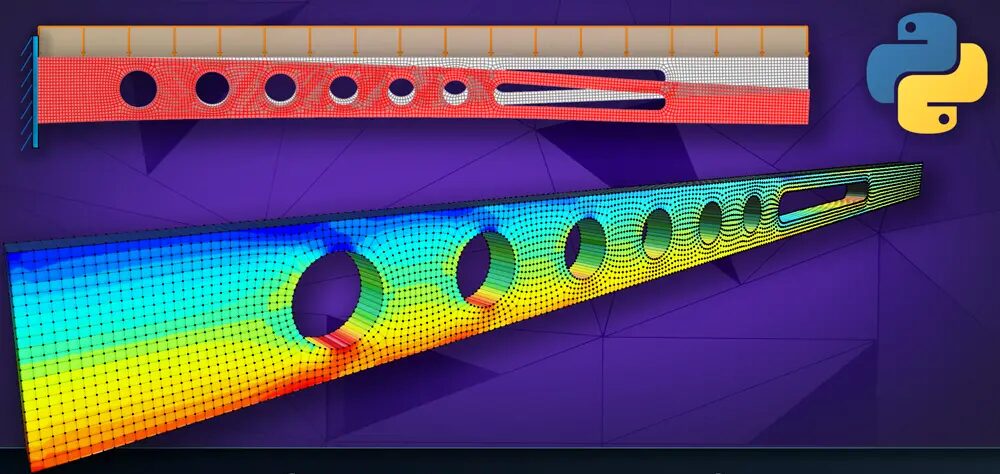
Finite Element Analysis is one of the most important computational methods in engineering. It is widely used in structural analysis, heat transfer, and mechanical design.
Commercial tools like ANSYS and Abaqus perform these calculations automatically, but understanding how they work internally is what separates basic users from advanced engineers.
Building a simplified FEA solver in Python is one of the most valuable educational projects in engineering.
In this project, students implement:
- Discretisation of a structure into finite elements
- Assembly of stiffness matrices
- Application of boundary conditions
- Solution of linear equation systems
- Visualisation of stress or displacement fields
Python’s NumPy and SciPy libraries make matrix operations efficient, while Matplotlib allows visualisation of results.
Even a basic 1D or 2D implementation provides deep insight into numerical methods and structural mechanics. It transforms FEA from a “black box” into a fully understandable system.
Automation System for Engineering Calculations and Reports
In real engineering environments, a significant amount of time is spent on repetitive tasks: recalculating designs, updating parameters, generating reports, and verifying results.
Python is extremely effective in automating these workflows.
A strong engineering project in this category involves building a system that can:
- Automatically evaluate multiple design scenarios
- Perform batch calculations for structural or mechanical systems
- Generate formatted engineering reports in PDF or Excel
- Visualise comparative performance between design options
This type of project introduces students to engineering productivity optimization. Instead of solving a single problem, you design a system that solves entire classes of problems automatically.
This is exactly how modern engineering teams increase efficiency at scale.
Engineering Data Visualisation and Analytics Dashboard
Modern engineering systems generate massive volumes of data — from sensors, simulations, experiments, and industrial processes.
Raw data alone is not useful unless it can be interpreted effectively.
Python allows engineers to transform raw datasets into meaningful visual insights using tools like Matplotlib, Plotly, Dash, and Streamlit.
A well-designed project in this category may include:
- Real-time data visualisation dashboards
- Interactive graphs for simulation outputs
- Heatmaps for physical field distributions
- Performance monitoring systems for industrial equipment
The key skill developed here is not coding, but interpretation. Engineers must learn to understand what data actually means in physical terms.
Visualisation is what bridges computation and decision-making.
IoT-Based Engineering Monitoring System
The integration of physical systems with digital analysis is one of the defining trends of modern engineering.
Python plays a key role in Internet of Things (IoT) systems, especially in data acquisition and processing.
A typical engineering IoT project involves connecting sensors (using Arduino, Raspberry Pi, or ESP32) to a Python-based system that processes and visualises real-world data.
Applications include:
- Temperature and pressure monitoring
- Structural vibration analysis
- Energy consumption tracking
- Environmental condition monitoring
This type of project combines hardware engineering, software development, and data analysis into a single system.
It is one of the closest representations of real industrial engineering workflows.
Predictive Maintenance Using Machine Learning
Predictive maintenance is one of the most important applications of artificial intelligence in engineering.
Instead of reacting to equipment failures, engineers use data to predict when failures are likely to occur.
Python enables this through machine learning libraries such as Scikit-learn, TensorFlow, and PyTorch.
A typical project includes:
- Collecting sensor data from machines
- Cleaning and preprocessing time-series data
- Training models to detect anomalies
- Predicting equipment failure or degradation
This approach is widely used in manufacturing, aviation, and energy industries.
It represents a shift from reactive engineering to proactive engineering.
CFD Post-Processing and Flow Analysis Tool
Computational Fluid Dynamics (CFD) simulations generate extremely large datasets that require significant post-processing.
While the simulation itself is performed in specialised software, Python is widely used to analyse and visualise results.
A CFD post-processing project typically includes:
- Importing simulation output data
- Extracting velocity, pressure, and turbulence fields
- Generating contour and vector plots
- Automating performance comparisons between designs
Libraries like PyVista enable 3D visualisation of flow fields, making complex fluid behavior easier to interpret.
This type of project is especially valuable in aerospace and mechanical engineering fields.
Digital Twin Prototype for Engineering Systems
Digital twin technology represents one of the most advanced engineering concepts in 2026.
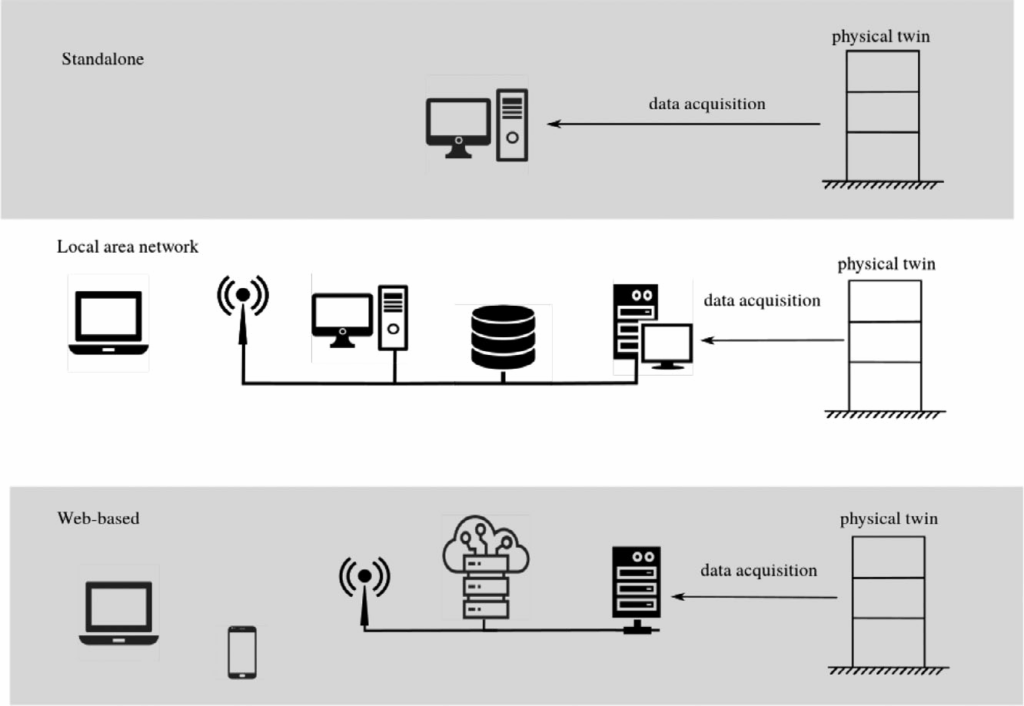
A digital twin is a virtual model of a physical system that continuously updates using real-time data.
Using Python, students can build simplified digital twin systems that:
- Simulate physical behavior of equipment
- Integrate live sensor data
- Update system state in real time
- Predict future performance based on current conditions
This combines simulation, data processing, and system modeling into a single framework.
Digital twins are now widely used in manufacturing plants, smart cities, and energy infrastructure.
CAD Automation and Parametric Design Systems
Computer-Aided Design (CAD) is a core part of engineering design processes. However, manual modeling can be time-consuming and repetitive.
Many modern CAD platforms support Python APIs, allowing engineers to automate design tasks.
A strong project in this area includes:
- Generating parametric 3D models
- Automating repetitive design modifications
- Running optimisation loops on geometry
- Producing engineering drawings automatically
This transforms CAD from a manual design tool into a programmable system.
It is one of the most practical skills for mechanical and industrial engineers.
AI-Powered Engineering Assistant
One of the most advanced and forward-looking projects is the development of an AI-based engineering assistant.
This system combines natural language processing with engineering knowledge and computational tools.
Such an assistant can:
- Explain engineering concepts
- Solve equations and perform calculations
- Summarize simulation results
- Assist in report generation
- Provide design recommendations
In essence, it acts as an intelligent layer on top of engineering workflows.
As AI continues to integrate into engineering systems, this type of project will become increasingly relevant. Check out our AI Engineering Assistant chat in the left corner of this page to see how this works in real life.
Conclusion: Python as a Bridge Between Theory and Real Engineering
Python has fundamentally changed how engineering is practiced and learned. Now it is a computational environment for solving real-world engineering problems.
Students who limit themselves to syntax and small exercises will struggle to transition into industry roles. In contrast, those who build real engineering systems — simulation tools, automation frameworks, data platforms, and AI-assisted engineering applications — gain a significant advantage.
The future of engineering belongs to those who can combine physical intuition with computational implementation. Python is one of the most powerful tools enabling that transition.
If you want to go beyond self-study, WiredWhite also offer Python tutors for engineering students who can help you build real projects, understand core concepts faster, and move from tutorials to industry-level engineering thinking.










Responses