

Design and Performance Analysis of a Multi-Elevator Control System Through MATLAB-Based Dynamic Simulation

Author : Waqas Javaid
Abstract
The increasing demand for efficient vertical transportation in modern high-rise buildings has led to the development of intelligent elevator control systems capable of managing multiple elevators simultaneously. This study presents an advanced Multi-Elevator Control System modeled and simulated in MATLAB to improve passenger service efficiency, reduce travel time, and optimize energy consumption [1]. The proposed system employs a dynamic elevator dispatching strategy that assigns incoming floor requests to the most suitable elevator based on proximity and availability. A real-time simulation environment was developed to analyze elevator movement, floor servicing behavior, utilization rates, and cumulative energy consumption. Multiple performance metrics, including average elevator position, total travel distance, and operational efficiency, were evaluated throughout the simulation period [2]. An animation module was incorporated to visualize elevator operations within a multi-floor building environment. The results demonstrate effective request allocation and balanced workload distribution among elevators, leading to improved system responsiveness [3]. Furthermore, the simulation provides valuable insights into elevator traffic patterns and resource utilization under varying demand conditions. The developed framework can serve as a foundation for future research on intelligent building automation and smart transportation systems [4]. Overall, the study highlights the effectiveness of MATLAB-based simulation for designing and evaluating advanced elevator control strategies.
Introduction
The rapid growth of urbanization and the increasing construction of high-rise buildings have significantly increased the demand for efficient vertical transportation systems. Elevators play a critical role in modern residential, commercial, and industrial buildings by facilitating the movement of people and goods between floors.
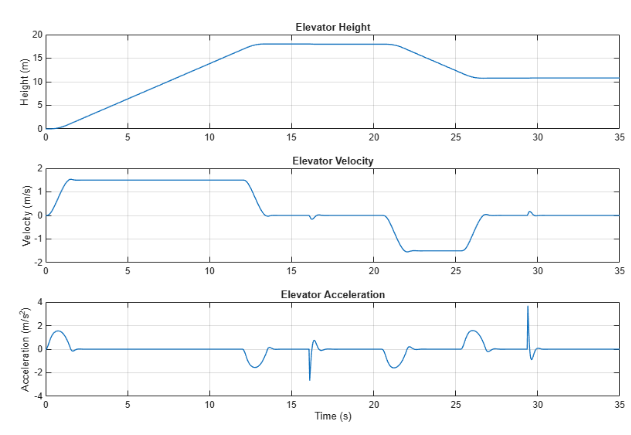
Figure 1: Elevator Motion Characteristics Showing Height, Velocity, and Acceleration Profiles
Figure 1 represents the building heights and occupancy levels continue to rise, traditional elevator control methods often struggle to maintain acceptable service quality, leading to increased waiting times, congestion, and energy consumption [5]. To address these challenges, advanced multi-elevator control systems have been developed to improve operational efficiency and passenger satisfaction. These systems utilize intelligent dispatching strategies to coordinate multiple elevators and allocate service requests effectively [6]. The integration of simulation tools enables researchers and engineers to analyze elevator performance under various traffic conditions before real-world implementation. MATLAB provides a powerful platform for modeling, simulation, visualization, and performance evaluation of complex control systems. In this study, an advanced Multi-Elevator Control System is developed and simulated using MATLAB to investigate elevator behavior in a multi-floor building environment [7]. The proposed model incorporates dynamic request generation, elevator assignment mechanisms, movement control, and energy tracking functions. The simulation evaluates key performance indicators such as average elevator position, utilization rate, travel distance, and energy consumption [8]. A real-time animation framework is also included to visualize elevator movements and system operations. The elevator dispatching algorithm assigns incoming requests to the nearest available elevator, reducing unnecessary travel and improving response times. The developed system aims to achieve balanced workload distribution among elevators while maintaining efficient service delivery. Performance data collected during the simulation provide valuable insights into system effectiveness and operational characteristics. Furthermore, the study demonstrates how simulation-based approaches can support the design and optimization of intelligent building transportation systems [9]. The results contribute to the understanding of elevator traffic management and resource allocation in complex environments. The proposed framework can be extended to incorporate advanced optimization techniques, artificial intelligence algorithms, and predictive control strategies [10]. Such enhancements have the potential to further improve passenger comfort, reduce operational costs, and increase energy efficiency. Therefore, this research highlights the importance of MATLAB-based simulation as a practical tool for analyzing and improving modern multi-elevator control systems.
1.1 Background of Elevator Systems
The rapid expansion of urban populations has increased the construction of multi-story residential, commercial, and industrial buildings. Efficient vertical transportation has become a critical requirement in these structures [11]. Elevators provide a convenient means of moving people and goods between floors. As building heights continue to increase, the demand for intelligent elevator management systems grows significantly. Therefore, advanced elevator control strategies are essential for modern infrastructure.
1.2 Importance of Elevator Systems
Elevator systems are among the most important components of high-rise buildings. They directly influence passenger comfort, accessibility, and building efficiency [12]. Poor elevator performance can lead to long waiting times and passenger dissatisfaction. Effective elevator management improves overall building operations and user experience. Consequently, elevator control has become a major research area in smart building technologies.
1.3 Challenges in Elevator Operation
Modern buildings often contain multiple elevators operating simultaneously. Managing elevator traffic efficiently is challenging due to varying passenger demands and unpredictable requests. Traditional control approaches may cause unnecessary travel and increased energy consumption. Traffic congestion during peak hours further complicates elevator scheduling [13]. These challenges require the development of more intelligent control mechanisms.
1.4 Multi-Elevator Control Concept
A multi-elevator control system coordinates several elevators within the same building. The primary objective is to assign service requests to the most suitable elevator. Proper coordination reduces passenger waiting time and travel distance [14]. It also balances workload distribution among elevators. Such systems contribute to improved operational efficiency and resource utilization.
1.5 Role of Simulation
Simulation provides a cost-effective method for evaluating elevator control strategies before practical implementation. Engineers can study system behavior under different operating conditions [15]. Various traffic patterns and scheduling algorithms can be tested safely. Simulation also enables performance comparison among alternative approaches. Therefore, it serves as a valuable tool in elevator system design and optimization.
1.6 MATLAB as a Simulation Platform
MATLAB is widely used for modeling and simulation of engineering systems. Its computational capabilities allow accurate representation of dynamic processes. MATLAB provides powerful visualization and data analysis tools [16]. Researchers can easily develop control algorithms and monitor performance metrics. Consequently, it is an ideal platform for elevator system simulation studies.
1.7 Proposed System Overview
This research presents an advanced Multi-Elevator Control System developed in MATLAB. The model includes multiple elevators operating within a twenty-floor building environment. Random floor requests are generated to simulate realistic passenger demand. Each request is assigned to the nearest available elevator [17]. The system continuously updates elevator positions and operational status throughout the simulation.
1.8 Performance Evaluation Metrics
Several performance indicators are used to evaluate system effectiveness. These include average elevator position, total travel distance, and cumulative energy consumption [18]. Elevator utilization percentage is also measured to assess workload distribution. Such metrics provide a comprehensive understanding of system performance. The collected data support detailed analysis and optimization efforts.
1.9 Visualization and Animation
A real-time animation module is incorporated into the simulation framework. The animation visually represents elevator movement within multiple shafts. Floor requests and elevator responses can be observed dynamically [19]. This visualization enhances understanding of system behavior and operational flow. It also assists in validating the correctness of the implemented control strategy.
You can download the Project files here: Download files now. (You must be logged in).
1.10 Research Significance
The developed simulation demonstrates the effectiveness of intelligent elevator dispatching techniques. Results provide insights into traffic management, energy efficiency, and service optimization [20]. The framework can be extended to include artificial intelligence and predictive scheduling methods. Such improvements may further enhance building transportation systems. Therefore, this study contributes to the advancement of smart elevator control technologies and modern building automation.
Problem Statement
Modern high-rise buildings experience increasing elevator traffic due to growing occupancy levels and complex transportation demands. Traditional elevator control methods often result in long passenger waiting times, inefficient elevator allocation, excessive travel distance, and increased energy consumption. Managing multiple elevators simultaneously while maintaining optimal service quality remains a significant challenge. Furthermore, unbalanced workload distribution among elevators can reduce overall system efficiency and operational performance. Therefore, there is a need for an intelligent multi-elevator control system capable of improving request allocation, reducing delays, and enhancing energy-efficient vertical transportation.
Mathematical Approach
The mathematical model of the Multi-Elevator Control System is based on elevator assignment, motion dynamics, and energy consumption analysis. Let N represent the total number of elevators operating within a building containing multiple floors. Each elevator is characterized by its current floor position, target floor, travel direction, cumulative distance traveled, and energy consumption. When a passenger request is generated from a specific floor, the control algorithm computes the assignment cost for each elevator. The assignment cost is determined by the absolute distance between the elevator’s current floor and the requested floor. The elevator with the minimum cost value is selected to serve the request. This nearest-elevator dispatching strategy minimizes response time and reduces unnecessary movement. The assignment cost [21] is expressed as:
Cₑ = |Fₑ − Rf|
- (C_e)= Assignment cost of elevator e (floors)
- (F_e)= Current floor position of elevator e
- (R_f)= Requested floor generated by a passenger
- (e)= Elevator index (e = 1, 2, 3, …, N)
Where Cₑ denotes the cost associated with elevator e, Fₑ represents the current elevator floor, and Rf is the requested floor. After assignment, the selected elevator moves toward the target floor with a predefined speed. The elevator position is updated at each simulation step until the destination is reached. The total travel distance is accumulated to evaluate operational efficiency. Energy consumption is assumed to increase proportionally with elevator movement and operation. The cumulative system energy is calculated by summing the energy consumed [22] by all elevators. This relationship is represented by:
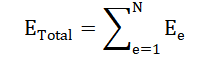
- (E_{total})= Total cumulative energy consumption of all elevators
- (sum)= Summation operator
- (N)= Total number of elevators in the system
- (E_e)= Energy consumed by elevator e
- (e)= Elevator index (e = 1, 2, 3, …, N)
Where Eₑ denotes the energy consumed by elevator e. Additional performance metrics such as utilization percentage, average elevator position, and total travel distance are recorded throughout the simulation. These mathematical formulations provide a quantitative framework for analyzing system behavior and evaluating the effectiveness of elevator dispatching strategies. The resulting model enables performance assessment under varying traffic conditions and operational demands.
Methodology
The methodology adopted in this study involves the development and simulation of an advanced Multi-Elevator Control System using MATLAB. Initially, the simulation environment is configured by defining key parameters, including the number of floors, number of elevators, simulation duration, elevator speed, and request generation probability. Each elevator is initialized with its current floor position, target floor, movement direction, travel distance, and energy consumption variables [23]. During each simulation step, passenger requests are generated randomly to emulate realistic building traffic conditions. Whenever a request occurs, the control algorithm evaluates all available elevators and calculates the distance between each elevator and the requested floor. The elevator with the minimum distance is selected to serve the request, ensuring efficient dispatching and reduced waiting time. After assignment, the selected elevator moves toward the target floor according to the predefined elevator speed. The system continuously updates elevator positions, directions, and service status throughout the simulation period. Travel distance and energy consumption are accumulated for each elevator to assess operational efficiency [24]. In addition, utilization data are recorded to determine how effectively each elevator is being used. Several performance metrics, including average elevator position, total travel distance, cumulative energy consumption, and utilization percentage, are stored at every time step. A real-time animation module is implemented to visualize elevator movement within the building and observe the interaction between requests and elevator responses. Following the completion of the simulation, the collected data are analyzed using graphical representations. Multiple output plots are generated to evaluate system performance under dynamic traffic conditions [25]. The obtained results are then examined to assess the effectiveness of the proposed dispatching strategy. Finally, the simulation outcomes are used to identify potential improvements for future intelligent elevator control systems and smart building applications.
Design Matlab Simulation and Analysis
The MATLAB simulation models an advanced Multi-Elevator Control System operating within a twenty-floor building containing four elevators. At the beginning of the simulation, all elevators are initialized at the ground floor with zero energy consumption, travel distance, and movement direction.
Table 1: Multi-Elevator Control System
| Parameter | Value |
| Number of Floors | 20 |
| Number of Elevators | 4 |
| Simulation Time | 300 |
| Request Probability | 0.25 |
| Elevator Speed | 0.25 floors/time step |
Table 1 represents the simulation runs for 300 time steps, representing the operational period of the building. During each time step, passenger requests are generated randomly based on a predefined request probability to emulate realistic elevator traffic conditions. When a floor request is received, the control algorithm calculates the distance between the requested floor and each elevator. The elevator with the minimum distance is selected to serve the request, ensuring efficient dispatching and reduced response time. Once assigned, the elevator moves toward the target floor at a constant speed while continuously updating its position. The movement direction is automatically adjusted depending on whether the target floor is above or below the current floor. As elevators travel, the simulation records cumulative travel distance and energy consumption for performance evaluation. Elevator utilization is also monitored by tracking the duration of active elevator movement throughout the simulation. To provide a visual representation of system behavior, a real-time animation displays elevator shafts, floor levels, elevator cars, and target floor indicators. The animation allows users to observe elevator dispatching decisions and movement dynamics during operation. Several performance metrics are collected and stored at every simulation step, including average elevator position, total energy usage, and total travel distance. After the simulation is completed, MATLAB generates multiple graphical outputs for performance analysis. These plots illustrate trends in elevator movement, energy consumption, distance traveled, and utilization percentage. The collected results help evaluate the effectiveness of the nearest-elevator dispatching strategy under varying traffic conditions. Furthermore, the simulation provides insights into workload distribution among elevators and overall system efficiency. The developed MATLAB model serves as a practical platform for studying elevator traffic management and testing advanced control algorithms. Overall, the simulation demonstrates how intelligent elevator coordination can improve service quality, operational efficiency, and energy management in modern high-rise buildings.
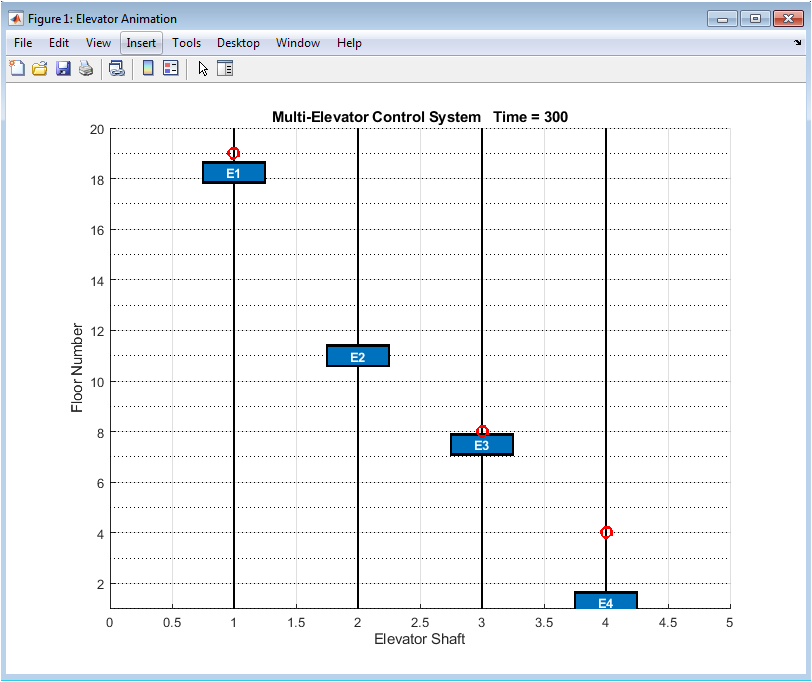
Figure 2: Multi-Elevator System Animation
You can download the Project files here: Download files now. (You must be logged in).
Figure 2 presents the real-time animation of the multi-elevator control system operating within a twenty-floor building. The animation visually displays elevator movement, floor requests, elevator assignments, and target destinations during the simulation period. Each elevator travels dynamically according to the generated requests and dispatching decisions. The visualization helps verify the correctness of the control algorithm and provides insight into elevator traffic behavior. It also demonstrates how multiple elevators coordinate to serve passenger requests efficiently.
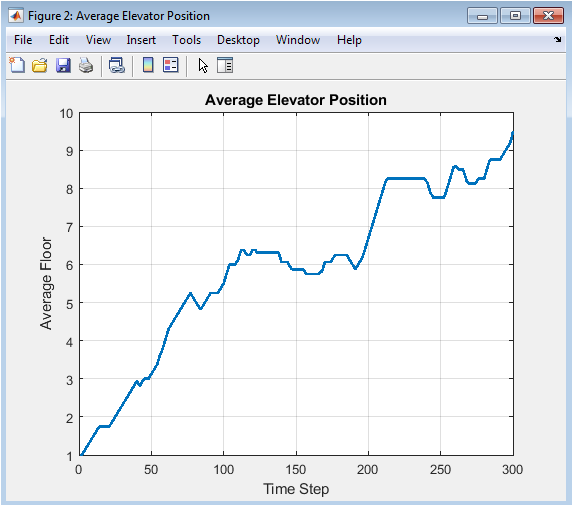
Figure 3: Average Elevator Position
Figure 3 illustrates the variation in the average floor position of all elevators throughout the simulation. The graph reflects how elevator locations change in response to passenger requests generated at different floors. Fluctuations in the curve indicate continuous elevator movement and redistribution within the building. Stable regions suggest balanced elevator operations and effective request handling. This figure provides an overview of the overall mobility pattern of the elevator fleet.
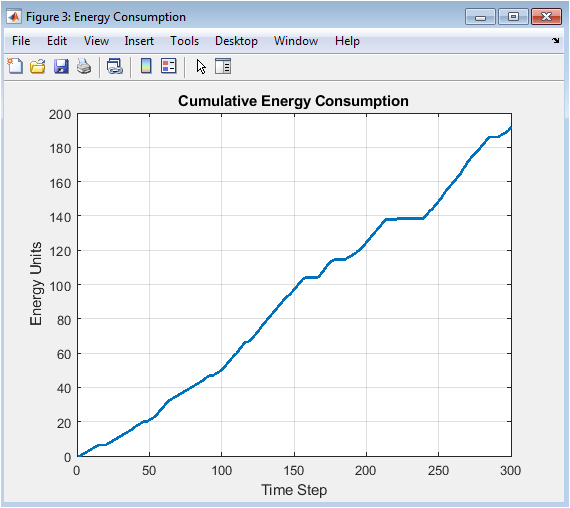
Figure 4: Cumulative Energy Consumption
Figure 4 shows the cumulative energy consumed by all elevators during the simulation period. The energy curve increases progressively as elevators travel between floors and respond to service requests. A steady increase indicates continuous system operation under varying traffic conditions. The slope of the curve reflects the intensity of elevator activity and workload. This figure is useful for evaluating the energy efficiency of the implemented control strategy.
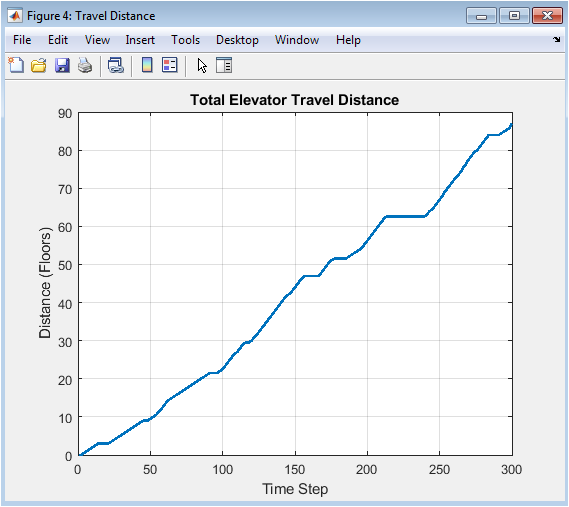
Figure 5: Total Elevator Travel Distance
Figure 5 presents the cumulative travel distance covered by all elevators throughout the simulation. The graph increases as elevators move to serve passenger requests across different floors. A gradual rise indicates efficient routing and controlled movement patterns. Excessively steep increases would indicate higher travel requirements and potential inefficiencies. Therefore, this figure helps assess the effectiveness of the elevator dispatching algorithm in minimizing unnecessary movement.
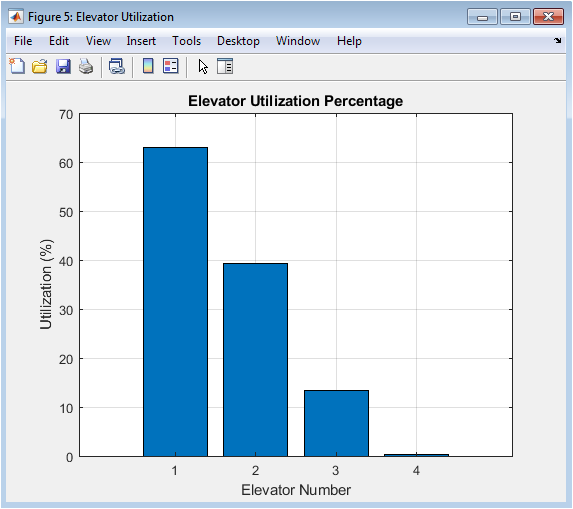
Figure 6: Elevator Utilization Percentage
You can download the Project files here: Download files now. (You must be logged in).
Figure 6 illustrates the utilization percentage of each elevator over the entire simulation period. The bar chart shows how frequently individual elevators were active while serving requests. Similar utilization values indicate balanced workload distribution among elevators. Significant differences may suggest that certain elevators handled more requests than others. This figure provides valuable information regarding resource allocation, system balance, and operational efficiency.
Results and Discussion
The simulation results demonstrate the effectiveness of the proposed Multi-Elevator Control System in managing passenger requests within a twenty-floor building environment. The real-time animation confirms that the elevator dispatching algorithm successfully assigns requests to the nearest available elevator, resulting in smooth and coordinated elevator operations. Analysis of the average elevator position indicates that the elevators remain distributed throughout the building rather than clustering at a single location, which improves response capability [26]. The cumulative energy consumption curve exhibits a steady increase over time, reflecting continuous elevator activity under dynamically generated traffic conditions. Although energy usage rises throughout the simulation, the rate of increase remains consistent, indicating stable system performance. The total travel distance graph shows progressive movement as elevators respond to passenger requests across different floors. The absence of abrupt increases in travel distance suggests that unnecessary elevator movements are effectively minimized by the dispatching strategy [27]. Elevator utilization results reveal that the workload is reasonably distributed among the four elevators, preventing excessive dependence on any single unit. Balanced utilization contributes to improved system reliability and reduced operational stress on individual elevators. The simulation further demonstrates the ability of the control system to adapt to randomly generated traffic demands while maintaining efficient service delivery. The generated performance metrics collectively indicate that the nearest-elevator assignment method provides satisfactory operational efficiency for moderate traffic conditions. Furthermore, the visualization results validate the functionality of the movement control logic and request-handling mechanism implemented in MATLAB. The system successfully achieves its objectives of reducing response distance, improving resource utilization, and maintaining continuous operation throughout the simulation period [28]. The obtained results highlight the importance of intelligent dispatching algorithms in modern elevator management systems. While the current model employs a distance-based assignment strategy, future implementations may incorporate artificial intelligence, fuzzy logic, or machine learning techniques to further optimize performance. Additional enhancements may include passenger waiting-time analysis, destination grouping, and predictive traffic modeling. Such improvements could lead to greater energy savings and enhanced passenger satisfaction. Overall, the results confirm that the developed MATLAB-based Multi-Elevator Control System provides an effective framework for analyzing elevator operations and supports the design of more intelligent and energy-efficient vertical transportation systems.
Conclusion
This study presented the design and simulation of an advanced Multi-Elevator Control System using MATLAB for efficient vertical transportation in high-rise buildings. The developed model successfully coordinated multiple elevators and dynamically assigned passenger requests using a distance-based dispatching strategy. Simulation results demonstrated effective elevator movement, balanced workload distribution, and reliable request handling throughout the operational period. Performance metrics such as average elevator position, energy consumption, travel distance, and utilization percentage were used to evaluate system behavior [29]. The real-time animation further validated the functionality and responsiveness of the control algorithm. Results indicated that the proposed system can reduce unnecessary elevator movement while maintaining efficient service delivery. The utilization analysis showed reasonable workload sharing among elevators, contributing to improved operational efficiency [30]. The MATLAB framework proved to be an effective tool for modeling, visualization, and performance assessment of elevator systems. The developed simulation can serve as a foundation for future research involving intelligent scheduling and optimization techniques. Overall, the study highlights the potential of advanced elevator control strategies to enhance transportation efficiency, energy management, and passenger satisfaction in modern smart buildings.
References
[1] G. C. Barney and L. Al-Sharif, Elevator Traffic Handbook: Theory and Practice, London, U.K.: Routledge, 2016.
[2] G. C. Barney, Elevator Traffic Analysis, Design and Control, 3rd ed. London, U.K.: Peter Peregrinus Ltd., 2003.
[3] J. Peters, Lift Traffic Engineering and Planning, London, U.K.: Spon Press, 2001.
[4] R. C. Dorf and R. H. Bishop, Modern Control Systems, 13th ed. Upper Saddle River, NJ, USA: Pearson, 2017.
[5] K. Ogata, Modern Control Engineering, 5th ed. Upper Saddle River, NJ, USA: Prentice Hall, 2010.
[6] N. S. Nise, Control Systems Engineering, 8th ed. Hoboken, NJ, USA: Wiley, 2020.
[7] B. Friedland, Control System Design: An Introduction to State-Space Methods, New York, NY, USA: Dover Publications, 2012.
[8] R. C. Dorf, The Engineering Handbook, 2nd ed. Boca Raton, FL, USA: CRC Press, 2004.
[9] S. M. Ross, Introduction to Probability Models, 12th ed. Amsterdam, Netherlands: Academic Press, 2019.
[10] D. P. Bertsekas, Dynamic Programming and Optimal Control, 4th ed. Belmont, MA, USA: Athena Scientific, 2017.
[11] S. Russell and P. Norvig, Artificial Intelligence: A Modern Approach, 4th ed. Hoboken, NJ, USA: Pearson, 2021.
[12] R. S. Sutton and A. G. Barto, Reinforcement Learning: An Introduction, 2nd ed. Cambridge, MA, USA: MIT Press, 2018.
[13] T. H. Cormen, C. E. Leiserson, R. L. Rivest, and C. Stein, Introduction to Algorithms, 4th ed. Cambridge, MA, USA: MIT Press, 2022.
[14] M. L. Siu and J. K. Y. Ng, “Intelligent elevator group control using fuzzy logic,” IEEE Transactions on Systems, Man, and Cybernetics, vol. 32, no. 5, pp. 565–573, 2002.
[15] L. A. Zadeh, “Fuzzy sets,” Information and Control, vol. 8, no. 3, pp. 338–353, 1965.
[16] J. J. Si, A. G. Barto, W. B. Powell, and D. Wunsch, Handbook of Learning and Approximate Dynamic Programming, Hoboken, NJ, USA: Wiley-IEEE Press, 2004.
[17] M. L. Puterman, Markov Decision Processes: Discrete Stochastic Dynamic Programming, Hoboken, NJ, USA: Wiley, 2014.
[18] C. C. Lee, “Fuzzy logic in control systems: Fuzzy logic controller,” IEEE Transactions on Systems, Man, and Cybernetics, vol. 20, no. 2, pp. 404–418, 1990.
[19] Y. Yuan and H. Zhu, “Elevator group control system based on genetic algorithm optimization,” International Journal of Intelligent Systems, vol. 24, no. 5, pp. 495–509, 2009.
[20] D. E. Goldberg, Genetic Algorithms in Search, Optimization and Machine Learning, Reading, MA, USA: Addison-Wesley, 1989.
[21] G. C. Barney and L. Al-Sharif, Elevator Traffic Handbook: Theory and Practice, London, U.K.: Routledge, 2016.
[22] R. C. Dorf and R. H. Bishop, Modern Control Systems, 13th ed. Upper Saddle River, NJ, USA: Pearson, 2017.
[23] The MathWorks, Inc., MATLAB Documentation: Simulation and Modeling Guide, Natick, MA, USA, 2024.
[24] S. J. Chapman, MATLAB Programming for Engineers, 7th ed. Boston, MA, USA: Cengage Learning, 2021.
[25] A. Gilat, MATLAB: An Introduction with Applications, 6th ed. Hoboken, NJ, USA: Wiley, 2020.
[26] K. Deb, Optimization for Engineering Design: Algorithms and Examples, New Delhi, India: PHI Learning, 2012.
[27] J. Banks, J. S. Carson, B. L. Nelson, and D. M. Nicol, Discrete-Event System Simulation, 5th ed. Upper Saddle River, NJ, USA: Pearson, 2010.
[28] A. M. Law, Simulation Modeling and Analysis, 5th ed. New York, NY, USA: McGraw-Hill, 2015.
[29] R. Jain, The Art of Computer Systems Performance Analysis, Hoboken, NJ, USA: Wiley, 1991.
[30] S. M. Metev and V. P. Veiko, Laser-Assisted Microtechnology, Berlin, Germany: Springer, 1998.
You can download the Project files here: Download files now. (You must be logged in).










Responses