Engineering Wind Power Systems: Modeling, Control, and Simulation
Design and analysis of control systems for grid-connected wind turbines using realistic electromechanical models and dynamic simulation.
We work with wind power systems that operate in real grid environments and are subject to real mechanical and electrical constraints. Our focus is on engineering solutions for DFIG-based, grid-connected wind turbines, where system behavior cannot be reliably predicted using simplified theoretical models.
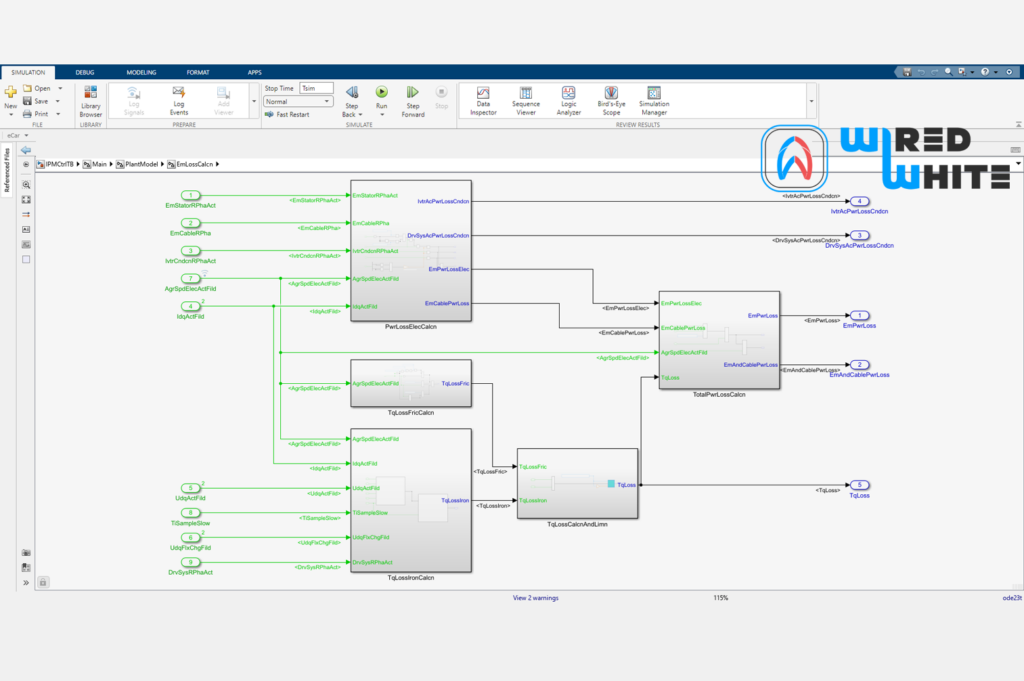
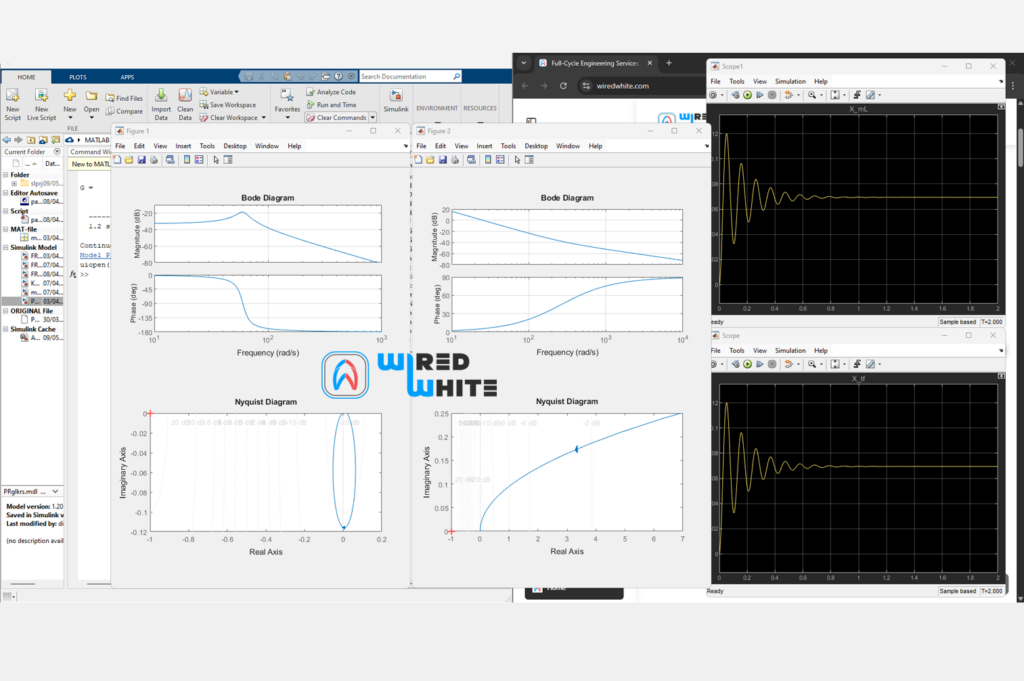
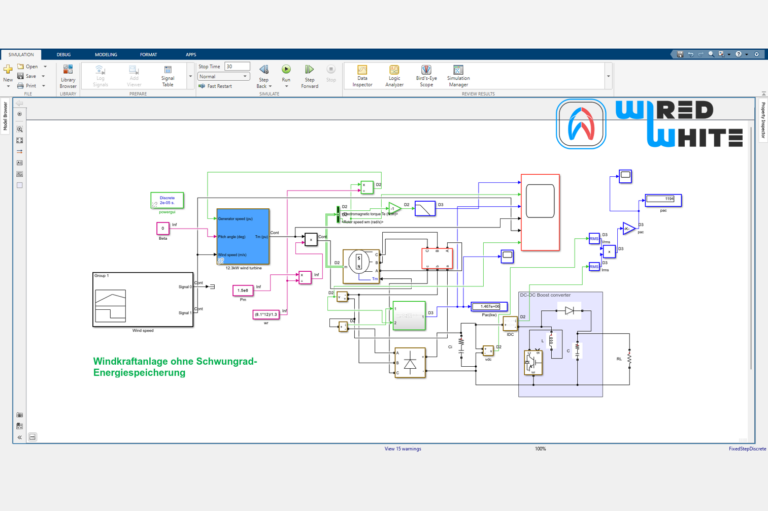
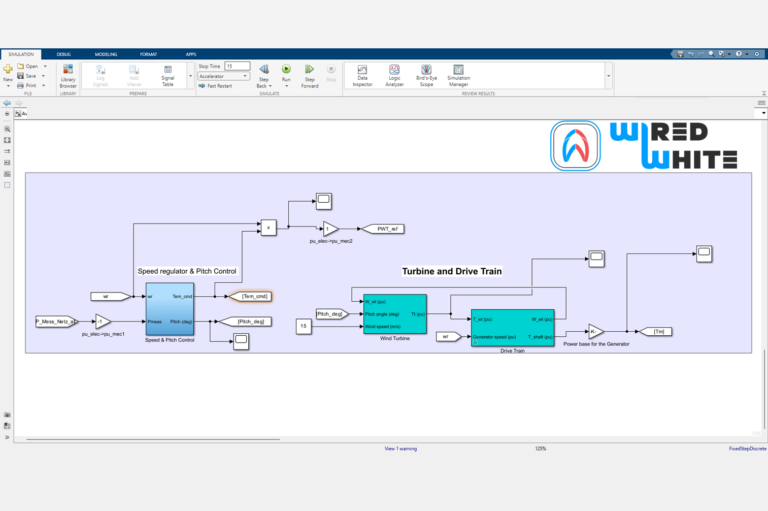
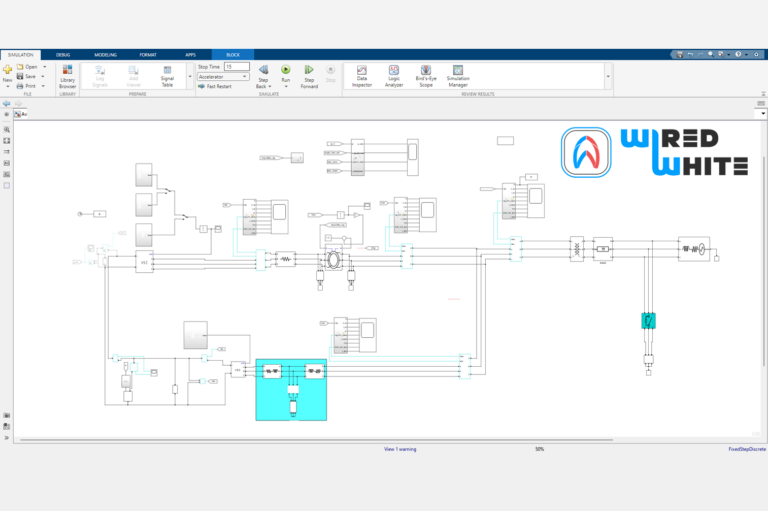
Most of our work is built around a simulation-first approach. Control strategies, generator behavior, and grid interaction are tested in dynamic models before being applied to physical systems. This allows engineering teams to identify stability issues, performance limits, and integration risks early in the design or troubleshooting phase.
Frustrated by the Complexity of Wind Power Control?
❌ Lack of transparency in wind turbine behavior under dynamic load conditions, especially during turbulent wind profiles and grid disturbances
❌ Inefficient power control strategies with outdated or rigid systems, which perform acceptably in steady state but degrade in real operating regimes
❌ Poor visualization and monitoring of turbine operations in real time, making it difficult to understand why performance deviates from expected models
❌ Difficulty in simulating nonlinear turbine behavior when aerodynamic, mechanical, and electrical subsystems interact
❌ Lack of modular and scalable control frameworks, limiting system upgrades and experimental testing
❌ Challenges in integrating neural networks for adaptive performance optimization without introducing instability
In most projects, these issues do not appear in isolation. They emerge as side effects of partial modeling, incomplete system assumptions, or control logic that was never validated outside ideal conditions.
Accelerate your roadmap and avoid costly rework with proven engineering practices.
Wind Power System Modeling Architecture
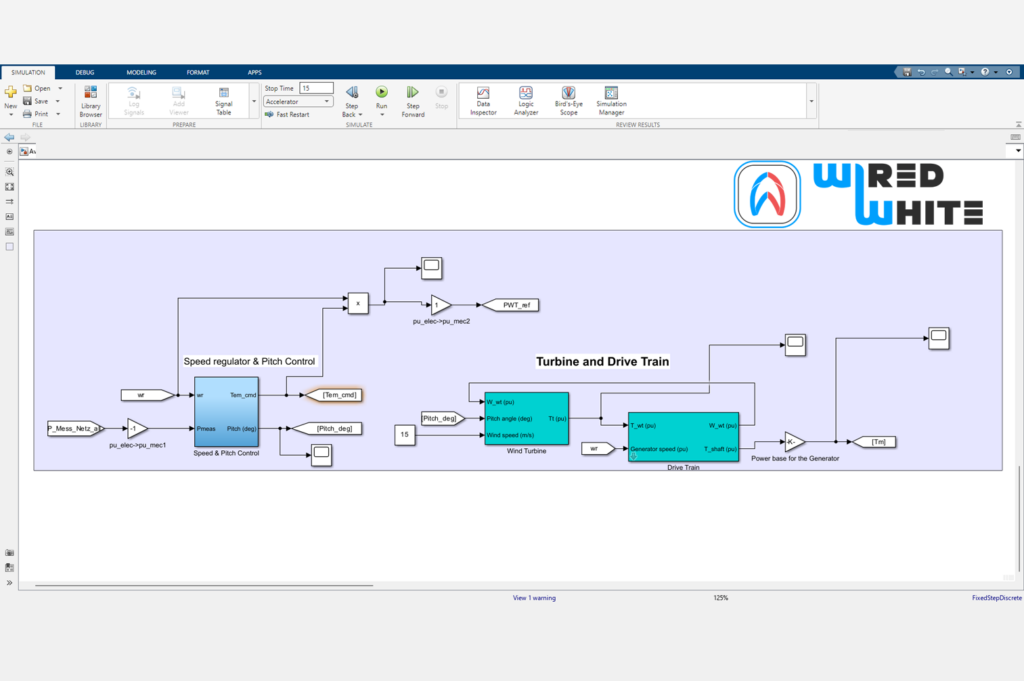
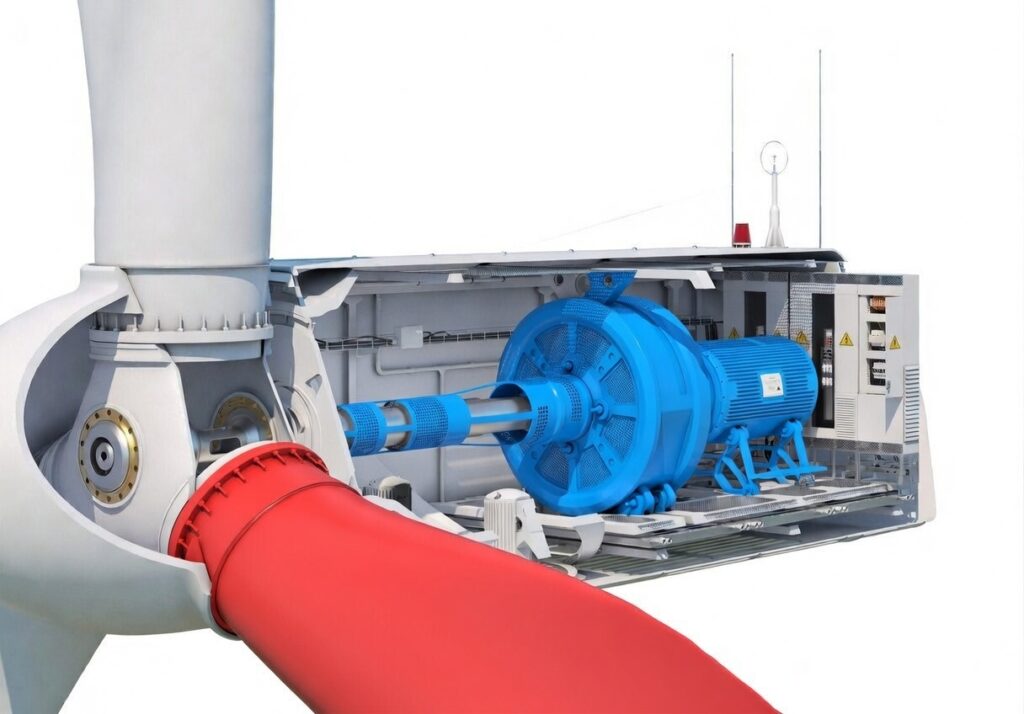
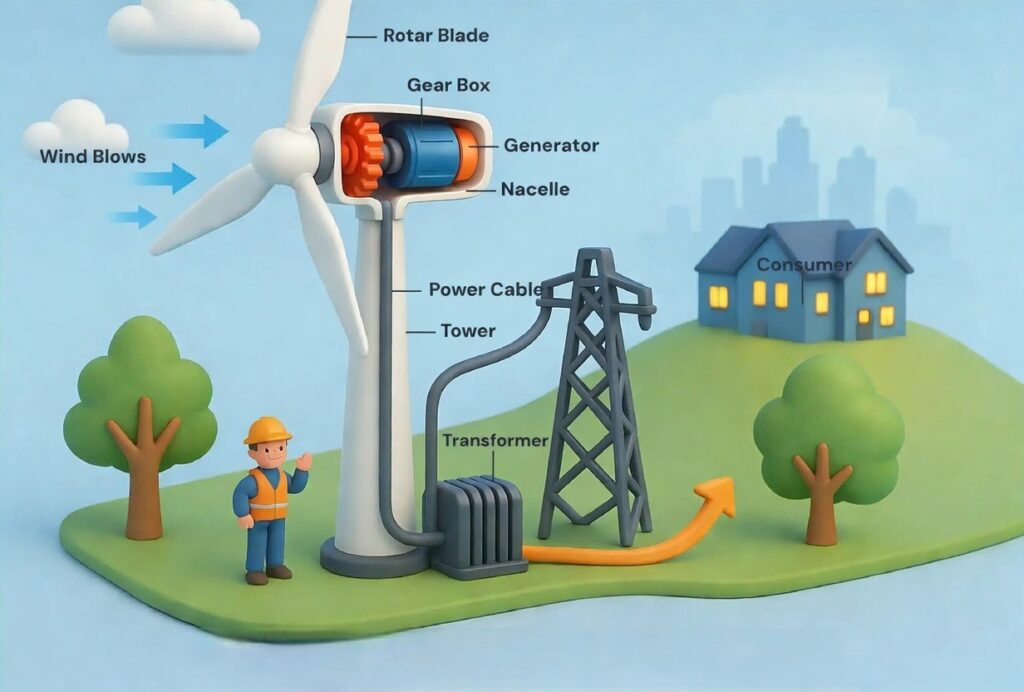
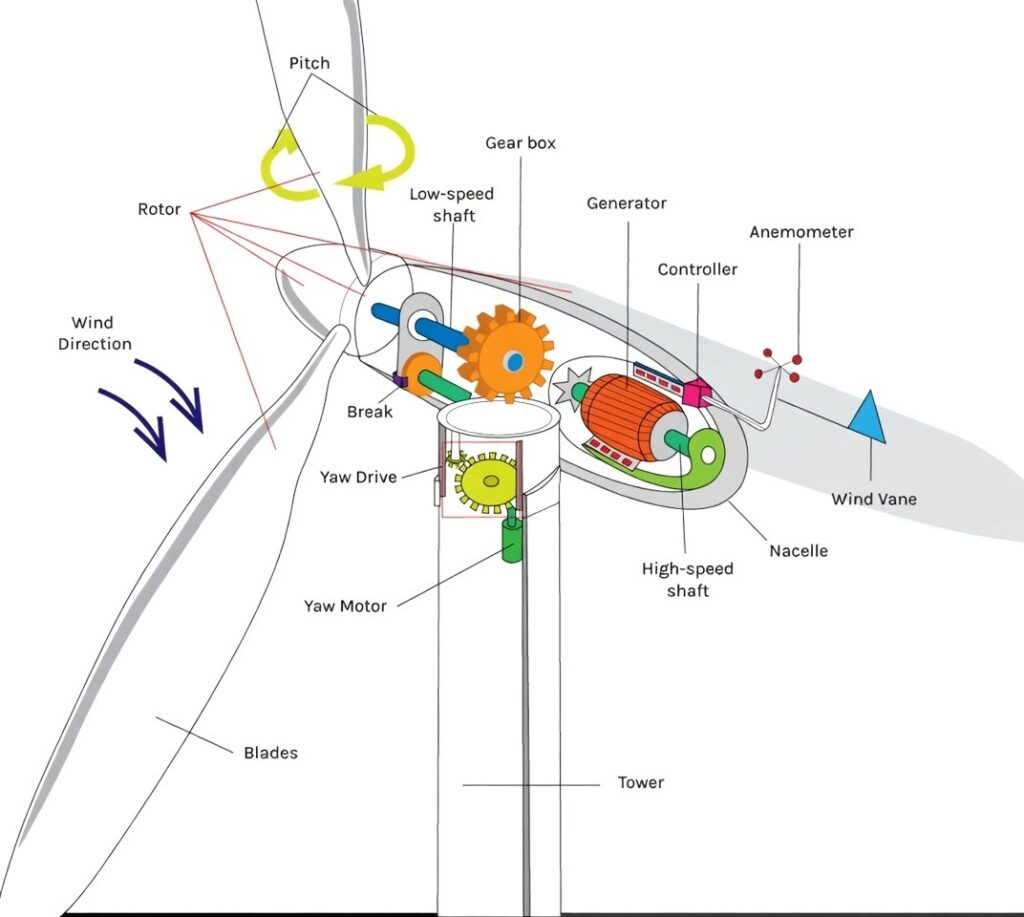
Electromechanical Modeling of Wind Turbines
Wind turbine models are often built around simplified aerodynamic equations. While useful for initial analysis, these models rarely reflect how real systems behave under variable wind and load conditions.
We work with electromechanical models that include:
- aerodynamic forces
- drivetrain inertia and elasticity
- generator electromagnetic dynamics
- grid-side converters and filters
The goal is not to build perfect digital twins, but to expose where control assumptions stop matching physical reality.
Nonlinear Dynamics and Grid Interaction
Wind turbines operate in strongly nonlinear environments. Small changes in wind speed, grid voltage, or mechanical load can propagate through the system and affect stability, torque response, and power quality.
For this reason, grid interaction is treated as a core part of the model rather than an external boundary condition.
Simulation-First Engineering Approach
Simulation is used to explore scenarios that are expensive or risky to test in real installations:
- fault conditions
- voltage dips
- parameter drift
- load transients
This approach allows engineers to understand system limits before those limits are reached in operation.
Tools and Simulation Environment
Our engineering workflow is built around industry-standard modeling and simulation tools used in real wind energy projects.
⚙️ System-Level Modeling and Control
✅ MATLAB — dynamic system modeling, parameter analysis, control algorithm validation
✅ Simulink — closed-loop control architectures, digital twins, real-time simulation
⚡ Power Electronics and Multiphysics
✅ SimPowerSystems / Simscape — electrical drives, grid interaction, converter dynamics
✅ PLECS Blockset — switching behavior, losses, and converter-level control stability
✅ ANSYS (CFD) — aerodynamic analysis of blade profiles and flow behavior
🔧 Electric Machines and Hardware Validation
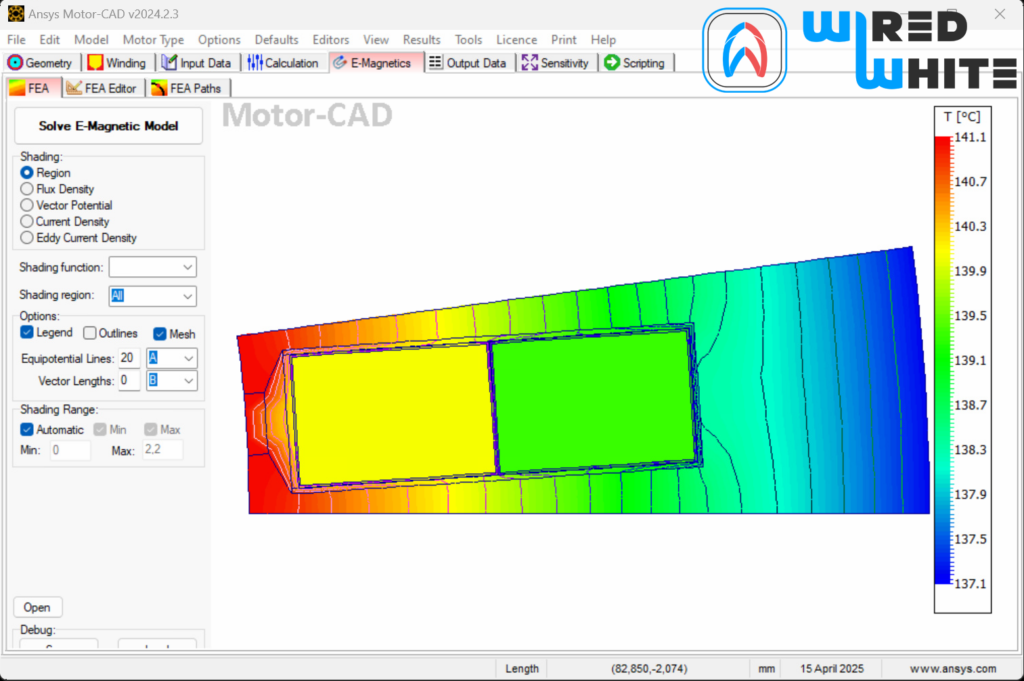
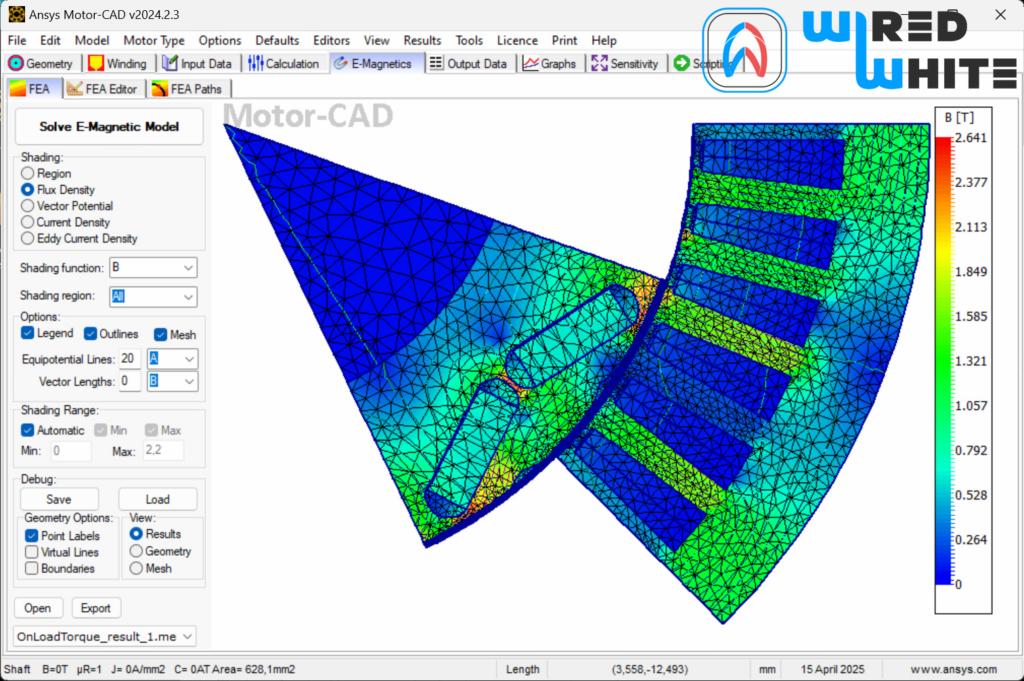
✅ ANSYS Maxwell / Motor-CAD — electromagnetic field modeling, torque ripple, thermal limits.
✅ dSPACE / Speedgoat — hardware-in-the-loop (HIL), rapid control prototyping, real-time debugging.
✅ SIMATIC WinCC (TIA Portal) — process visualization, supervisory control interfaces
DFIG-Based Wind Turbine Control Systems
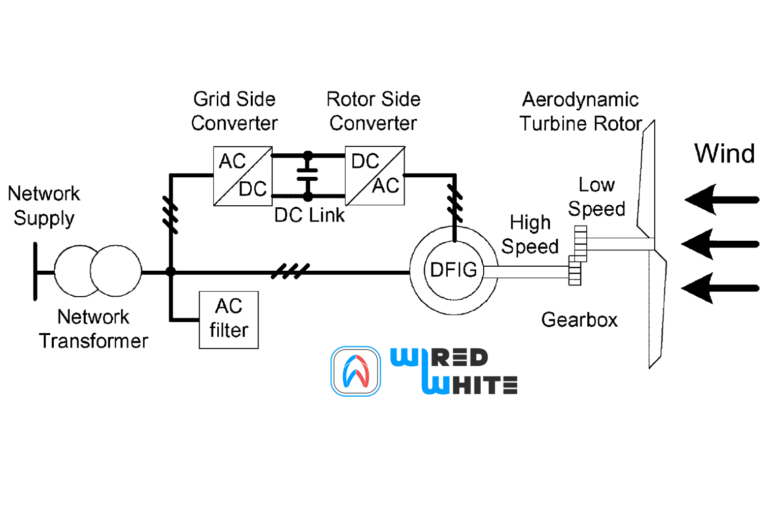
Doubly Fed Induction Generator (DFIG) Overview
DFIG turbines remain widely used due to their balance between efficiency, controllability, and hardware complexity. They allow partial speed variability and flexible reactive power control with relatively modest converter ratings.
At the same time, DFIG architectures introduce additional control challenges related to rotor-side converters and grid synchronization.
Direct Power Control (DPC) Strategies
Direct power control strategies aim to regulate active and reactive power without intermediate current control loops. In practice, their performance depends heavily on:
- measurement quality
- switching logic
- sampling frequency
- grid stability
Poorly tuned DPC systems often perform well in nominal conditions but become unstable during transients.
Dynamic Performance Under Variable Wind Conditions
Most control problems appear outside nominal operating points:
- partial load
- gusts
- start-up and shutdown cycles
These regimes dominate real mechanical stress but are often ignored in simplified models.
Direct Drive Wind Turbine Architectures
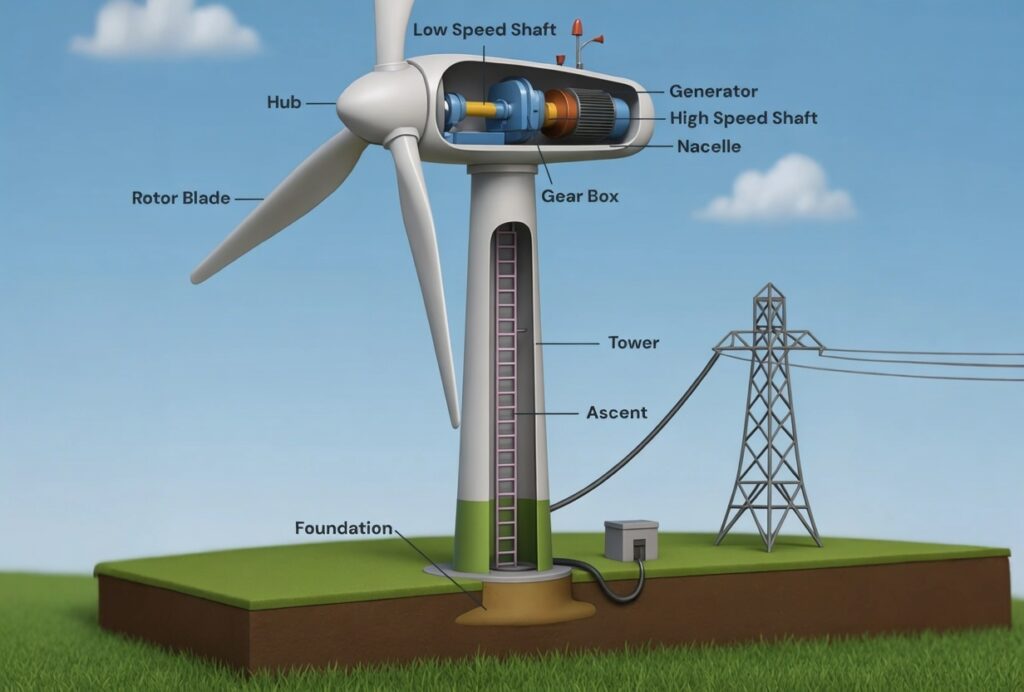
Direct drive wind turbines remove the mechanical gearbox and connect the rotor directly to the generator. These turbines are used where low-speed operation and reduced maintenance are important. Because the rotor turns slowly, the generator needs a full-scale converter to feed power into the grid.
Direct Drive PMSG Wind Turbine
Permanent magnet synchronous generators use rotor-mounted magnets to produce the excitation field. These machines do not have rotor windings and operate without external excitation current. In practice, PMSG turbines show:
- high torque at low rotor speeds
- efficient operation under partial load
- dependence on magnetic material properties
- sensitivity to thermal limits
- control entirely through full-scale converters
Direct Drive Electrically Excited Synchronous Generator
Electrically excited synchronous generators have rotor windings supplied with an excitation current instead of permanent magnets. Observed characteristics:
- adjustable air-gap flux for reactive power control
- no reliance on permanent magnets
- additional rotor losses and thermal management needs
- higher mechanical and electrical complexity
- dedicated excitation loops combined with full-scale converters
Neural Network Control for Wind Turbine Optimization
⚠️ Why Classical Models Fail in Nonlinear Wind Conditions
Direct drive wind turbines remove the mechanical gearbox and connect the rotor directly to the generator. These turbines are used where low-speed operation and reduced maintenance are important. Because the rotor turns slowly, the generator needs a full-scale converter to feed power into the grid.
🧠 MP-Neuron and Supervised Learning Applications
Neural networks based on MP-neurons and supervised learning are used to approximate turbine behavior that cannot be described analytically.
Training data usually comes from:
- simulation outputs
- historical operational logs
- synthetic fault scenarios
Data quality is critical. Poor datasets lead to unstable or overfitted controllers.
📈 Adaptive Control and Parameter Optimization
Neural control improves adaptability but introduces trade-offs:
- reduced interpretability
- dependence on training data
- higher computational complexity
In most systems, neural components are used as auxiliary layers rather than primary controllers.
Flywheel Energy Storage in Wind Power Systems
Power Smoothing and Transient Response
Flywheel systems are used for short-term power smoothing and mechanical load mitigation. They are effective for absorbing fast fluctuations caused by gusts or sudden load changes.
They are not designed for long-term energy storage.
Integration with Wind Turbine Control Loops
Flywheels are modeled directly inside turbine control loops to evaluate:
- response time
- control interaction
- long-term stability effects
Treating them as independent subsystems usually leads to misleading results.
Engineering Scenarios We Solve
- Power smoothing under turbulent wind conditions
- Stability analysis during grid disturbances and voltage dips
- Control redesign for turbines that underperform outside nominal regimes
- Integration of energy storage into existing control architectures
- Adaptive control using neural networks in nonlinear systems
- Simulation of fault and emergency scenarios that are risky to test in real installations
These tasks typically originate from real projects, not from academic exercises.
Why WiredWhite Is the Engineering Partner for Complex Wind Projects
We work with engineering teams, system integrators, and technology companies dealing with complex wind power systems in real operational environments.
⏱ 15+ Years
industry experience
👨 1000+
networked engineering professionals
🔄 Integrated
project collaboration tools
✅ 100%
Proficient in advanced engineering tools
Discuss Your Wind Power System Architecture
If you are working with:
- unstable control behavior
- mismatch between simulation and field data
- grid compliance issues
- nonlinear dynamics that are difficult to model
We can review your current system architecture and identify practical engineering options.
We Are Supporting Businesses, Executives, and Innovators Worldwide
Freelance Agencies
Teams of Engineers
Start-ups
Companies
Trusted by









- Free consultation call
- Contact form
Partner with Us for Your Wind Power Systems Project
Speak directly with our experts to explore how we can help you model, simulate, and validate your wind power systems — with speed, precision, and full standards compliance.
Let’s move your ideas forward.
Explore All Our Business Services
We offer full-cycle engineering services ranging from small consulting projects to extensive R&D projects, where we support throughout the entire product development process.