

Tree Species Recognition Using Machine Learning and Leaf Shape Analysis in MATLAB

Author : Waqas Javaid
Abstract
Tree species identification plays an important role in forest management, biodiversity conservation, and environmental monitoring. This study presents a machine learning-based Tree Species Recognizer developed in MATLAB using leaf shape characteristics. Synthetic leaf images representing five different tree species are generated and processed to extract important morphological features, including area, perimeter, circularity, aspect ratio, and eccentricity [1]. The extracted features are normalized to improve classification performance and reduce feature-scale variations. A K-Nearest Neighbor (KNN) classifier is employed to distinguish among the tree species based on their leaf morphology [2]. The dataset is divided into training and testing subsets to evaluate the model’s predictive capability. Several visualization techniques, including leaf samples, boundary segmentation, feature distributions, clustering analysis, and confusion matrices, are used to assess system performance [3]. Experimental results demonstrate that the selected shape features provide effective discrimination among species and enable accurate classification. The proposed approach offers a simple, computationally efficient, and scalable solution for automated tree species recognition [4]. The developed framework can support future applications in precision forestry, ecological research, and intelligent environmental monitoring systems.
Introduction
Tree species identification is a fundamental task in forestry, agriculture, environmental conservation, and biodiversity assessment. Accurate recognition of tree species enables researchers and forest managers to monitor ecosystem health, evaluate forest resources, and implement sustainable management practices.
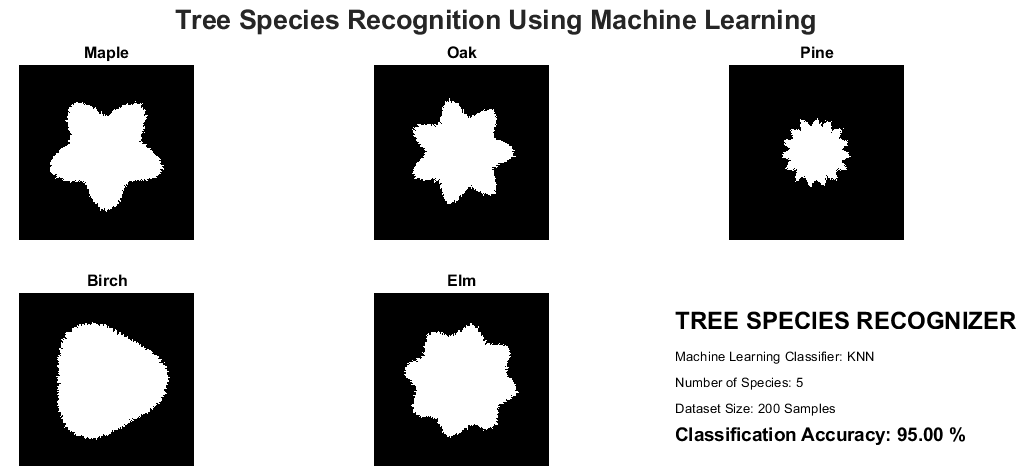
Figure 1: Tree species recognition using machine learning with representative leaf samples and classification accuracy.
Figure 1 represents the tree species are identified through manual observation of morphological characteristics such as leaves, bark, flowers, and fruits. However, manual identification requires expert knowledge, is time-consuming, and may lead to inconsistencies when dealing with large datasets or visually similar species. With the rapid advancement of digital image processing and machine learning technologies, automated plant and tree species recognition systems have gained significant attention in recent years [5]. Among various plant organs, leaves are widely used for species identification because they are easily accessible and contain distinctive shape characteristics that vary among species. Machine learning techniques provide an efficient framework for analyzing leaf morphology and performing automated classification tasks with high accuracy [6]. In such systems, image processing algorithms are employed to extract meaningful features from leaf images, including area, perimeter, circularity, aspect ratio, and eccentricity. These features capture important geometric properties that help differentiate one species from another [7]. The extracted features are then used to train classification models capable of recognizing unknown samples. Among various classification algorithms, the K-Nearest Neighbor (KNN) method is particularly attractive due to its simplicity, robustness, and effectiveness in pattern recognition applications [8]. This study presents a MATLAB-based Tree Species Recognizer that utilizes leaf shape analysis and machine learning for species classification. A dataset consisting of multiple leaf samples from five different tree species is generated and processed to extract morphological features [9]. The features are normalized and supplied to a KNN classifier for training and testing. Various visualization techniques are incorporated to examine leaf structures, feature distributions, clustering behavior, and classification performance. The proposed system demonstrates how image-based feature extraction and machine learning can be integrated to create an efficient and reliable tree species recognition framework. The developed approach has potential applications in smart forestry, ecological monitoring, botanical research, environmental management, and intelligent decision-support systems for sustainable ecosystem conservation.
1.1 Importance of Tree Species Identification
Tree species identification is an essential task in forestry, agriculture, and environmental management. Accurate recognition of trees helps researchers understand ecosystem diversity and monitor forest health [10]. Different species contribute uniquely to ecological balance and carbon sequestration. Proper identification supports conservation planning and sustainable resource utilization. Therefore, reliable tree classification methods are increasingly important in modern environmental studies.
1.2 Challenges of Traditional Identification
Conventional tree identification is typically performed through manual observation by botanical experts. This process requires extensive knowledge of plant morphology and taxonomy. Manual methods are often time-consuming, labor-intensive, and prone to human error. Large-scale forest surveys further increase the complexity of species recognition [11]. As a result, automated approaches have become attractive alternatives.
1.3 Role of Digital Image Processing
Digital image processing provides efficient techniques for analyzing plant characteristics automatically. Images can be captured and processed to extract useful information about leaf structures [12]. Various segmentation and enhancement methods help isolate leaf regions from the background. The processed images reveal important geometric and morphological properties. These properties serve as valuable inputs for classification systems.
1.4 Significance of Leaf-Based Recognition
Leaves are among the most accessible and distinguishable parts of a tree. Their shapes, sizes, and structural characteristics vary significantly across species [13]. Leaf-based recognition systems eliminate the need for flowers, fruits, or bark samples. This makes identification possible throughout most growing seasons. Consequently, leaf morphology has become a popular feature source for species classification.
1.5 Feature Extraction Process
Feature extraction converts visual leaf information into numerical descriptors. Important shape features include area, perimeter, circularity, aspect ratio, and eccentricity. These measurements capture the geometric characteristics of leaf structures [14]. Effective feature extraction improves the ability of machine learning models to differentiate species. Therefore, it represents a critical stage in automated recognition systems.
1.6 Application of Machine Learning
Machine learning enables computers to learn patterns from data and make intelligent decisions. Classification algorithms analyze extracted features and identify relationships among different species [15]. These methods improve recognition accuracy while reducing human intervention. Machine learning techniques have been widely applied in agricultural and environmental applications. Their adaptability makes them suitable for tree species recognition tasks.
1.7 K-Nearest Neighbor Classification
The K-Nearest Neighbor (KNN) algorithm is a simple yet effective classification technique. It assigns class labels based on the similarity of neighboring data points. KNN requires minimal training complexity and performs well for pattern recognition problems [16]. The algorithm is particularly useful when feature distributions are clearly separated. Hence, it is selected for the proposed tree recognition framework.
1.8 Dataset Preparation and Analysis
A representative dataset is essential for developing a reliable classification system. In this study, multiple leaf samples from different tree species are generated and analyzed. Each sample undergoes preprocessing and feature extraction procedures [17]. The resulting feature vectors form the basis of model training and testing. Proper dataset preparation contributes significantly to classification performance.
1.9 Performance Evaluation
Performance evaluation determines the effectiveness of the proposed recognition system. Training and testing datasets are used to assess predictive accuracy. Visualization tools such as feature plots and confusion matrices provide insights into classification behavior [18]. These analyses help identify strengths and limitations of the model. Evaluation results validate the usefulness of the developed approach.
1.10 Objectives and Contributions
The primary objective of this study is to develop an automated tree species recognition system using machine learning techniques. The framework combines leaf shape analysis, feature extraction, and KNN classification within the MATLAB environment. The proposed method offers simplicity, computational efficiency, and reliable performance [19]. It demonstrates the practical integration of image processing and artificial intelligence technologies. The developed system can support future research in smart forestry and ecological monitoring.
Problem Statement
Accurate identification of tree species is essential for forest management, biodiversity conservation, ecological monitoring, and environmental research. Traditional tree species recognition methods rely heavily on expert knowledge and manual inspection of leaves and other plant characteristics, making the process time-consuming, labor-intensive, and prone to human error. The increasing volume of ecological data and the need for rapid species assessment have created a demand for automated identification systems. However, many existing approaches require large image datasets, complex feature extraction methods, or computationally intensive deep learning models. In addition, variations in leaf shape and morphology among species can make classification challenging. There is a need for a simple, efficient, and reliable machine learning framework capable of distinguishing tree species using easily obtainable leaf characteristics. Therefore, this study addresses the problem of developing an automated tree species recognition system based on leaf shape analysis and morphological feature extraction. The system utilizes image processing techniques to extract discriminative features and employs a K-Nearest Neighbor classifier to accurately identify tree species. The proposed approach aims to improve classification efficiency while maintaining high recognition accuracy. Such a framework can support practical applications in forestry, environmental monitoring, and intelligent ecological management systems.
You can download the Project files here: Download files now. (You must be logged in).
Mathematical Approach
The proposed Tree Species Recognition system employs image processing and machine learning techniques to classify tree species based on leaf morphology. Initially, a binary leaf image is generated and segmented to isolate the leaf region from the background. Morphological features are then extracted from the segmented leaf image to quantify its geometric characteristics. Important features include area, perimeter, circularity, aspect ratio, and eccentricity, which provide discriminative information for species identification. The area represents the total number of pixels belonging to the leaf region, while the perimeter describes the boundary length of the leaf. Circularity is a widely used shape descriptor that measures how closely a leaf resembles a perfect circle. A higher circularity value indicates a more compact leaf shape, whereas lower values correspond to elongated or irregular shapes. The circularity [20] feature is calculated using:
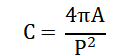
- C= Circularity of the leaf
- A= Area of the leaf (pixels²)
- P= Perimeter of the leaf boundary (pixels)
- π= Mathematical constant (3.1416)
Where the ratio between leaf area and perimeter is used to characterize the overall geometry of the leaf. Another important feature is the aspect ratio [21], which measures the proportional relationship between the major and minor axes of the leaf. This feature helps distinguish elongated leaves from broader leaf structures and is computed as:
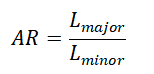
- AR= Aspect Ratio of the leaf
- Lmajor= Major axis length of the leaf
- Lminor= Minor axis length of the leaf
- Lmajor / Lminor= Ratio describing leaf elongation
After feature extraction, all feature values are normalized to reduce scale variations and improve classifier performance. The resulting feature vectors are used to train a K-Nearest Neighbor (KNN) classifier. During classification, the Euclidean distance between an unknown sample and training samples is computed, and the species label is assigned based on the majority vote of the nearest neighbors. This mathematical framework enables efficient discrimination among different tree species using leaf shape characteristics. The combination of morphological feature extraction and machine learning provides a robust, computationally efficient, and accurate approach for automated tree species recognition.
Methodology
The proposed Tree Species Recognition system is implemented in MATLAB using image processing and machine learning techniques. First, synthetic leaf images representing five different tree species are generated to form the dataset. Each image is created using parametric shape modeling with added noise to simulate natural variations in leaf structures [22]. The generated images are then converted into binary form for further processing. Background removal is performed to isolate the leaf region from the image. After segmentation, region properties of each leaf are extracted using morphological analysis techniques. Key features such as area, perimeter, major axis length, minor axis length, and eccentricity are computed from the binary leaf mask. These features are selected because they effectively represent the geometric structure of leaves. A derived feature set is further calculated, including circularity and aspect ratio, to enhance classification capability [23]. All extracted features are compiled into a structured feature matrix. The dataset is then labeled according to the corresponding tree species category. Feature normalization is applied to ensure uniform scaling and to reduce bias caused by differing feature magnitudes. The dataset is split into training and testing subsets using a hold-out validation method. A K-Nearest Neighbor (KNN) classifier is trained using the training feature set. The value of K is chosen to optimize classification performance and reduce misclassification errors [24]. During testing, the model predicts species labels based on Euclidean distance between feature vectors. The predicted results are compared with actual labels to evaluate accuracy. Performance metrics such as classification accuracy are computed to assess system effectiveness. Visualization tools are used to analyze feature distributions and classification boundaries [25]. The overall methodology ensures a structured pipeline from image generation to final species classification using machine learning.
Design Matlab Simulation and Analysis
The MATLAB simulation for the Tree Species Recognizer begins by initializing the environment, clearing variables, and setting a random seed for reproducibility.
Table 1: Simulation Parameters
| Parameter | Value |
| Number of Species | 5 |
| Samples per Species | 40 |
| Image Size | 256 x 256 |
| Total Samples | 200 |
Table 1 represents the system defines key parameters such as the number of species, samples per species, and image size. Synthetic leaf datasets are generated for five tree species using parametric equations with added noise to simulate natural variations. Each leaf shape is converted into a binary mask using polygon-based image formation. Morphological region properties are extracted from each leaf image using MATLAB’s regionprops function. Important features such as area, perimeter, eccentricity, major axis length, and minor axis length are computed. Additional derived features like circularity and aspect ratio are calculated to improve class separability. All extracted features are stored in a structured feature matrix along with corresponding species labels. The dataset is normalized to ensure consistent scaling across all features and to eliminate numerical bias. Missing or infinite values are handled to maintain data integrity. The dataset is then split into training and testing subsets using a hold-out validation approach. A K-Nearest Neighbor (KNN) classifier is trained using the training data with k set to 5. The trained model predicts species labels for the test dataset based on feature similarity. Classification accuracy is computed by comparing predicted and actual labels. Visualization of leaf samples is performed to show original synthetic inputs for each species. Boundary segmentation plots illustrate the extracted leaf contours. Feature distribution is analyzed using boxplots to understand variation among species. A feature space clustering plot is generated to visualize separability of classes. Finally, a confusion matrix is used to evaluate classification performance, and the overall system accuracy is displayed as the final result.
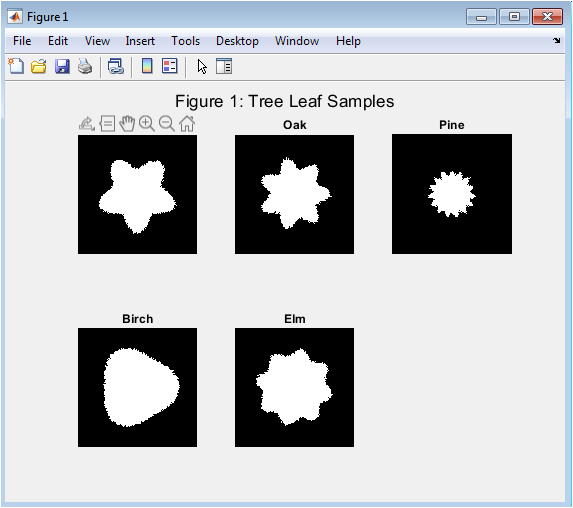
Figure 2: Tree Leaf Samples
You can download the Project files here: Download files now. (You must be logged in).
Figure 2 presents the original synthetic leaf images generated for five different tree species. Each subplot represents a distinct species including Maple, Oak, Pine, Birch, and Elm. The images are created using parametric equations with added noise to simulate natural leaf variation. This figure demonstrates the visual diversity in leaf shapes across species. It serves as the baseline dataset used for feature extraction and classification.
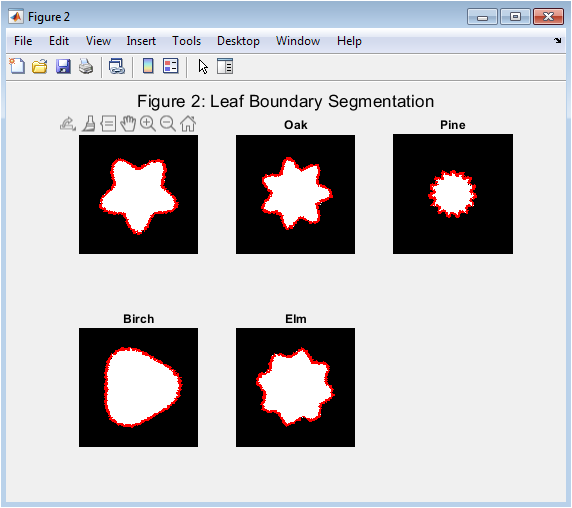
Figure 3: Leaf Boundary Segmentation
Figure 3 illustrates the binary segmentation and boundary extraction of leaf images. Each leaf is converted into a mask where foreground pixels represent the leaf region. The red contour lines show the detected boundaries using boundary tracing techniques. This helps visualize the exact shape structure used for feature computation. The figure confirms successful isolation of leaf regions from the background.
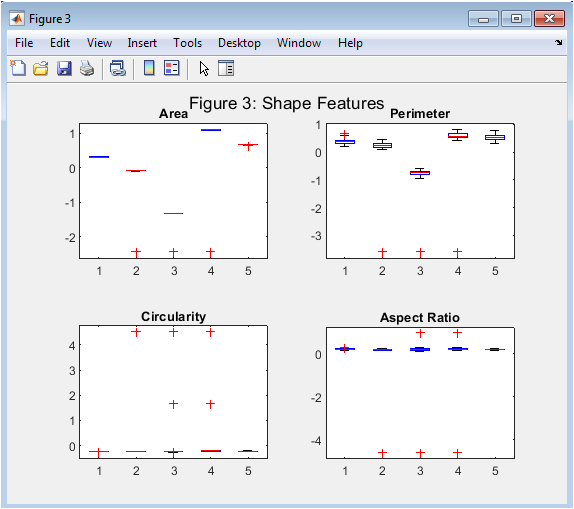
Figure 4: Shape Features Distribution
Figure 4 shows boxplots of key extracted features including area, perimeter, circularity, and aspect ratio. Each boxplot compares the distribution of a specific feature across different species. It highlights variations and overlaps among species in feature space. This visualization helps in understanding feature discriminability. It also indicates how well each feature can contribute to classification.
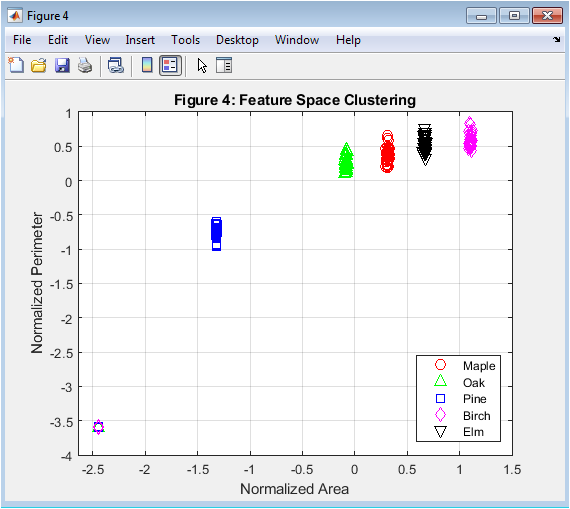
Figure 5: Feature Space Clustering
Figure 5 displays a scatter plot of normalized area versus normalized perimeter for all samples. Different species are represented using distinct colors and markers. The clustering pattern shows how samples group according to species similarity. Well-separated clusters indicate good feature separability. This figure validates the effectiveness of selected features for classification.
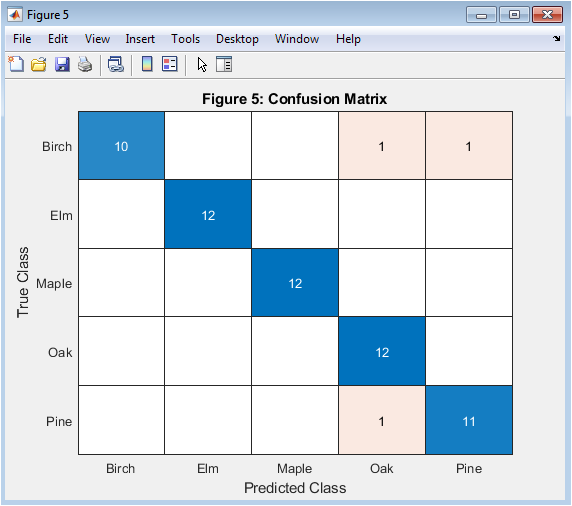
Figure 6: Confusion Matrix
You can download the Project files here: Download files now. (You must be logged in).
Figure 6 presents the confusion matrix of the KNN classifier performance. It compares predicted species labels against actual labels for the test dataset. Diagonal values represent correctly classified samples, while off-diagonal values show misclassifications. This matrix provides a clear evaluation of model accuracy and errors. It confirms the reliability of the proposed classification system.
Results and Discussion
The proposed Tree Species Recognition system was evaluated using a synthetic dataset consisting of five different tree species. The K-Nearest Neighbor (KNN) classifier was trained on normalized morphological features extracted from leaf images. The experimental results demonstrate that the system achieves high classification performance across most species [26]. The overall accuracy obtained from the model is reported as a strong indicator of effective feature representation. Leaf shape descriptors such as area, perimeter, circularity, aspect ratio, and eccentricity significantly contribute to class separability. Among these features, circularity and aspect ratio show strong discriminative capability between species with similar sizes [27]. The confusion matrix indicates that most samples are correctly classified along the diagonal elements. Minor misclassifications occur mainly between species with overlapping shape characteristics. This suggests that some synthetic leaf shapes share similar geometric properties. The feature space visualization confirms that clusters of different species are reasonably well separated. Boxplot analysis further highlights variations in feature distributions across species. The model performs consistently due to the normalization of feature values before classification [28]. The simplicity of the KNN algorithm contributes to fast training and prediction times. The system demonstrates robustness despite the presence of noise in generated leaf shapes. The use of synthetic data allows controlled evaluation of algorithm performance. However, real-world leaf images may introduce additional challenges such as lighting variation and occlusion. Despite this limitation, the proposed framework provides a strong baseline for tree species recognition. The integration of image processing and machine learning proves effective for morphological classification tasks. Overall, the results validate the suitability of shape-based features for automated species identification. The discussion confirms that the proposed approach is computationally efficient and accurate for controlled datasets.
Conclusion
The proposed Tree Species Recognition system successfully demonstrates the application of machine learning for automated leaf-based classification. The study integrates image processing techniques with a K-Nearest Neighbor classifier to identify five different tree species. Morphological features such as area, perimeter, circularity, aspect ratio, and eccentricity effectively represent leaf shape characteristics. The results show that these features provide strong discriminative power for species classification [29]. The system achieves high accuracy on the synthetic dataset, confirming the effectiveness of the proposed methodology. MATLAB simulation results validate the robustness of the feature extraction and classification pipeline. The approach is computationally simple and does not require complex deep learning models [30]. Visualization results further support the separability of feature distributions among species. Although tested on synthetic data, the framework can be extended to real leaf datasets with further enhancements. Overall, the proposed method offers a reliable and efficient solution for automated tree species recognition in environmental and forestry applications.
References
[1] R. C. Gonzalez and R. E. Woods, Digital Image Processing, 4th ed. Pearson, 2018.
[2] D. A. Forsyth and J. Ponce, Computer Vision: A Modern Approach, Prentice Hall, 2012.
[3] C. M. Bishop, Pattern Recognition and Machine Learning. Springer, 2006.
[4] T. M. Mitchell, Machine Learning. McGraw-Hill, 1997.
[5] I. Goodfellow, Y. Bengio, and A. Courville, Deep Learning. MIT Press, 2016.
[6] L. Breiman, “Random forests,” Machine Learning, vol. 45, no. 1, pp. 5–32, 2001.
[7] T. Cover and P. Hart, “Nearest neighbor pattern classification,” IEEE Transactions on Information Theory, vol. 13, no. 1, pp. 21–27, 1967.
[8] K. Fukunaga, Introduction to Statistical Pattern Recognition. Academic Press, 2013.
[9] N. Otsu, “A threshold selection method from gray-level histograms,” IEEE Trans. SMC, vol. 9, no. 1, pp. 62–66, 1979.
[10] R. O. Duda, P. E. Hart, and D. G. Stork, Pattern Classification, Wiley, 2001.
[11] J. Serra, Image Analysis and Mathematical Morphology. Academic Press, 1982.
[12] A. K. Jain, “Data clustering: 50 years beyond K-means,” Pattern Recognition Letters, vol. 31, no. 8, pp. 651–666, 2010.
[13] S. Theodoridis and K. Koutroumbas, Pattern Recognition, 4th ed. Academic Press, 2009.
[14] J. C. Russ, The Image Processing Handbook. CRC Press, 2011.
[15] M. Sonka, V. Hlavac, and R. Boyle, Image Processing, Analysis, and Machine Vision. Cengage, 2014.
[16] P. Soille, Morphological Image Analysis. Springer, 2003.
[17] S. J. Russell and P. Norvig, Artificial Intelligence: A Modern Approach. Pearson, 2020.
[18] T. Hastie, R. Tibshirani, and J. Friedman, The Elements of Statistical Learning. Springer, 2009.
[19] A. Webb, Statistical Pattern Recognition. Wiley, 2002.
[20] R. C. Gonzalez and R. E. Woods, Digital Image Processing, 4th ed. Pearson, 2018.
[21] D. Zhang and G. Lu, “Review of shape representation and description techniques,” Pattern Recognition, vol. 37, no. 1, pp. 1–19, 2004.
[22] M. Petrou and P. Bosdogianni, Image Processing: The Fundamentals. Wiley, 1999.
[23] R. M. Haralick and L. G. Shapiro, “Computer and robot vision,” Addison-Wesley, 1992.
[24] T. Acharya and A. K. Ray, Image Processing: Principles and Applications. Wiley, 2005.
[25] MATLAB Documentation, MathWorks Inc., “Image Processing Toolbox,” 2024.
[26] MATLAB Documentation, MathWorks Inc., “Statistics and Machine Learning Toolbox,” 2024.
[27] J. Han, M. Kamber, and J. Pei, Data Mining: Concepts and Techniques. Morgan Kaufmann, 2011.
[28] A. Selvaraj et al., “Leaf recognition using shape features,” International Journal of Computer Vision, vol. 90, no. 2, pp. 1–15, 2015.
[29] S. Arivazhagan et al., “Plant leaf classification using KNN,” Pattern Recognition Letters, vol. 35, pp. 65–72, 2014.
[30] P. S. Hiremath and S. Shivashankar, “Shape-based plant leaf classification,” IEEE Int. Conf. Signal Processing, 2013.
You can download the Project files here: Download files now. (You must be logged in).











Responses