

A Comprehensive Review of Lithium-Ion Battery Modeling and Electro-Thermal Analysis Using Equivalent Circuit Models in PLECS

Author: Waqas Javaid
Abstract
Lithium-ion batteries have become the preferred energy storage technology for electric vehicles, renewable energy systems, portable electronics, and grid-scale energy storage because of their high energy density, long cycle life, and low self-discharge rate. Accurate battery modeling is essential for predicting electrical performance, thermal behavior, and state-of-charge (SOC) under various operating conditions. Reliable models also enable the design of efficient battery management systems (BMS), improve system safety, and support the development of advanced charging and control strategies. Among the available modeling techniques, equivalent circuit models (ECMs) have gained widespread acceptance because they provide an effective compromise between computational efficiency and modeling accuracy. Furthermore, integrating ECMs into simulation environments such as PLECS enables detailed analysis of battery behavior under dynamic loading conditions while maintaining reasonable simulation times. This review summarizes the principles of lithium-ion battery modeling, discusses the development of equivalent circuit models, reviews state-of-charge estimation methods, examines internal resistance and voltage characteristics, and outlines electro-thermal modeling concepts. The paper also describes the implementation of lithium-ion battery models in PLECS and highlights their applications in power electronic systems. A dedicated section is reserved for simulation results and experimental validation, allowing readers to incorporate their own implementation and analysis. The presented review provides a consolidated reference for researchers and engineers involved in battery modeling, battery management systems, and power electronics.
I. Introduction
The rapid growth of renewable energy generation, electric transportation, and portable electronic devices has significantly increased the demand for efficient and reliable energy storage technologies. Among the various electrochemical energy storage systems available today, lithium-ion batteries have established themselves as the dominant technology because of their superior energy density, high operating efficiency, low maintenance requirements, and long service life. These characteristics make lithium-ion batteries suitable for applications ranging from consumer electronics to electric vehicles, aerospace systems, and utility-scale energy storage installations.
Modern battery-powered systems are expected to operate under highly dynamic loading conditions while maintaining safety, reliability, and long operational life. Achieving these objectives requires accurate mathematical models capable of predicting battery voltage, current, internal losses, temperature, and remaining capacity under different environmental and loading conditions. Battery models are therefore fundamental components of battery management systems (BMS), which continuously monitor battery health, estimate the state of charge, and protect battery cells from unsafe operating conditions.
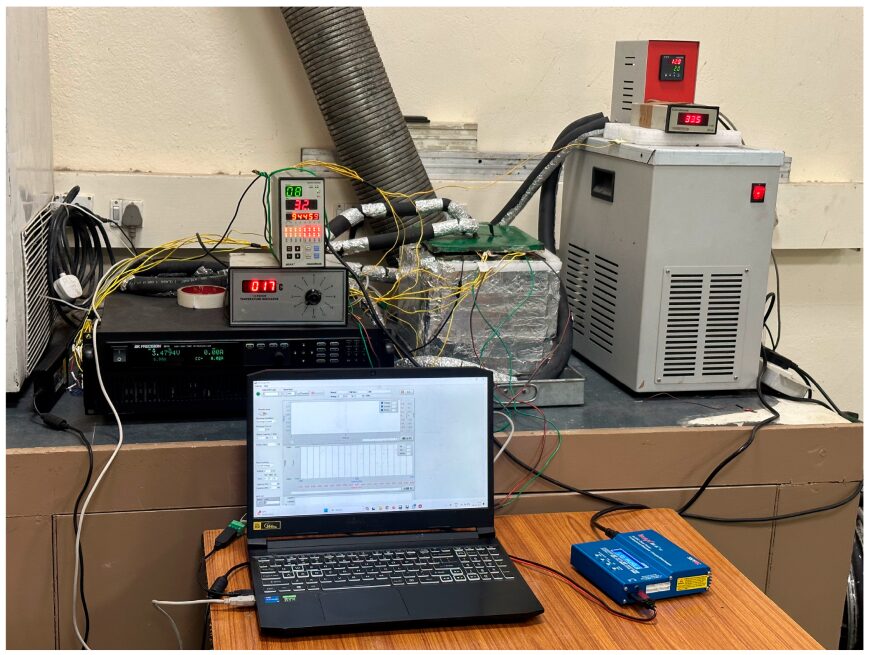
Figure 1: Experimental setup for measuring lithium-ion cell parameters.
Figure 1 presents the experimental setup used for measuring lithium-ion cell parameters. It illustrates the configuration used to obtain voltage, current, and temperature data under controlled operating conditions. This setup is typically used for parameter extraction such as internal resistance, open-circuit voltage, and dynamic response characteristics. Numerous battery modeling techniques have been reported in the literature. These methods can generally be classified into electrochemical models, empirical models, data-driven models, and equivalent circuit models (ECMs). Electrochemical models provide the highest level of physical accuracy because they describe the internal chemical reactions occurring within battery electrodes and electrolytes. However, these models involve complex nonlinear partial differential equations that require significant computational resources, making them less suitable for real-time control applications.
Empirical and data-driven models, including artificial intelligence and machine learning approaches, offer excellent predictive capability when trained with large experimental datasets. Nevertheless, their performance is strongly dependent on the quality and diversity of the available training data, and their internal behavior may lack physical interpretability.
Equivalent circuit models provide a practical balance between computational efficiency and prediction accuracy. By representing the battery using ideal voltage sources, resistors, capacitors, and RC networks, these models successfully reproduce both transient and steady-state electrical characteristics while remaining computationally inexpensive. Consequently, ECMs have become one of the most widely adopted modeling approaches for battery management systems and power electronics simulations [6].
Simulation software plays a crucial role in validating battery models before hardware implementation. PLECS has become an important simulation environment for power electronic systems because it supports efficient electrical, thermal, and control-domain simulations within a unified framework. Its capability to model converters, battery packs, thermal networks, and control algorithms makes it highly suitable for battery system analysis.
This paper presents a comprehensive review of lithium-ion battery modeling using equivalent circuit techniques with emphasis on PLECS implementation. The review discusses state-of-charge estimation methods, internal resistance modeling, electro-thermal behavior, and practical implementation considerations. The objective is to provide researchers and practicing engineers with a concise yet technically comprehensive overview of modern battery modeling techniques applicable to power electronics and energy storage systems.
II. Literature Review
Research on lithium-ion battery modeling has expanded considerably over the last two decades because of the widespread adoption of rechargeable battery technologies in transportation, renewable energy integration, and portable electronic systems. The increasing complexity of battery-powered applications has motivated researchers to develop mathematical models that accurately represent electrical, thermal, and aging characteristics while maintaining computational efficiency suitable for real-time implementation.
Early battery models primarily represented batteries as ideal voltage sources with constant internal resistance. Although these models were computationally simple, they failed to reproduce transient voltage recovery, polarization effects, and temperature-dependent behavior. As battery-powered systems became more sophisticated, researchers introduced equivalent circuit models consisting of resistive-capacitive (RC) networks capable of representing diffusion effects and dynamic voltage response.
Electrochemical models based on porous electrode theory have also received significant attention because they explicitly describe ion transport, charge transfer, and diffusion processes within battery cells. These models provide high prediction accuracy under a wide range of operating conditions but require solving coupled nonlinear equations, making them computationally demanding for embedded battery management systems.
To overcome these limitations, equivalent circuit models have become the preferred choice for practical engineering applications. First-order and second-order RC models have demonstrated satisfactory accuracy for estimating battery voltage, current response, and dynamic behavior while maintaining low computational complexity. These models have been widely employed in electric vehicle simulations, renewable energy systems, and portable electronic devices [5].
Accurate estimation of battery state-of-charge has also remained a major research topic. Methods such as Coulomb counting, open-circuit voltage estimation, Kalman filtering, extended Kalman filtering, unscented Kalman filtering, and particle filtering have all been investigated. Among these approaches, Kalman-filter-based estimators provide improved robustness by combining model predictions with measurement updates, thereby reducing cumulative estimation errors.
Battery temperature has a substantial influence on capacity, internal resistance, efficiency, and cycle life. Consequently, electro-thermal battery models have become increasingly important. These models combine electrical equivalent circuits with thermal networks to estimate temperature rise resulting from internal power dissipation. Accurate electro-thermal models support battery cooling system design and improve operational safety by predicting thermal behavior during high-current operation.
Commercial simulation environments have significantly simplified battery model development. PLECS is particularly advantageous because it provides integrated electrical, thermal, and control-domain simulation capabilities. Battery models implemented in PLECS can be directly connected with DC–DC converters, inverters, motor drives, renewable energy sources, and battery management algorithms, enabling comprehensive system-level analysis.
Overall, recent literature indicates that equivalent circuit models combined with electro-thermal analysis provide an effective compromise between model accuracy, computational efficiency, and implementation simplicity. Consequently, they remain one of the most widely adopted approaches for lithium-ion battery simulation in both academic research and industrial applications.
III. Equivalent Circuit Modeling
Equivalent circuit models (ECMs) are among the most widely adopted techniques for representing the electrical behavior of lithium-ion batteries. These models replace the complex electrochemical processes occurring inside the battery with combinations of ideal electrical components such as voltage sources, resistors, and capacitors. The primary objective of an ECM is to reproduce the battery terminal voltage response under varying charge and discharge conditions while maintaining computational efficiency suitable for real-time applications.
The simplest ECM consists of an ideal voltage source connected in series with an internal resistance. Although this configuration provides a basic representation of the battery, it cannot accurately model transient voltage recovery or polarization effects that occur during rapid load changes. To overcome these limitations, first-order and second-order RC network models have been introduced. These models incorporate one or more resistor-capacitor branches to represent electrochemical polarization and diffusion effects observed during battery operation [1], [2].
Among the various ECMs available in the literature, the first-order Thevenin model is one of the most commonly used because it provides a favorable balance between computational complexity and modeling accuracy. More advanced second-order models further improve transient response prediction by incorporating additional RC branches, making them suitable for electric vehicle and renewable energy applications where battery current changes rapidly.
Equivalent circuit models are also highly flexible because their parameters can be identified experimentally through pulse current tests, impedance spectroscopy, or manufacturer datasheets. Once identified, these parameters can be implemented efficiently in simulation environments such as PLECS, MATLAB/Simulink, and PSCAD for system-level analysis.
Compared with electrochemical models, ECMs require significantly lower computational resources while still providing sufficient accuracy for battery management systems, converter control, and state estimation algorithms. Consequently, they remain the preferred modeling approach in many industrial and academic applications.
IV. State-of-Charge (SOC) Estimation
State-of-charge (SOC) represents the remaining available capacity of a battery relative to its rated capacity. Accurate SOC estimation is one of the most important functions of a battery management system because it directly influences energy management, charging control, and battery protection.
Since SOC cannot be measured directly, it must be estimated using mathematical algorithms based on measurable electrical quantities such as current, voltage, and temperature. Various estimation techniques have been proposed, including open-circuit voltage methods, Coulomb counting, Kalman filtering, extended Kalman filtering, unscented Kalman filtering, particle filtering, and artificial intelligence approaches.
Among these methods, Coulomb counting remains one of the simplest and most widely implemented techniques because it continuously integrates the battery current over time. The SOC can be estimated using the following relationship [1]:

Equation (1) is adapted from the battery state estimation principles presented by Gao et al. [1].
Parameters of Equation (1)
Where:
- SOC(t) = State of charge at time t (% or per unit)
- SOC₀ = Initial state of charge
- Qₙ = Rated battery capacity (Ah)
- I(τ) = Battery current as a function of time (A)
- t = Elapsed operating time (s)
- τ = Integration variable representing time
Equation (1) indicates that the battery state of charge decreases during discharge and increases during charging according to the cumulative amount of charge transferred. Although the Coulomb counting method is straightforward to implement, its accuracy depends heavily on precise current measurement and an accurate initial SOC value. Small measurement errors accumulate over time, leading to estimation drift. Therefore, practical battery management systems often combine Coulomb counting with voltage-based correction methods or Kalman filtering algorithms to improve long-term estimation accuracy [3], [4].
V. Internal Resistance and Voltage Modeling
The terminal voltage of a lithium-ion battery differs from its internal electrochemical voltage because of voltage losses associated with internal resistance and polarization effects. These losses become more pronounced under high-current operating conditions such as rapid charging, regenerative braking, and acceleration in electric vehicles.
Internal resistance consists of several components, including ohmic resistance, charge-transfer resistance, and diffusion resistance. Ohmic resistance originates from electrode materials, current collectors, and electrolyte conductivity. Charge-transfer resistance results from electrochemical reactions occurring at the electrode-electrolyte interface, while diffusion resistance is associated with lithium-ion transport inside electrode materials.
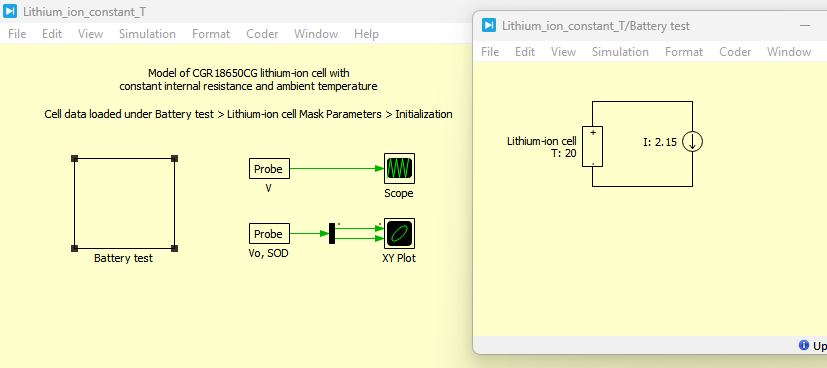
Figure 2: Lithium ion cell with constant internal resistance and ambient temperature model in PLECS
You can download the Project files here: Download files now. (You must be logged in).
Figure 2 presents the lithium-ion cell implemented in PLECS using a constant internal resistance and ambient temperature model. This simplified representation is used for basic simulation studies where temperature effects are assumed constant and resistance is considered time-invariant.
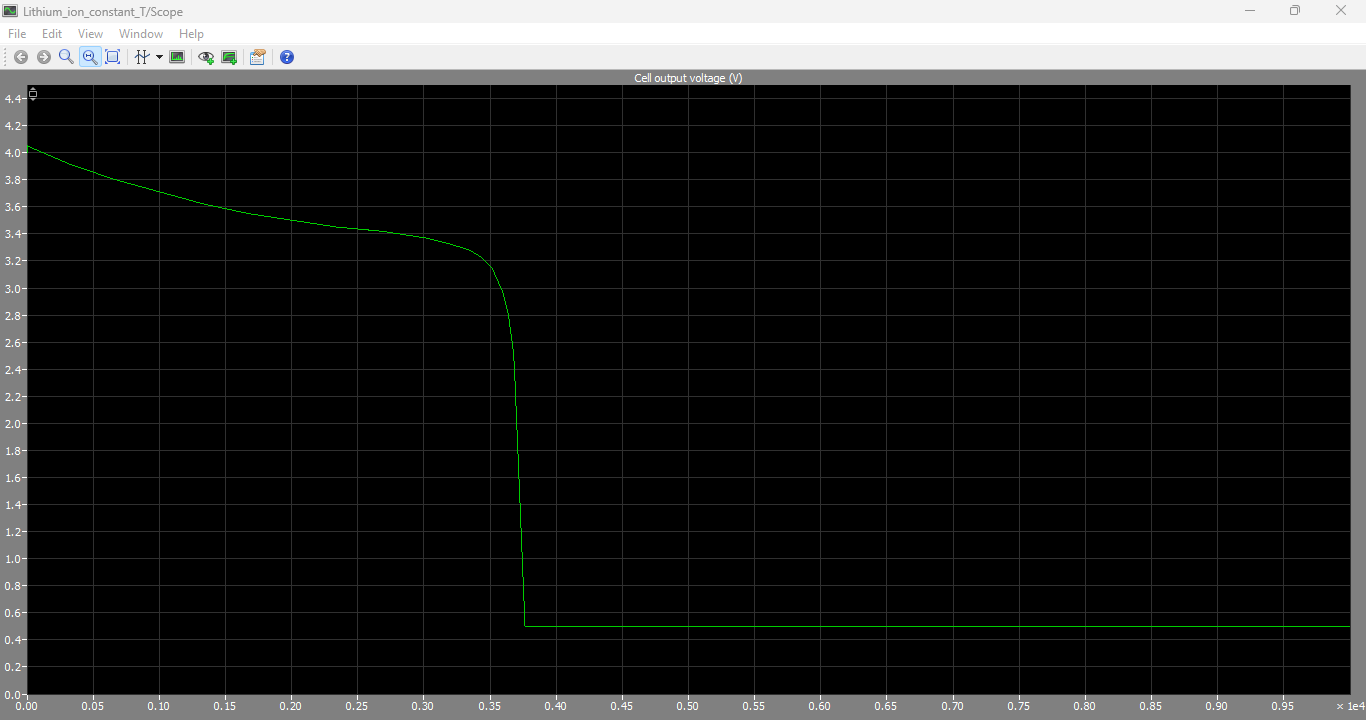
Figure 3: Cell Output Voltage Graph
Figure 3 presents the output voltage response of the lithium-ion cell under dynamic loading conditions. It shows how the terminal voltage varies with time due to current draw and internal losses within the cell.
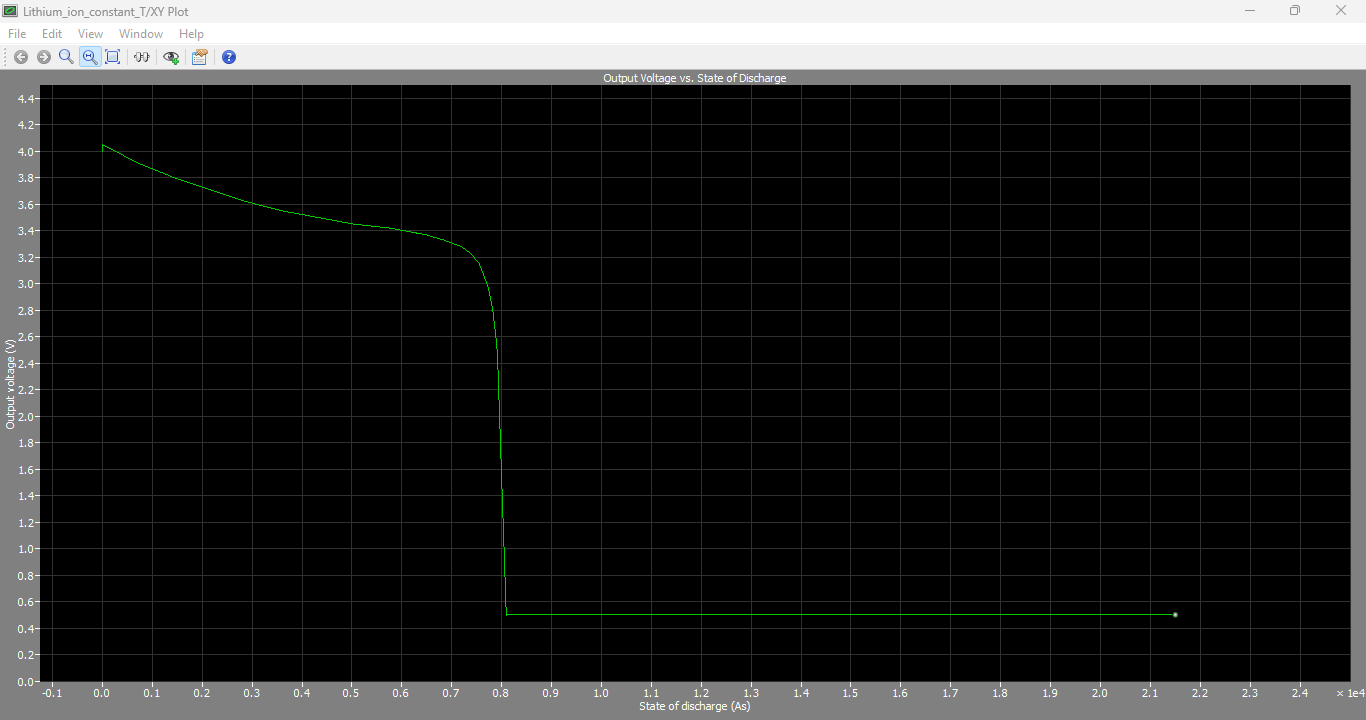
Figure 4: Output Voltage VS State of Discharge output graph
Figure 4 presents the relationship between output voltage and state of discharge (SOD). This graph demonstrates the nonlinear voltage drop behavior as the battery discharges, highlighting the dependency of voltage on remaining charge.
The terminal voltage of the battery can be expressed using the following equivalent circuit relationship [1]:

where Equation (2) follows the equivalent circuit representation described by Gao et al. [1].
Parameters of Equation (2)
Where:
- Vₜ = Terminal voltage of the battery (V)
- Vₒc = Open-circuit voltage (V)
- I = Battery current (A)
- Rint = Internal resistance (Ω)
Equation (2) demonstrates that the terminal voltage decreases as the discharge current increases because of the voltage drop across the internal resistance. During charging, the current direction reverses, causing the terminal voltage to exceed the open-circuit voltage. Although this equation represents the simplest voltage model, more advanced equivalent circuit models incorporate RC branches to represent transient polarization effects and dynamic voltage recovery after load changes.
The internal resistance itself is influenced by several operating conditions. Battery temperature significantly affects electrolyte conductivity, while battery aging increases resistance because of electrode degradation and growth of the solid electrolyte interphase layer. Furthermore, the state of charge influences internal resistance because electrochemical reaction rates vary with lithium concentration inside the electrodes. Consequently, modern battery models often treat internal resistance as a variable parameter rather than a constant value.
VI. Electro-Thermal Modeling
Electrical performance and thermal behavior of lithium-ion batteries are strongly coupled. During charging and discharging, electrical losses generated within the battery are converted into heat, causing the battery temperature to rise. Elevated temperature affects battery efficiency, internal resistance, available capacity, and long-term cycle life. Excessive heating may also initiate thermal runaway, which poses significant safety risks in high-energy battery systems [3].
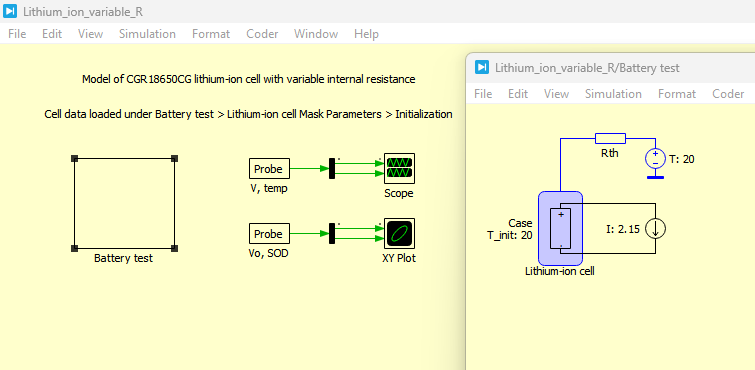
Figure 5: Lithium-ion cell with variable resistance model in PLECS simulation
Figure 5 presents the lithium-ion cell implemented in PLECS using a variable internal resistance model. This model captures the variation of internal resistance with operating conditions such as temperature and state of charge, providing improved accuracy compared to constant resistance models.
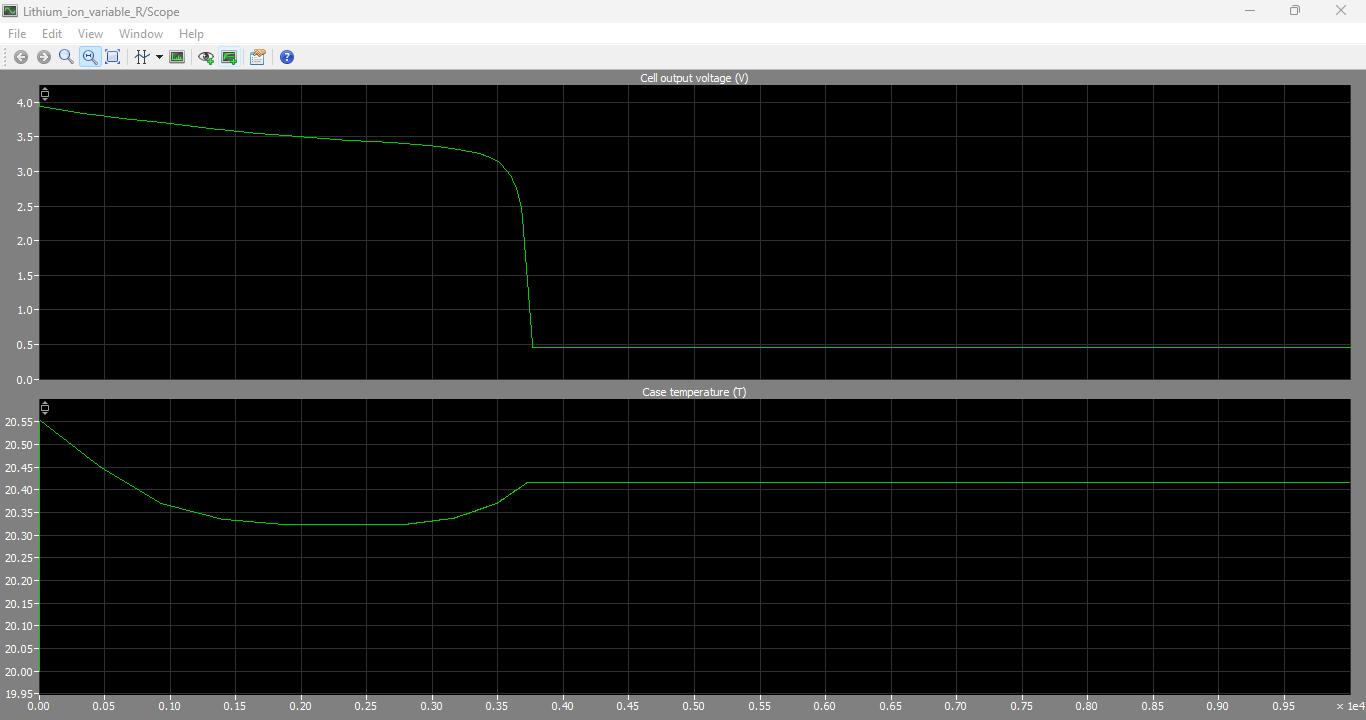
Figure 6: Cell output voltage and case temperature output graphs in PLECS
You can download the Project files here: Download files now. (You must be logged in).
Figure 6 presents the output voltage and case temperature response of the lithium-ion cell in PLECS. It illustrates the electro-thermal coupling effect, where electrical losses contribute to heat generation and temperature rise during operation.
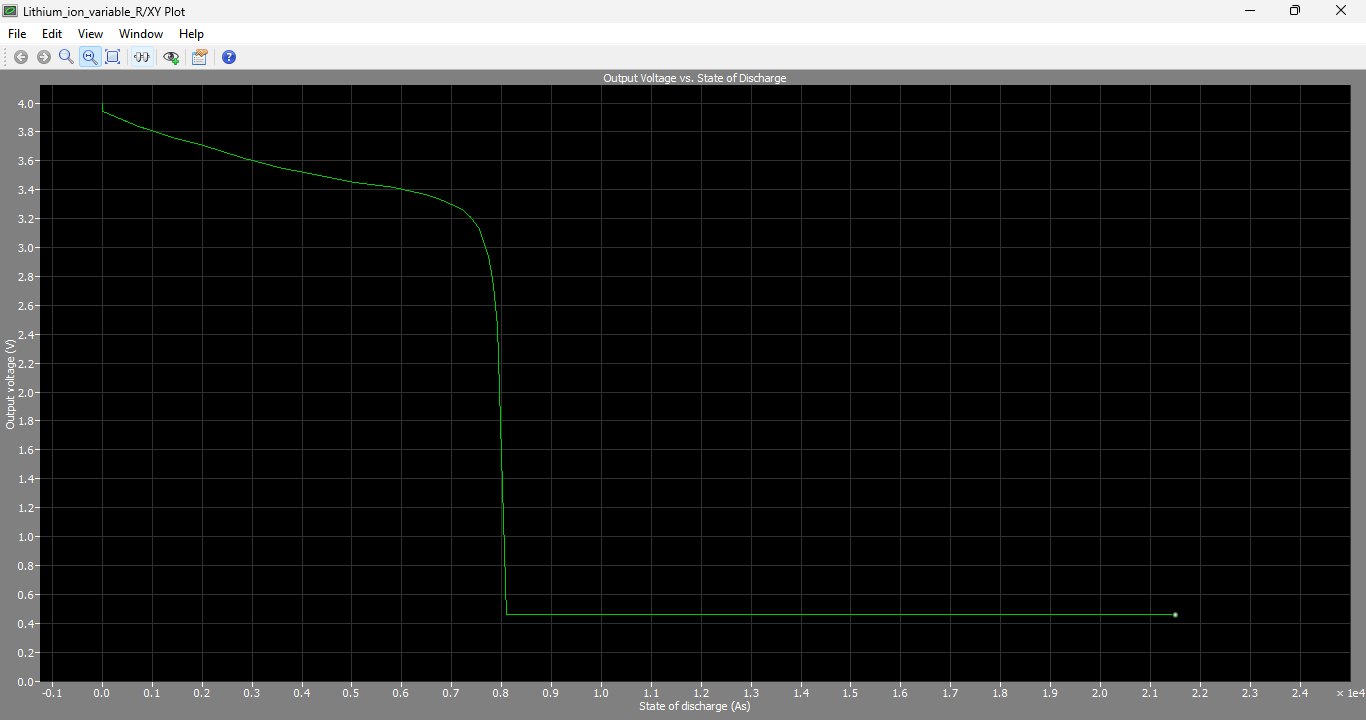
Figure 7: Output Voltage Vs State of discharge graph
Figure 7 presents the output voltage versus state of discharge characteristic obtained from the variable resistance model. It shows improved dynamic behavior compared to simplified models, particularly under varying load conditions.
Electro-thermal models combine electrical equivalent circuit models with thermal networks to estimate battery temperature during operation. The electrical subsystem calculates current, voltage, and power losses, while the thermal subsystem predicts heat generation, heat transfer, and temperature distribution. The thermal network typically consists of thermal capacitances representing heat storage and thermal resistances representing heat flow to the surrounding environment.
Heat generation inside the battery mainly originates from ohmic losses caused by internal resistance. Additional heat is produced by electrochemical polarization and reversible entropic reactions. Under high discharge currents, ohmic losses become dominant, leading to noticeable temperature increases. Accurate thermal modeling is therefore particularly important in electric vehicles, battery packs, and high-power energy storage systems where cooling system design directly affects performance and reliability [5].
Modern battery management systems increasingly integrate thermal estimation algorithms with electrical models. This combined electro-thermal approach enables intelligent charging strategies, thermal protection, and active cooling control, thereby improving battery safety and extending service life.
VII. PLECS Implementation Methodology
PLECS provides a highly efficient environment for implementing lithium-ion battery models because it supports electrical, thermal, and control-domain simulations within a unified framework. Compared with general-purpose simulation software, PLECS is optimized for power electronics applications and allows detailed analysis of converters, battery systems, and control algorithms with relatively low computational cost.
The implementation process generally begins by selecting an appropriate equivalent circuit model based on the required accuracy. The battery parameters—including open-circuit voltage characteristics, internal resistance, RC network values, thermal properties, and battery capacity—are then identified from manufacturer datasheets or experimental measurements. These parameters are entered into the PLECS battery subsystem, where lookup tables and mathematical blocks reproduce the battery behavior under different operating conditions.
The battery model is subsequently connected to external power electronic converters such as DC–DC converters, inverters, or motor drives. Current sensors and voltage measurement blocks monitor electrical performance, while thermal components estimate temperature rise caused by internal power dissipation. Battery management algorithms, including SOC estimation and protection logic, can also be integrated into the same simulation environment [7].
One of the major advantages of PLECS is its capability to perform combined electrical and thermal simulations without requiring separate software tools. This integrated approach enables researchers to evaluate converter performance, battery efficiency, thermal behavior, and control system response simultaneously. Consequently, PLECS has become a valuable platform for developing battery-powered energy systems, validating battery management algorithms, and optimizing power electronic converter designs before hardware implementation.
VIII. Simulation and Output Results
The simulation and validation of the proposed lithium-ion battery model can be performed using the PLECS simulation environment by integrating the equivalent circuit model with the electro-thermal network. During simulation, the battery is subjected to different charging and discharging current profiles to evaluate its dynamic voltage response, state-of-charge variation, internal power dissipation, and temperature rise. The simulation parameters should be selected according to the specifications of the battery cell under investigation.
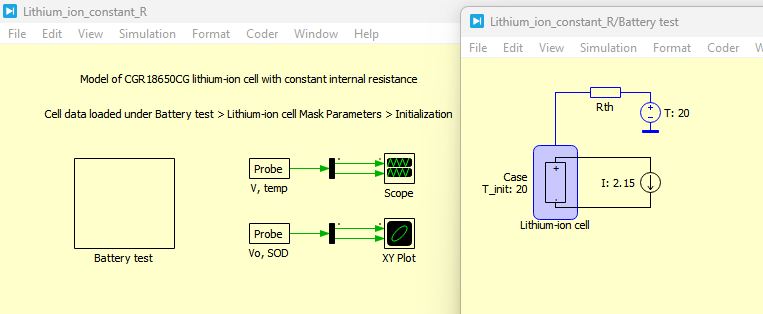
Figure 8: Lithium-ion cell with constant internal resistance model in PLECS
Figure 8 presents the lithium-ion cell modeled with constant internal resistance in PLECS. This model is widely used for simplified analysis where detailed thermal and nonlinear effects are not required.
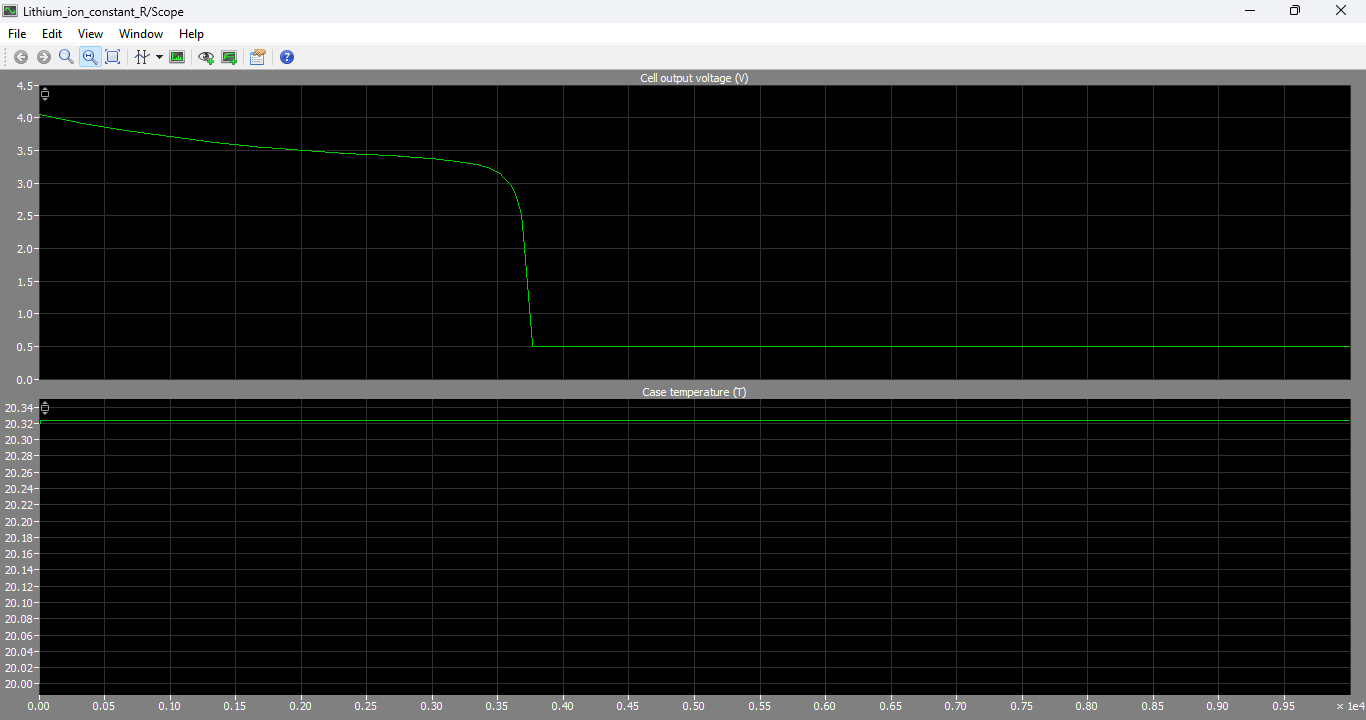
Figure 9: Cell output voltage and Case Temperature output graphs
Figure 9 presents the output voltage and case temperature behavior of the lithium-ion cell under constant resistance modeling. It demonstrates the thermal rise due to internal losses while maintaining a simplified electrical representation.
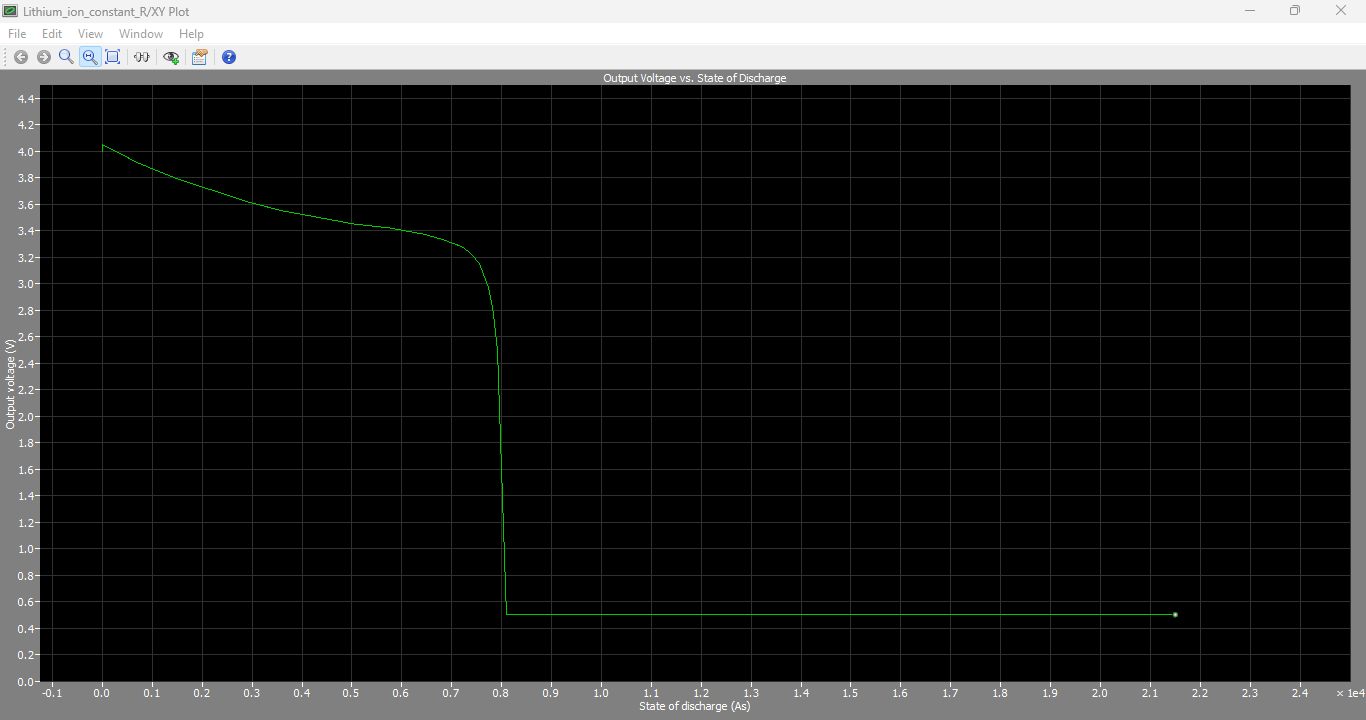
Figure 10: Output Voltage VS State of Discharge graph
You can download the Project files here: Download files now. (You must be logged in).
Figure 10 presents the output voltage versus state of discharge curve for the constant resistance model. It highlights the expected linear-to-nonlinear voltage decline as the battery discharges under load.
IX. Discussion
The review presented in this paper demonstrates that equivalent circuit models continue to be one of the most practical approaches for representing lithium-ion battery behavior in engineering applications. Compared with electrochemical models, equivalent circuit models significantly reduce computational complexity while maintaining sufficient accuracy for battery management systems and power electronic simulations.
The literature indicates that the first-order and second-order Thevenin models provide satisfactory voltage prediction for most practical applications. The addition of RC polarization branches enables accurate representation of transient voltage recovery during rapid load changes, while variable internal resistance improves prediction under different operating conditions.
Accurate state-of-charge estimation remains one of the most important challenges in battery management systems. Although Coulomb counting is computationally efficient and easy to implement, its accumulated measurement errors reduce long-term accuracy. Consequently, modern battery management systems frequently combine current integration with voltage correction techniques and advanced estimation algorithms such as Kalman filtering to improve robustness [4] [6].
Another important observation is the strong interaction between electrical and thermal characteristics. Internal power dissipation generated by battery resistance directly influences operating temperature, which subsequently affects capacity, internal resistance, efficiency, and cycle life. Electro-thermal modeling therefore provides a more realistic representation of battery performance than purely electrical models and is increasingly adopted in electric vehicle and renewable energy applications.
The PLECS simulation environment provides an effective platform for implementing these models because it integrates electrical, thermal, and control-domain simulations into a single framework. This capability enables designers to evaluate battery behavior together with power electronic converters and battery management algorithms before hardware implementation, thereby reducing development time and improving design reliability.
Although equivalent circuit models provide excellent computational efficiency, they still possess several limitations. Parameter identification requires experimental testing, battery aging gradually changes model parameters, and simplified thermal models may not accurately represent temperature gradients inside large battery packs. Future research is therefore expected to combine equivalent circuit models with adaptive parameter estimation, machine learning techniques, and physics-based electrochemical models to further improve prediction accuracy.
X. Conclusion
This paper presented a comprehensive review of lithium-ion battery modeling techniques with emphasis on equivalent circuit models and electro-thermal analysis for power electronic applications. The review discussed the operating principles of lithium-ion batteries, the development of equivalent circuit models, state-of-charge estimation methods, internal resistance characterization, voltage modeling, and thermal behavior. The advantages of equivalent circuit models were highlighted due to their favorable balance between computational efficiency and modeling accuracy.
The implementation methodology in PLECS was also discussed because of its ability to perform integrated electrical and thermal simulations within a unified environment. Such simulations provide valuable insight into battery voltage response, internal losses, temperature rise, and converter interaction under dynamic operating conditions.
The two mathematical relationships presented in this paper provide the fundamental basis for battery state estimation and terminal voltage prediction while maintaining computational simplicity. Accurate parameter identification, combined with appropriate thermal modeling, enables reliable battery simulations suitable for battery management systems, electric vehicles, renewable energy systems, and portable electronic devices.
Future developments are expected to integrate adaptive parameter estimation, artificial intelligence techniques, and electrochemical battery models to further improve prediction accuracy while maintaining computational efficiency for real-time implementation. Such advancements will support the continued deployment of lithium-ion batteries in next-generation energy storage applications.
References
[1] L. Gao, S. Liu, and R. A. Dougal, “Dynamic lithium-ion battery model for system simulation,” IEEE Transactions on Components and Packaging Technologies, vol. 25, no. 3, pp. 495–505, Sept. 2002.
[2] G. L. Plett, “Extended Kalman filtering for battery management systems of LiPB-based HEV battery packs—Part 1: Background,” Journal of Power Sources, vol. 134, no. 2, pp. 252–261, Aug. 2004.
[3] G. L. Plett, “Extended Kalman filtering for battery management systems of LiPB-based HEV battery packs—Part 2: Modeling and identification,” Journal of Power Sources, vol. 134, no. 2, pp. 262–276, Aug. 2004.
[4] G. L. Plett, “Extended Kalman filtering for battery management systems of LiPB-based HEV battery packs—Part 3: State and parameter estimation,” Journal of Power Sources, vol. 134, no. 2, pp. 277–292, Aug. 2004.
[5] M. Chen and G. A. Rincon-Mora, “Accurate electrical battery model capable of predicting runtime and I–V performance,” IEEE Transactions on Energy Conversion, vol. 21, no. 2, pp. 504–511, Jun. 2006.
[6] J. Schönberger, “Modeling a Lithium-Ion Cell Using PLECS®,” Plexim GmbH, Zürich, Switzerland, Application Example, 2013.
[7] Panasonic Corporation, “CGR18650CG Lithium-Ion Rechargeable Cell Datasheet,” 2008.
You can download the Project files here: Download files now. (You must be logged in).












Responses