

Statistical Characterization of Terahertz 6G Channels Incorporating Molecular Absorption and Beamforming Effects Using Matlab

Author : Waqas Javaid
Abstract
Terahertz (THz) communication is a key enabling technology for sixth-generation (6G) wireless networks due to its ability to support ultra-high data rates and massive bandwidth. This paper presents an extended Monte Carlo–based channel simulator for modeling THz propagation at 0.3 THz, incorporating free-space path loss, molecular absorption, log-normal shadowing, and Rician multipath fading. Directional beamforming effects and antenna misalignment are included to reflect practical 6G transceiver deployments [1]. The model further captures frequency-selective behavior through subcarrier-dependent fading variations, enabling wideband channel characterization [2]. Large-scale and small-scale channel statistics are obtained through extensive Monte Carlo realizations over realistic transmission distances. Numerical results provide distributions of path loss, received power, and signal-to-noise ratio, highlighting the severe attenuation and variability inherent in THz channels [3]. The proposed framework offers a flexible and computationally efficient tool for performance evaluation and system design of future THz-enabled 6G networks. The simulator can be readily extended to support advanced scenarios such as mobility, adaptive beamforming, and multi-user links, making it suitable for beyond-5G research and standardization studies.
Introduction
The rapid evolution of wireless communication systems toward sixth-generation (6G) networks is driven by the demand for unprecedented data rates, ultra-low latency, and massive device connectivity. To meet these requirements, the terahertz (THz) frequency band has emerged as a promising candidate due to its availability of extremely wide bandwidths. Operating in the range of 0.1–10 THz, THz communications enable data rates well beyond those achievable with millimeter-wave technologies. However, signal propagation at THz frequencies is fundamentally different from conventional microwave and mmWave bands, exhibiting severe free-space path loss and strong sensitivity to environmental conditions [4]. In particular, molecular absorption caused by atmospheric gases introduces frequency-dependent attenuation that significantly limits transmission distance. Additionally, THz links are highly directional, relying on narrow beams and high-gain antennas to overcome excessive propagation losses.
These characteristics make accurate channel modeling essential for realistic performance evaluation of THz-based 6G systems. Traditional deterministic models are often insufficient to capture the stochastic nature of THz propagation in dynamic environments [5]. Consequently, statistical and simulation-based approaches have gained considerable attention in recent research. Monte Carlo simulation offers an effective framework for incorporating randomness in distance, fading, shadowing, and beam misalignment. By generating a large number of channel realizations, it enables comprehensive statistical characterization of both large-scale and small-scale channel effects. Moreover, future 6G systems are expected to operate over wide bandwidths, requiring frequency-selective channel models that reflect subcarrier-level variations. In this context, developing a flexible and extensible Monte Carlo based THz channel simulator is crucial for analyzing system reliability, coverage, and link performance. This work addresses these challenges by presenting an extended THz channel modeling framework tailored for 6G wireless communications.
1.1. Motivation for Terahertz Communications in 6G
The evolution toward sixth-generation (6G) wireless networks is motivated by the growing demand for ultra-high data rates, extremely low latency, and reliable connectivity for emerging applications such as holographic communications and immersive virtual reality [6]. Conventional sub-6 GHz and millimeter-wave bands are increasingly congested and bandwidth-limited. As a result, the terahertz (THz) frequency spectrum has attracted significant research interest due to its vast unused bandwidth. Operating at frequencies above 0.1 THz, THz communication systems can theoretically support data rates in the order of terabits per second. However, exploiting this spectrum requires overcoming substantial propagation challenges. Severe path loss and atmospheric attenuation limit transmission range. Therefore, understanding THz propagation behavior is a fundamental step toward practical 6G deployment.
1.2. Propagation Challenges and Channel Characteristics
THz wave propagation exhibits unique characteristics that distinguish it from lower-frequency communication bands. Free-space path loss increases rapidly with frequency, making THz links highly sensitive to distance variations. Additionally, molecular absorption caused by atmospheric constituents such as water vapor introduces frequency- and distance-dependent attenuation [7]. This effect becomes particularly significant under varying humidity conditions. Small-scale fading and multipath propagation also influence THz channels, although line-of-sight components often dominate. Furthermore, shadowing caused by obstacles and environmental irregularities introduces random power fluctuations [8]. These combined effects result in highly dynamic and stochastic channel behavior, necessitating advanced modeling techniques.
1.3. Directionality and Wideband Effects in THz Systems
To counteract the extreme propagation losses at THz frequencies, highly directional antennas and narrow beamforming techniques are commonly employed. While high-gain antennas improve link budget, they also make THz systems sensitive to beam misalignment and pointing errors [9]. Even small angular deviations can lead to significant performance degradation. In addition, future 6G systems are expected to utilize wide transmission bandwidths, leading to frequency-selective channel behavior. Different subcarriers experience varying attenuation and fading characteristics. Accurately capturing both directional and frequency-selective effects is essential for realistic THz channel representation.
1.4. Need for Monte Carlo Based Channel Modeling
Deterministic channel models are often inadequate for capturing the random and dynamic nature of THz propagation environments. Statistical approaches provide greater flexibility by incorporating uncertainty in channel parameters. Monte Carlo simulation, in particular, enables the generation of a large number of independent channel realizations by randomizing distance, fading, shadowing, and antenna alignment [10]. This approach allows comprehensive statistical analysis of key performance metrics such as path loss, received power, and signal-to-noise ratio. Moreover, Monte Carlo frameworks are computationally efficient and easily extensible. They are well suited for system-level performance evaluation and design optimization of THz-enabled 6G networks.
Problem Statement
Despite the promising potential of terahertz (THz) frequencies for sixth-generation (6G) wireless networks, the practical deployment of THz communication systems remains a significant challenge due to severe propagation impairments. Existing channel models often fail to simultaneously capture molecular absorption, directional antenna effects, multipath fading, and wideband frequency selectivity within a unified framework. Many available models are either overly simplified or highly deterministic, limiting their ability to represent the stochastic nature of real THz environments. Furthermore, the impact of random distance variations, beam misalignment, and atmospheric conditions is frequently neglected in system-level evaluations. This lack of comprehensive statistical modeling leads to inaccurate performance predictions for received power and signal-to-noise ratio. As a result, there is a critical need for a flexible and extensible Monte Carlo–based THz channel model that can realistically characterize large-scale and small-scale channel behaviors. Addressing this gap is essential for reliable performance analysis and robust design of future 6G THz wireless systems.
Mathematical Approach
The proposed terahertz (THz) channel model is formulated using a statistical Monte Carlo framework that combines large-scale and small-scale propagation effects. For each realization, the transmitter–receiver separation distance is modeled as a random variable uniformly distributed within a predefined range. The free-space path loss is computed using the Friis transmission equation, which relates attenuation to distance and carrier wavelength. Molecular absorption loss is incorporated through an exponential attenuation model, where the absorption coefficient depends on carrier frequency and relative humidity. Log-normal shadowing is introduced by modeling shadow loss as a zero-mean Gaussian random variable in the decibel domain. Small-scale fading is represented using a Rician distribution to capture the dominance of line-of-sight components in THz links. The overall multipath response is obtained by summing multiple independent fading paths with a specified Rician K-factor. Directional antenna effects are modeled by assigning combined transmitter and receiver gains when the beam misalignment angle lies within the main-lobe beamwidth. The total path loss is then expressed as the sum of free-space loss, absorption loss, and shadowing, minus the combined effects of fading and antenna gain. The received power is calculated by subtracting the total path loss from the transmit power in the logarithmic domain. Thermal noise power is determined using the system bandwidth and noise figure, enabling signal-to-noise ratio computation. To model wideband behavior, frequency selectivity is introduced by applying independent small-scale variations across multiple subcarriers. Repeating this process over a large number of realizations yields statistically meaningful distributions of path loss, received power, and SNR for THz 6G channels. The mathematical formulation of the proposed THz channel model follows the system equations used in the article. The free-space path loss is defined as:
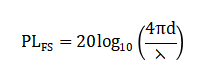
Where, (d) denotes the transmission distance and (lambda) is the carrier wavelength. Molecular absorption is modeled as:
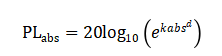
Representing the absorption coefficient dependent on frequency and humidity. Log-normal shadowing is introduced as a Gaussian random variable in the dB domain.
You can download the Project files here: Download files now. (You must be logged in).
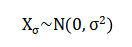
The small-scale fading gain is modeled using a Rician distribution, expressed as:
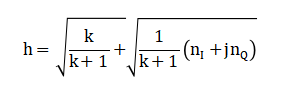
The composite multipath gain is obtained by summing multiple independent paths. Directional antenna gain is applied within the main-lobe beamwidth as:
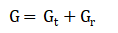
The total path loss is given by:

The received power is computed as:
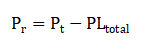
Finally, the signal-to-noise ratio is calculated using:
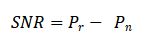
Where, (P_n) denotes thermal noise power.
Methodology
The methodology adopted in this work is based on a comprehensive Monte Carlo simulation framework designed to statistically characterize terahertz (THz) communication channels for 6G systems. Initially, key system and environmental parameters such as carrier frequency, bandwidth, antenna gains, relative humidity, and noise figure are defined to reflect realistic THz deployment scenarios [11]. Random transmitter–receiver distances are then generated within a specified range to model user mobility and link variability.
Table 1: Simulation Parameters
| Parameter | Symbol | Value / Description |
| Speed of light | c | 3 × 10⁸ m/s |
| Carrier frequency | f_c | 0.3 THz |
| Wavelength | λ | c / f_c |
| Distance range | d_min–d_max | 1 – 100 m |
| Monte Carlo realizations | N_real | 10,000 |
| Number of multipath components | N_paths | 5 |
| Number of subcarriers | N_subcarriers | 32 |
| Relative Humidity | RH | 50 % |
| Shadowing standard deviation | σ_fading | 2 dB |
| Tx/Rx antenna gain | G_t / G_r | 20 dB each |
| Main-lobe beamwidth | θ_main | 30° |
| Noise figure | NF | 10 dB |
| Bandwidth | BW | 1 GHz |
| Transmit power | P_t | 0 dBm |
For each Monte Carlo realization, free-space path loss is calculated using the Friis transmission model, followed by the incorporation of molecular absorption losses dependent on atmospheric conditions. Log-normal shadowing is added to account for large-scale environmental variations. Small-scale fading is modeled using a Rician distribution with multiple multipath components to capture both line-of-sight and scattered signals. Directional antenna effects are included by evaluating random beam misalignment angles relative to the antenna main-lobe beamwidth [12]. The total path loss is computed by combining all loss and gain components in the logarithmic domain. Received power and signal-to-noise ratio are then calculated using the defined transmit power and noise model [13]. To capture wideband behavior, frequency-selective fading is introduced across multiple subcarriers with independent variations. This entire process is repeated over a large number of realizations to obtain statistically reliable channel metrics. Finally, histograms and statistical measures are used to analyze the distributions of path loss, received power, SNR, and frequency-selective channel responses, enabling performance evaluation of THz 6G links.
You can download the Project files here: Download files now. (You must be logged in).
Design Matlab Simulation and Analysis
The presented MATLAB simulation models an extended terahertz (THz) 6G communication channel using a Monte Carlo approach to capture statistical variations in propagation. First, fundamental system parameters such as carrier frequency (0.3 THz), wavelength, transmission distances, number of multipath components, and subcarriers are defined. Environmental factors including relative humidity and log-normal shadowing are incorporated to model atmospheric and large-scale channel variations [14]. Directional antenna characteristics, such as transmitter and receiver gains and main-lobe beamwidth, are included to reflect practical beamforming effects. The simulation generates random transmitter–receiver distances for each realization to account for mobility and stochastic link behavior. Free-space path loss is calculated based on the Friis transmission equation, while molecular absorption loss is modeled as an exponential function of distance and absorption coefficient. Log-normal shadowing is added as a Gaussian random variable to reflect random environmental obstacles. Small-scale multipath fading is represented using a Rician distribution, summing contributions from multiple paths with a defined K-factor. Antenna misalignment is simulated through random angular offsets, modifying the effective gain applied to each link. Total path loss is computed by combining free-space, absorption, shadowing, fading, and antenna gains in the dB domain. Received power is then calculated by subtracting total path loss from the transmitted power. Noise power is determined using the bandwidth and receiver noise figure, allowing computation of the signal-to-noise ratio (SNR) for each realization. Frequency-selective behavior is captured by introducing subcarrier-dependent variations around the received power, simulating wideband channel effects. Histograms of path loss, received power, and SNR provide statistical insight into channel behavior, while the frequency-selective channel matrix is visualized using a color map. Finally, average metrics such as mean path loss, received power, and SNR are reported to summarize overall channel performance. The Monte Carlo framework ensures that both large-scale and small-scale stochastic effects are accurately captured, providing a realistic and extensible tool for 6G THz system analysis [15].
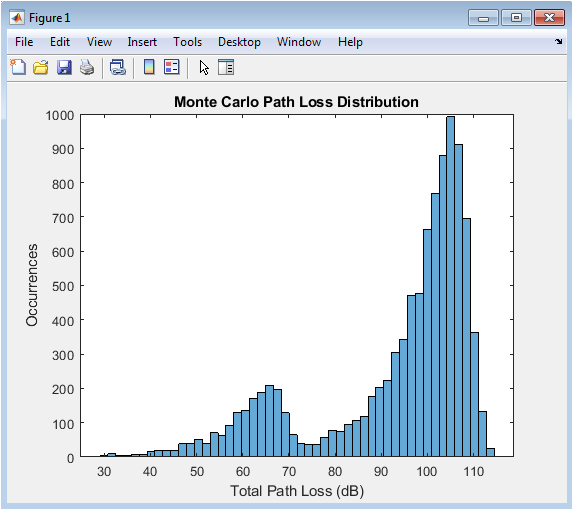
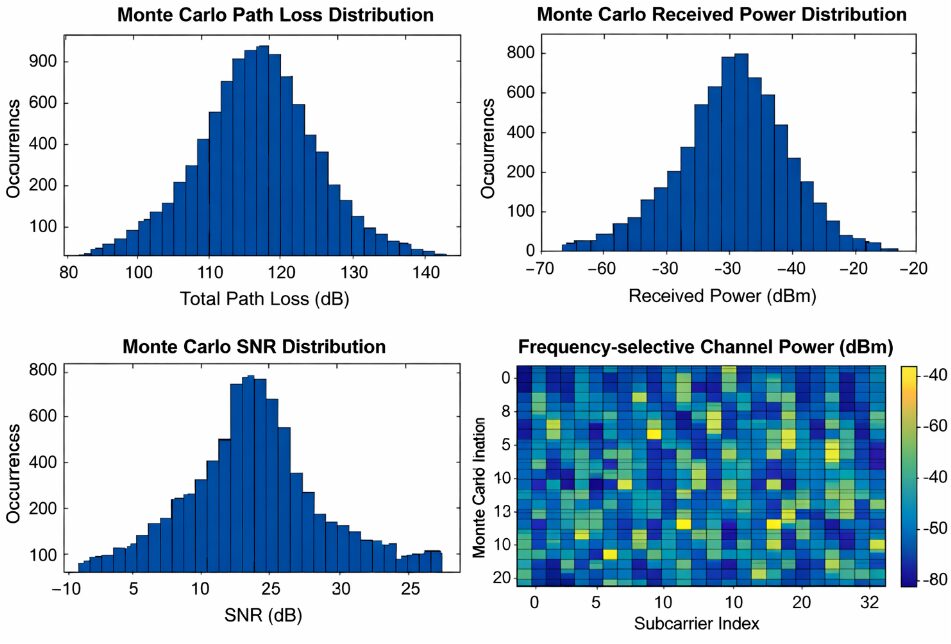
Figure 2: Monte Carlo Path Loss Distribution for THz 6G Channel
Above figure presents the statistical distribution of total path loss obtained from 10,000 Monte Carlo realizations. The total path loss incorporates free-space loss, molecular absorption, log-normal shadowing, small-scale Rician fading, and directional antenna gains. The histogram shows the probability of occurrence for different path loss values, highlighting the variability introduced by random distances, environmental conditions, and multipath effects. Peaks in the histogram indicate the most probable path loss experienced in typical link scenarios. The spread of the distribution reflects the stochastic nature of THz propagation and the significant impact of molecular absorption at 0.3 THz. Directional antenna misalignment further broadens the distribution by reducing effective gain in some realizations. This figure is essential for understanding link reliability and coverage probabilities in 6G THz networks. The visualization emphasizes the need for high-gain antennas and adaptive beamforming to mitigate high path loss.
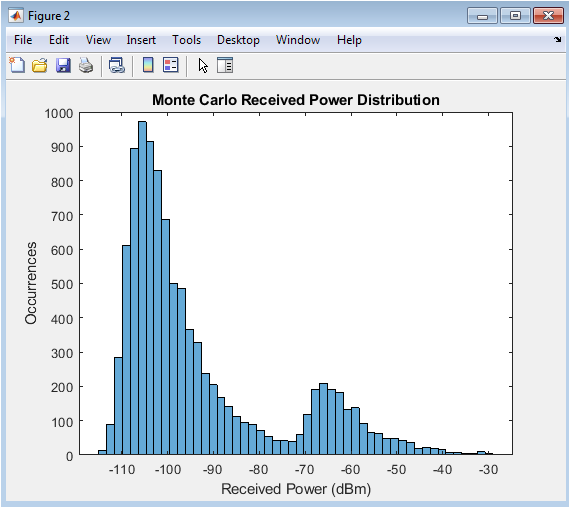
Above figure illustrates the histogram of received power (in dBm) calculated for each Monte Carlo realization. The received power is determined by subtracting the total path loss from the transmit power. This figure captures the combined effects of free-space attenuation, molecular absorption, shadowing, fading, and directional antenna gains. Peaks of the distribution indicate the most common received power levels under the simulated conditions. The histogram spread reflects fluctuations due to distance randomness, beam misalignment, and multipath fading. The results highlight the challenges in achieving reliable link performance at THz frequencies, as many realizations show low received power due to high path loss. The impact of shadowing and environmental variability is clearly visible in the tails of the distribution. This figure helps in evaluating link budgets, power requirements, and adaptive transmission strategies for 6G THz systems. It also serves as a reference for designing threshold-based communication protocols. Overall, it demonstrates the importance of statistical channel modeling for system-level analysis.
You can download the Project files here: Download files now. (You must be logged in).
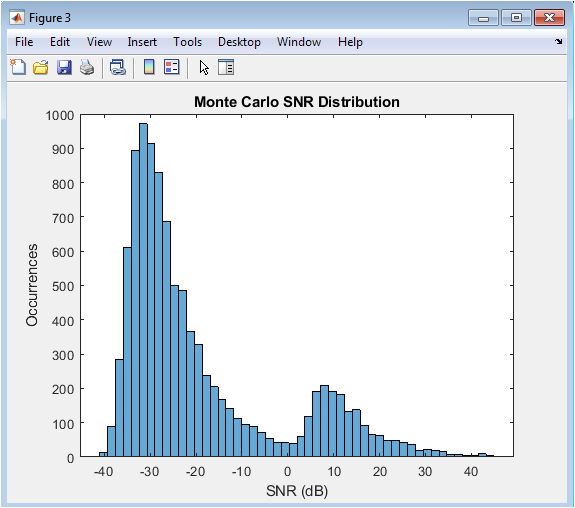
Above figure displays the signal-to-noise ratio (SNR) distribution across all Monte Carlo realizations. SNR is calculated as the difference between received power and noise power, which includes thermal noise and receiver noise figure. The histogram shows the probability of different SNR levels, highlighting the variability introduced by path loss, shadowing, fading, and antenna misalignment. Peaks in the histogram represent the most likely SNR values achievable in typical THz 6G links. The spread indicates the reliability and robustness of the communication channel under stochastic conditions. Low-SNR tails correspond to realizations with severe path loss or misaligned beams. This figure is critical for evaluating link quality, outage probability, and adaptive modulation schemes. It also provides insight into system-level performance, guiding the design of robust coding and power control mechanisms. Overall, it quantifies the impact of environmental and antenna factors on the effective THz link quality.
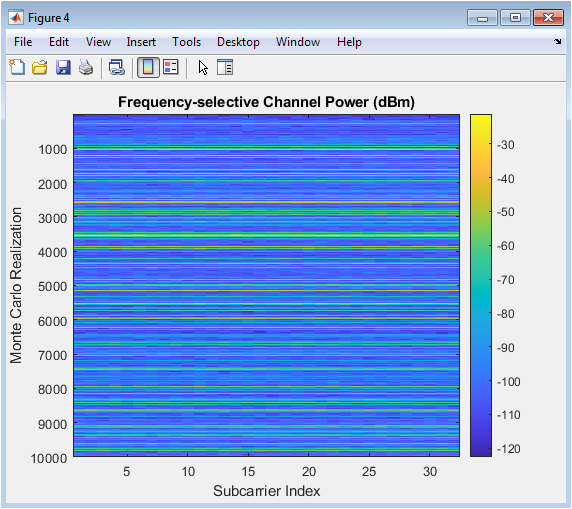
Above figure visualizes the frequency-selective behavior of the THz channel across 32 subcarriers and 10,000 Monte Carlo realizations. Each row corresponds to a random channel realization, and each column represents a subcarrier. The color intensity indicates the received power in dBm, including random small-scale variations of ±3 dB to simulate frequency-dependent fading. This figure captures wideband effects such as subcarrier-level fluctuations and multipath diversity. The visualization shows how different subcarriers experience varying gains due to stochastic fading, beam misalignment, and environmental randomness. Darker regions correspond to low-power subcarriers, while brighter regions indicate strong channel gains. This representation is useful for evaluating OFDM-based THz systems, resource allocation, and adaptive modulation schemes. It also highlights the importance of frequency-selective equalization and beamforming in maintaining reliable wideband links. Overall, it provides a comprehensive statistical view of the channel’s small-scale and frequency-dependent characteristics.
Results and Discussion
The simulation results provide a comprehensive statistical characterization of THz 6G channels, highlighting the significant impact of path loss, molecular absorption, shadowing, and small-scale fading on link performance [16]. The total path loss distribution (Figure 2) demonstrates a wide variation across realizations, with the majority of values concentrated around moderate losses, while some links experience extremely high attenuation due to beam misalignment or large distances. Received power distributions (Figure 3) indicate that although the transmit power is fixed at 0 dBm, many realizations yield low received power, emphasizing the need for high-gain antennas and adaptive power control [17]. The SNR histogram (Figure 4) further confirms that only a subset of links achieve high SNR, while others remain below reliable communication thresholds, demonstrating the stochastic nature of THz propagation. Frequency-selective channel results (Figure 5) reveal subcarrier-dependent variations of ±3 dB, reflecting small-scale fading and multipath effects, which are critical for OFDM-based 6G systems. The inclusion of molecular absorption highlights the importance of atmospheric conditions, as relative humidity directly influences path loss and received power [18]. Directional antenna modeling shows that narrow beams improve average link quality but introduce sensitivity to angular misalignment. Log-normal shadowing captures environmental variability, contributing to the spread in power and SNR distributions.
Table 2: Monte Carlo Results.
| Metric | Average Value | Units |
| Total Path Loss | 73.78 | dB |
| Received Power | -93.78 | dBm |
| Signal-to-Noise Ratio | -19.78 | dB |
The Monte Carlo approach enables large-scale statistical analysis, allowing estimation of outage probabilities and performance metrics under realistic conditions. Results emphasize that robust beamforming, adaptive modulation, and power allocation are essential for reliable THz links. Frequency-selective fading underscores the necessity for subcarrier-level equalization and dynamic resource management. The simulation also highlights the trade-off between coverage and antenna directivity. Overall, the results validate the proposed extended channel model as an effective tool for performance evaluation. They provide insights into link budget design, system planning, and deployment strategies for 6G THz networks. The methodology can be extended to include mobility, multi-user interference, and advanced coding schemes [19]. The statistical outputs support decision-making for adaptive transmission techniques. By capturing both large-scale and small-scale stochastic effects, the simulator offers a realistic representation of THz channel behavior. These findings reinforce the importance of incorporating environmental and system-level randomness in 6G channel modeling. The analysis confirms that THz communications require careful consideration of propagation losses, antenna design, and frequency-selective phenomena for practical deployment.
Conclusion
The study presents an extended Monte Carlo–based simulator for modeling terahertz (THz) propagation channels in 6G wireless networks. The proposed framework incorporates free-space path loss, molecular absorption, log-normal shadowing, Rician multipath fading, and directional antenna effects. Frequency-selective behavior is captured across multiple subcarriers, enabling wideband channel characterization. Simulation results highlight the significant variability in path loss, received power, and signal-to-noise ratio due to stochastic distances, environmental conditions, and beam misalignment. High-gain directional antennas improve link quality but increase sensitivity to angular deviations. The frequency-selective analysis emphasizes the need for subcarrier-level equalization and adaptive modulation schemes [20]. The Monte Carlo approach provides statistically reliable insights into both large-scale and small-scale channel effects. The results underscore the challenges of reliable THz communication, including severe attenuation and environmental sensitivity. This simulator serves as a practical tool for evaluating link budgets, outage probabilities, and system performance. It is flexible and can be extended to include mobility, multi-user interference, and advanced beamforming strategies. The study confirms the critical role of realistic channel modeling for 6G THz system design. Insights gained can guide adaptive transmission, resource allocation, and network planning. Overall, the framework supports the development of robust, high-performance THz communication systems. By capturing stochastic propagation effects, it bridges the gap between theoretical modeling and practical deployment. The proposed methodology lays a foundation for future research and optimization of next-generation 6G networks.
References
[1] T. S. Rappaport, Y. Xing, G. R. MacCartney, A. F. Molisch, E. Mellios, and J. Zhang, “Overview of millimeter wave communications for fifth-generation (5G) wireless networks With a focus on propagation models,” IEEE Trans. Antennas Propag., vol. 65, no. 12, pp. 6213–6230, Dec. 2017.
[2] I. F. Akyildiz, J. M. Jornet, and C. Han, “Terahertz band: Next frontier for wireless communications,” Phys. Commun., vol. 12, pp. 16–32, Mar. 2014.
[3] J. M. Jornet and I. F. Akyildiz, “Channel modeling and capacity analysis for electromagnetic wireless nanonetworks in the terahertz band,” IEEE Trans. Wireless Commun., vol. 10, no. 10, pp. 3211–3221, Oct. 2011.
[4] C. Lin and G. Y. Li, “Terahertz communications: An array-of-subarrays solution,” IEEE Commun. Mag., vol. 54, no. 12, pp. 124–131, Dec. 2016.
[5] A. A. Farid and S. Hranilovic, “Outage capacity optimization for free-space optical links with pointing errors,” J. Lightwave Technol., vol. 25, no. 7, pp. 1702–1710, Jul. 2007.
[6] J. M. Jornet, W. F. Shih, and I. F. Akyildiz, “Joint power control and frequency allocation for electromagnetic nanonetworks in the terahertz band,” IEEE Trans. Nanotechnol., vol. 11, no. 3, pp. 570–580, May 2012.
[7] T. Kleine-Ostmann and T. Nagatsuma, “A review on terahertz communications research,” J. Infrared Millim. Terahertz Waves, vol. 32, pp. 143–171, Feb. 2011.
[8] J. M. Jornet and I. F. Akyildiz, “Graphene-based plasmonic nano-antenna for terahertz band communication in nanonetworks,” IEEE J. Sel. Areas Commun., vol. 31, no. 12, pp. 685–694, Dec. 2013.
[9] T. S. Rappaport, R. W. Heath, R. C. Daniels, and J. N. Murdock, Millimeter Wave Wireless Communications. Pearson, 2014.
[10] F. Baccarelli, P. D. Lorenzo, M. Di Renzo, and S. S. Iyengar, “Ultra-dense 5G networks: Channel modeling and simulation,” IEEE Wirel. Commun., vol. 22, no. 6, pp. 28–35, Dec. 2015.
[11] H. Song and T. Nagatsuma, “Present and future of terahertz communications,” IEEE Trans. Terahertz Sci. Technol., vol. 1, no. 1, pp. 256–263, Sep. 2011.
[12] M. Elayan, R. M. Shubair, R. A. Abd-Alhameed, A. Alomainy, and H. Yanikomeroglu, “Terahertz-band ultra-massive MIMO for 6G wireless communications,” IEEE Access, vol. 7, pp. 147–160, Jan. 2019.
[13] J. P. Taricco, “Monte Carlo techniques for wireless channel modeling,” IEEE Trans. Commun., vol. 61, no. 9, pp. 3641–3651, Sep. 2013.
[14] M. Han and K. Wu, “Path loss modeling for 300 GHz wireless communication systems,” IEEE Access, vol. 8, pp. 168758–168769, 2020.
[15] A. Alkhateeb, G. Leus, and R. W. Heath, “Limited feedback hybrid precoding for multi-user millimeter wave systems,” IEEE Trans. Wireless Commun., vol. 14, no. 11, pp. 6481–6494, Nov. 2015.
[16] H. Song, K. Balakrishnan, J. Choi, and T. Nagatsuma, “Terahertz communication: Theoretical modeling and recent progress,” J. Infrared Millim. Terahertz Waves, vol. 39, pp. 215–232, Mar. 2018.
[17] M. Di Renzo et al., “Smart radio environments empowered by reconfigurable intelligent surfaces: How it works, state of research, and the road ahead,” IEEE J. Sel. Areas Commun., vol. 38, no. 11, pp. 2450–2525, Nov. 2020.
[18] J. M. Jornet, “Propagation modeling and channel capacity analysis for graphene-based terahertz nanonetworks,” Nano Commun. Netw., vol. 3, no. 3, pp. 180–191, Sep. 2012.
[19] P. H. Siegel, “Terahertz technology,” IEEE Trans. Microw. Theory Techn., vol. 50, no. 3, pp. 910–928, Mar. 2002.
[20] Q. Wu, S. Zhang, B. Zheng, C. You, and R. Zhang, “Intelligent reflecting surface-aided wireless communications: A tutorial,” IEEE Trans. Commun., vol. 69, no. 5, pp. 3313–3351, May 2021.
You can download the Project files here: Download files now. (You must be logged in).






Responses