Master Electrical Schematic Design Considerations

Engineering

Design and LTSpice Simulation of a High-Efficiency Bidirectional Single-Phase EV Charger for Vehicle-to-Grid (V2G) Applications

Author: Waqas Javaid

Introduction:

In this project, a groundbreaking single-phase bidirectional current-source AC/DC converter tailored for Vehicle-to-Grid (V2G) applications is unveiled. The converter is ingeniously designed; comprising a line frequency commutated unfolding bridge and an interleaved buck-boost stage. Notably, the semiconductor losses within the line frequency commutated unfolding bridge contribute to the converter’s commendable efficiency. The interleaved buck-boost stage further enhances performance with its dual capabilities of buck and boost operating modes, facilitating seamless operation across a broad battery voltage range [2]. The interleaved structure of this stage significantly reduces battery current ripple. Beyond these advantages, the converter ensures sinusoidal input current, bidirectional power flow, and the capability for reactive power compensation. This project delves into the intricate topology and operational principles of this innovative converter, shedding light on its potential impact in the realm of V2G applications.

Read More »

Calibration and Design of High-Precision Sensor Systems for Optomechanical Applications

Author: Waqas Javaid

Abstract:

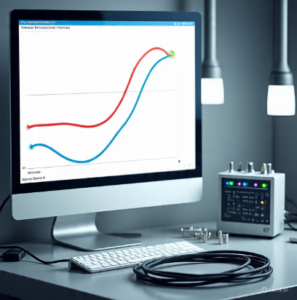
This MATLAB script presents a comprehensive framework for the calibration and design of high-precision sensor systems tailored for optomechanical applications. The script encompasses the calibration of cavity optomechanical displacement-based sensors, as well as the design considerations for accelerometers, force detection sensors, and torque magnetometry sensors. The calibration procedure involves processing sensor data, particularly from accelerometers and magnetometers, to derive accurate calibration parameters. A key aspect of the calibration process involves performing a spherical fit on the magnetometer data to determine the center, residue, and radius of the fitted sphere [1]. These calibration parameters are essential for ensuring the accuracy and reliability of sensor measurements.

The MATLAB script also includes simulations and visualizations to illustrate the calibration procedure and sensor design. Furthermore, the project incorporates Simulink models to simulate MEMS accelerometer systems, integrating force, translational dynamics, and voltage outputs. The resulting framework provides a comprehensive toolkit for sensor calibration, design, and simulation, contributing to advancements in high-precision sensor technologies. In addition to calibration, the script provides a platform for designing sensor systems suitable for various applications [2] [3]. Designs for accelerometers, force detection sensors, and torque magnetometer sensors are defined, considering parameters such as sensitivity, frequency range, and noise levels. These designs serve as a foundation for developing sensor systems tailored to specific operational requirements. The MATLAB code simulation also generates informative visualizations, including plots of sensor data, calibration results, and sensor designs. These visualizations aid in understanding the behavior and performance characteristics of the sensors, facilitating informed decision-making during sensor calibration and system design processes.

Read More »
L ading...